
Liverpool delivered a crushing statement of superiority on Sunday, dismantling Manchester United 4–0 at Anfield in a result that will leave the visitors facing uncomfortable questions about their quality, mentality and ability to compete with the Premier League’s biggest sides.
It was more than an ordinary defeat. It was the kind of performance that exposes weaknesses, destroys confidence and gives supporters of the winning side bragging rights that can last for months.
For Liverpool, the victory was a powerful demonstration of dominance in one of English football’s fiercest rivalries. For Manchester United, it was a sobering afternoon in which the gulf between expectation and performance became impossible to ignore.
A nightmare began in the eighth minute
The contest had barely settled when Manchester United’s afternoon began to unravel.
Liverpool started aggressively, pushing forward and exploiting spaces behind United’s defensive line. Bradley Barcola had already threatened, while Alexander Isak was beginning to find room to operate.
Then came the decisive early incident.
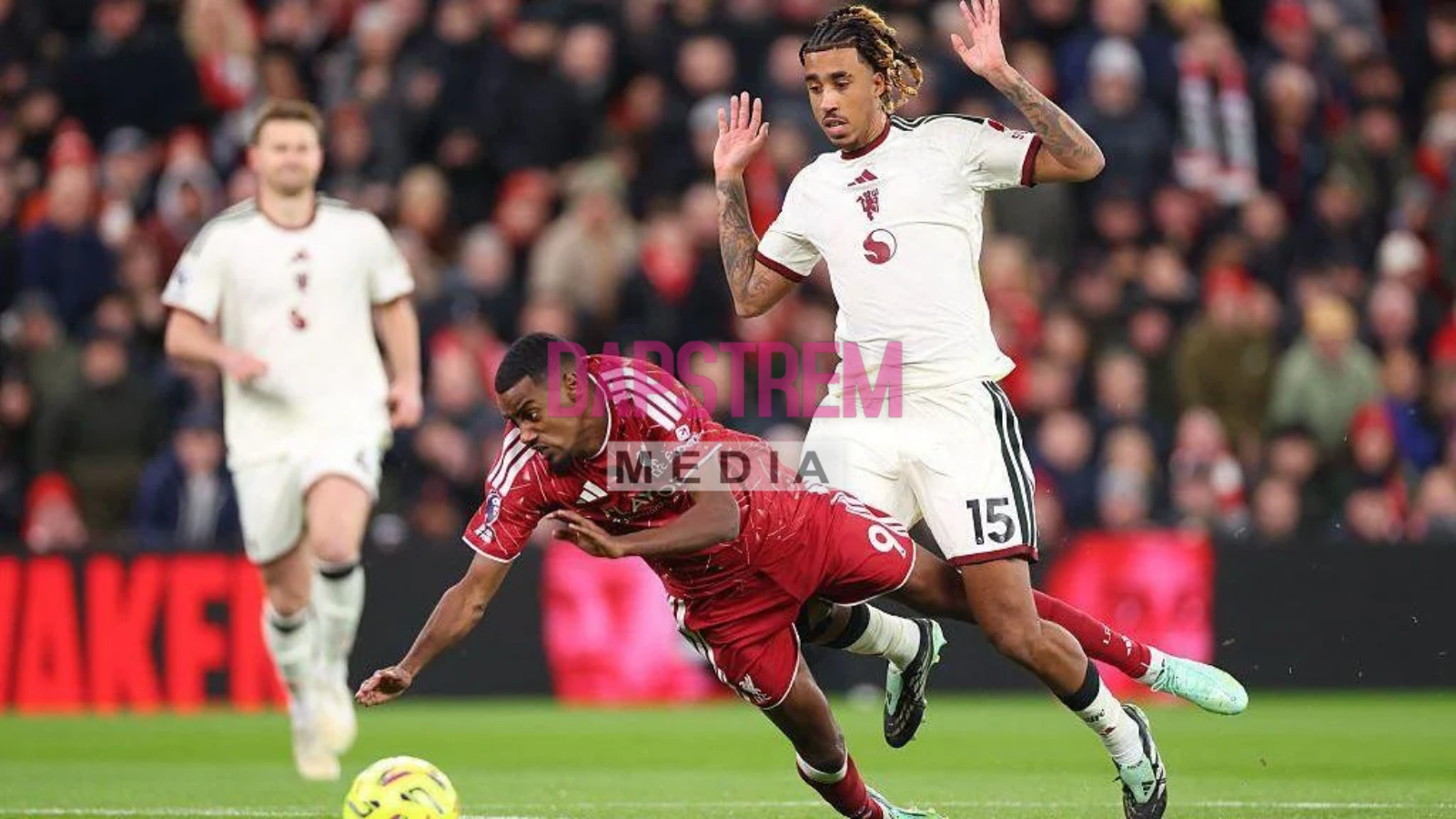
In the eighth minute, Ronald Araújo sent a ball over United’s defence, allowing Isak to race towards goal. Leny Yoro brought down the Liverpool forward on the edge of the penalty area and was shown a straight red card for denying a clear goalscoring opportunity.
United were suddenly down to ten men, with a free-kick to defend.
Dominik Szoboszlai stepped forward and delivered a well-placed, driven effort into the bottom corner. Liverpool were 1–0 ahead in the 10th minute.
Three minutes later, the damage became even worse.
Rio Ngumoha produced an excellent delivery from the left, finding Florian Wirtz inside the penalty area. Wirtz executed a superb volley on the turn, sending the ball into the net via the underside of the crossbar.
Within the opening 13 minutes, Liverpool had scored twice and United had lost a defender.
It was a catastrophic start for Mauricio Pochettino, who was taking charge of his first Manchester United match. He became the first manager in Premier League history to see his team concede twice and receive a red card in the first half of his opening game in charge.
Liverpool smelled blood, and United had no answers
The two-goal advantage and numerical superiority allowed Liverpool to dictate the tempo.
Their passing was sharper, their movement more purposeful and their attacking combinations increasingly difficult for United to contain.
United goalkeeper Senne Lammens was forced into several interventions as Liverpool continued to create opportunities. Ngumoha remained a constant threat, while Isak and Szoboszlai also tested the visitors’ defensive resistance.
United attempted to find a response, but their attacking threat was limited. Bruno Fernandes came close with a free-kick, while the team struggled to maintain possession and move forward with any sustained purpose.
The problem was not simply the absence of one player. United’s defensive organisation looked fragile, their midfield struggled to impose itself, and their ability to recover possession was severely compromised.
Liverpool, meanwhile, played with the confidence of a side that understood exactly where its opponent was vulnerable.
The second half: No mercy from the Reds
The home side continued to dominate possession and stretch the ten-man visitors.
In the 66th minute, the third goal arrived.
Barcola burst forward down the right flank, using his pace to penetrate the United defence before squaring the ball across the penalty area. Ngumoha was perfectly positioned to finish first time.
At just 18 years old, the youngster had delivered a performance that announced his arrival on one of English football’s biggest stages.
There was still time for another blow.
In the 82nd minute, substitute Víctor Muñoz completed the demolition. Liverpool won possession high up the pitch, Wirtz collected the ball and supplied the winger, who finished clinically past Lammens.
Liverpool 4, Manchester United 0.
Even in stoppage time, United could not find consolation. Fernandes was denied by an excellent one-on-one save from Alisson Becker, preserving Liverpool’s clean sheet.
The final whistle confirmed a thoroughly miserable afternoon for the visitors. The attendance was 60,343.
Pochettino’s baptism of fire exposes Manchester United’s crisis
For Pochettino, the defeat could hardly have come at a worse time.
Taking charge of Manchester United carries enormous expectations, but inheriting a team struggling defensively and mentally presents an entirely different challenge.
The Argentine manager must now confront a defence that has become alarmingly vulnerable. According to the post-match statistics, United have conceded 34 goals in 16 matches across all competitions this season, the highest tally among clubs in Europe’s five major domestic leagues.
Their Premier League position is equally worrying: 19th, with only eight points after 11 matches and just one league victory.
Former United captain Gary Neville was particularly scathing in his assessment, describing the club’s failure to adequately strengthen its defence as negligent.
His criticism centred on the club’s recruitment, defensive planning and the repeated mistakes that have continued to undermine the team.
Pochettino’s immediate challenge is therefore much bigger than correcting one poor performance. He must restore confidence, improve defensive organisation and convince a struggling dressing room that the club can still turn its season around.
Liverpool’s young stars steal the show
While Manchester United will want to forget the afternoon, Liverpool have plenty of reasons to celebrate.
Florian Wirtz was particularly influential, scoring a spectacular goal and creating the fourth. His creativity and ability to operate between the lines gave United’s depleted defence constant problems.
Rio Ngumoha was another outstanding performer. His contribution to the first-half goal and his second-half strike demonstrated the exciting attacking potential Liverpool possess.
Szoboszlai also deserves recognition for his early free-kick, which set the tone for the afternoon.
For manager Andoni Iraola, the victory was an important statement. Liverpool had not simply beaten their fiercest rivals; they had demonstrated the attacking quality, intensity and confidence needed to compete at the highest level.