Blame Genetics, Not Diapers: Experts Dismiss Claims Linking Disposable Nappies to Small Genital Development in Boys
A debate over male physical development has emerged in parts of the Mt Kenya region after Kikuyu elders raised concerns about what they described as unusually small genital organs among boys undergoing traditional initiation. The elders questioned whether prolonged use of disposable diapers, changing parenting practices and modern lifestyles could be affecting the development of young boys.
Their remarks sparked widespread public discussion, attracting reactions from parents, medical professionals and social media users. While some supported the elders’ concerns about modern childcare practices, health experts moved to challenge the suggestion that diapers were responsible for the alleged changes.
Urologist Dr Shirley Achoka dismissed the claims, explaining that there is no established scientific evidence linking the use of disposable diapers to reduced penis size or impaired genital development. She said genetics and hormonal changes play a much more significant role in determining how male reproductive organs develop.
The discussion has therefore brought together two different perspectives: cultural observations from elders involved in traditional initiation programmes and medical explanations based on human growth and development. At the centre of the debate is an important question about how boys develop physically and whether modern childcare practices have any influence on that process.
What triggered the elders’ concern?
The debate followed traditional circumcision and initiation ceremonies held in Kiambu County, where members of the Kikuyu cultural organisation Kiama Kia Ma said they had observed what they considered unusually small genital organs among some boys who underwent initiation.
One of the events took place at Hillcrest Academy in Kanunga village, where more than 100 boys participated in the circumcision programme. Kimando wa Kagwe, the Kiama Kia Ma chairman in Kiambu Sub-County, said the observations had raised concerns among elders and people involved in preparing boys for the transition into adulthood.
The elders argued that some of the boys appeared to have smaller genital organs than expected for their ages. They questioned whether modern childcare practices, particularly the prolonged use of disposable diapers, could be contributing to the situation.
Their concerns were also linked to the changing lifestyles of families. Some elders argued that children today spend more time wearing diapers and tight clothing than previous generations, raising questions about whether such practices could interfere with natural physical development.
Circumcision expert Dr Mwangi Muiruri was among those who questioned prolonged diaper use. He suggested that parents should limit the practice to situations where it is necessary, such as travelling or visiting other places, and allow boys to wear loose-fitting clothing at home.
The elders also raised concerns about parents leaving children in wet or soiled diapers for extended periods. They encouraged families to pay greater attention to children’s hygiene and general care.
However, the observations made during the initiation ceremonies have not established that diapers cause reduced genital development. Medical experts say that noticing physical differences among boys does not, by itself, prove that a particular childcare practice is responsible.
Urologist explains the role of genetics and hormones
Responding to the claims, urologist Dr Shirley Achoka said there was no published research establishing a relationship between disposable diaper use and penis size.
She explained that genetics is one of the primary factors determining the size of male reproductive organs. Inherited characteristics contribute to natural physical differences among individuals, meaning boys from the same age group may not necessarily have identical development.
According to Achoka, genetic variation within families and populations helps explain why physical characteristics differ from one person to another. She cautioned against assuming that a boy’s physical development has been affected simply because his appearance differs from that of his peers.
Hormones are another major factor in male development. Achoka explained that testosterone and other hormonal processes influence genital growth, particularly during puberty.
Boys do not all enter puberty at exactly the same age or experience physical changes at the same pace. Some may begin developing earlier, while others take longer before experiencing noticeable changes. This variation can make boys of similar ages appear physically different.
The urologist noted that younger boys generally have smaller genital organs and that growth becomes more noticeable as they progress through puberty. Therefore, comparing boys who may be at different stages of development can create misleading conclusions about whether their growth is normal.
Her explanation challenges the suggestion that wearing diapers during infancy determines the size a boy will have during adolescence or adulthood. Instead, she pointed to inherited characteristics and hormonal development as more important influences.
Achoka also noted that temperature can temporarily affect the appearance of the penis. Changes in temperature may cause the organ to contract or appear smaller, including in adult men. Such temporary changes should not be confused with permanent differences in development.
Body weight can also influence how much of the penis is visibly exposed. In people carrying excess weight around the lower abdomen and pubic area, some of the shaft may be concealed by surrounding tissue, making it appear shorter than it actually is.
These explanations demonstrate why visual observations alone cannot reliably establish whether a boy has a medical condition or a developmental problem.
Nutritionist introduces another perspective
The debate also attracted the attention of paediatric nutritionist Kathomi, who challenged the elders’ claims and argued that poor child-feeding practices deserved attention instead of blaming disposable diapers.
In her response, Kathomi maintained that diapers were not responsible for the concerns raised during the circumcision ceremonies. She encouraged the elders to consider research and evidence relating to children’s nutrition, breastfeeding and general feeding practices.
Her comments introduced another dimension to the discussion, particularly around the importance of proper nutrition during childhood.
Adequate nutrition is essential for children’s overall growth and development. Children require balanced diets that provide the nutrients needed for healthy bones, muscles, organs and other body systems. Poor feeding practices can contribute to growth problems and other health complications.
However, it is important to distinguish general physical development from the specific question of penis size. While nutrition plays a role in a child’s overall health, the claims made during the debate do not establish that poor feeding practices are directly responsible for smaller genital organs.
The discussion therefore highlights the need for parents and community leaders to seek qualified medical guidance rather than relying on assumptions about the causes of physical differences.
Kathomi’s intervention also demonstrates how discussions about children’s health can benefit from collaboration between cultural leaders, nutritionists and medical practitioners.
Why the debate has attracted public attention
The issue has generated considerable discussion because it touches on several sensitive subjects, including parenting, traditional circumcision, male development and the influence of modern lifestyles on children.
For many families, disposable diapers have become an essential part of childcare. They offer convenience, help parents manage hygiene and make it easier to care for infants, particularly in households where parents have demanding work schedules.
The elders’ remarks have therefore raised questions among parents who regularly use disposable diapers. Some may wonder whether they should change their childcare practices to protect their children’s future health.
However, medical professionals have cautioned against drawing conclusions without scientific evidence. There is currently no established research supporting the claim that ordinary diaper use causes permanent reduction in penis size or prevents normal genital growth.
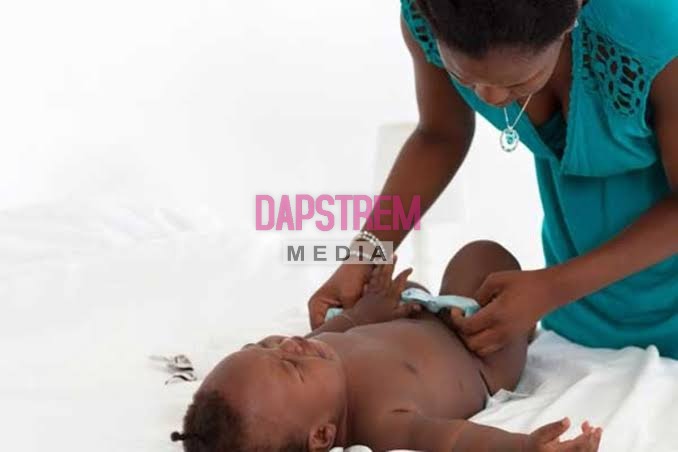
Parents should continue observing appropriate hygiene practices, changing diapers regularly and ensuring that children are comfortable. Proper diaper use is important for preventing problems such as skin irritation and diaper rash, but it should not be confused with the factors responsible for genital development.
The discussion has also attracted jokes and reactions on social media, with some users turning the subject into entertainment. Nevertheless, the issue concerns children and their physical development, making it important to approach it responsibly.
Young boys should not be embarrassed, ridiculed or subjected to comparisons because of their bodies. Physical development varies, and public discussions that make children feel inadequate can have lasting emotional consequences.
The importance of understanding puberty
One of the most important issues raised by the debate is the need for parents to understand the different stages of male puberty.
Puberty is a natural process through which a child’s body gradually develops into an adult body. In boys, hormonal changes trigger several physical developments, including growth of the reproductive organs, changes in voice, increased body hair and changes in muscle mass.
These changes do not happen at the same time for everyone. Some boys experience puberty earlier than their classmates, while others develop later.
This difference can be particularly noticeable among boys in the same school grade. Although they may have similar ages, their bodies could be at completely different stages of physical development.
The boys mentioned in the elders’ observations were reportedly in Grade Nine. At that age, some may have already experienced significant pubertal changes, while others may still be progressing through earlier stages.
This makes it difficult to draw conclusions about their development based purely on observations made during an initiation ceremony.
Medical professionals can assess whether a child is developing normally by considering factors such as age, growth patterns, hormonal development and physical examination. Where necessary, further investigations can help identify underlying medical conditions.
Parents who have concerns about delayed puberty or unusual genital development should seek advice from qualified healthcare professionals instead of relying on comparisons with other children.
Cultural traditions and modern medical knowledge
The discussion has also highlighted the relationship between traditional practices and modern medical knowledge within the Kikuyu community.
Traditional circumcision and initiation ceremonies have historically played an important role in preparing boys for adulthood. Beyond the physical procedure, these programmes often involve counselling, discipline, moral education and guidance on responsibilities within the community.
Elders involved in these programmes frequently use their experience to guide younger generations. Their observations can help bring attention to issues affecting children and families, particularly where communities are experiencing changes in parenting practices and lifestyles.
However, medical explanations are essential when discussing questions involving human anatomy, hormones and physical development.
Cultural experience and medical research can complement each other, but claims involving children’s health should be supported by reliable scientific evidence. Observations made during circumcision ceremonies may raise questions worth investigating, but they cannot independently establish the medical causes of physical differences.
The current debate provides an opportunity for cultural leaders to work with paediatricians, urologists and other health professionals to educate parents about childhood development.
Such cooperation could help address genuine health concerns while preventing misinformation from spreading within communities.
Parents urged to prioritise children’s health
Although the diaper debate has attracted much of the attention, the broader message for parents is the importance of providing children with proper care throughout their development.
Parents should ensure that boys receive balanced nutrition, regular healthcare and appropriate hygiene. They should also pay attention to changes in their children’s physical development and seek professional advice whenever they have concerns.
There is no need for parents to abandon disposable diapers because of unproven claims about genital growth. Instead, they should focus on using them appropriately, changing them regularly and maintaining good hygiene.
Parents should also create an environment where children can ask questions about their bodies without fear of embarrassment or punishment. As boys approach adolescence, age-appropriate conversations about puberty, personal hygiene and reproductive health become increasingly important.
Healthcare professionals can also help parents understand the difference between normal developmental variation and medical conditions that may require treatment.
Ultimately, the debate should not become an opportunity to shame children or criticise parents who use modern childcare products. It should encourage informed conversations about children’s health and the importance of relying on evidence when making medical claims.
The concerns raised by Kikuyu elders over the alleged small genital sizes of boys undergoing initiation have sparked a wider debate about modern parenting and male physical development.
While some elders linked their observations to prolonged use of disposable diapers, urologist Dr Shirley Achoka has dismissed the suggestion, explaining that genetics and hormonal changes play a much greater role in determining penis size. She also highlighted the influence of puberty, temperature and body weight on physical appearance.
Paediatric nutritionist Kathomi has separately challenged the diaper theory and urged attention to proper child-feeding practices.
The discussion has highlighted the importance of separating cultural observations from medically established facts. Although parents should maintain proper childcare and hygiene practices, there is no established scientific evidence that disposable diapers permanently reduce penis size.
For now, experts’ explanations point to genetics and hormonal development rather than diapers as the major factors influencing male genital growth. Parents are encouraged to seek professional medical advice when concerned about their children’s development instead of relying on speculation or comparisons.