Nearly 700,000 People Displaced as Moyale Conflict Triggers Humanitarian Crisis in Southern Ethiopia
The conflict in southern Ethiopia has escalated into a major humanitarian emergency, with nearly 700,000 people forced to flee their homes following violent clashes between members of the Oromo and Ethiopian Somali communities. The violence, which has spread across several areas near the borders of Kenya and Somalia, has destroyed homes, disrupted essential services and left thousands of families struggling to find safety.
According to humanitarian organisation Islamic Relief Ethiopia, approximately 688,800 people have been displaced by the fighting, which has centred on the border town of Moyale. The organisation has warned that the crisis is deepening and that hundreds of thousands of affected residents urgently need humanitarian assistance.
The latest figures reveal the scale of the unfolding emergency. About 329,000 people have reportedly been displaced from Dawa Zone in Ethiopia’s Somali Region, while another 359,798 people have fled their homes across southern Oromia. The violence has reportedly spread as far as 300 kilometres from Moyale, affecting communities well beyond the initial areas of confrontation.
Islamic Relief Worldwide+2
The displacement has created a difficult situation for families who have been forced to abandon their homes, businesses, farms and livestock in search of safety. Many have reportedly left with very few belongings, uncertain about when they will return or whether they will find their properties still standing.
How the Moyale conflict began
The fighting involves members of the Oromo and Ethiopian Somali communities, two groups living in regions that share a boundary in southern Ethiopia. The latest escalation is connected to longstanding territorial and administrative disagreements around Moyale, a strategically important border town.
The town occupies a significant position along the Ethiopia-Kenya border and has historically been important for cross-border trade, movement of people and pastoralist livelihoods. Its strategic location and economic potential have made questions surrounding territorial administration particularly sensitive.
The latest violence reportedly began in October following renewed tensions over control of the town and competing territorial claims. The situation escalated into sustained clashes, with reports of armed confrontations and destruction of property.
Earlier reports linked the tensions to a dispute surrounding the display of the Somali regional state flag in Moyale. The disagreement reportedly intensified after the opening of a Somali regional administrative office and the killing of a 13-year-old girl, which further heightened tensions.
Although local elders and community representatives attempted to intervene, efforts to contain the violence have struggled to produce a lasting solution. The situation has also raised questions about the ability of regional and federal authorities to prevent territorial disagreements from developing into wider confrontations.
The fighting has since spread into surrounding districts, including parts of Borana Zone, creating insecurity among communities that previously depended on peaceful relations and movement across the region.
The Eastleigh Voice+2
Hundreds of thousands left without homes and basic services
The consequences of the conflict have extended far beyond the immediate fighting. Islamic Relief says homes, businesses and fuel stations have been destroyed or burned, leaving many families without shelter and removing important sources of income from affected communities.
For families who depend on small businesses, livestock and local trade, the destruction has created an additional economic crisis. People who previously earned a living through trading, farming, herding animals or providing services now face uncertainty over how they will support themselves.
The destruction of homes has also increased the pressure on communities receiving displaced families. Relatives and neighbours may provide temporary shelter, but many households are already struggling with limited resources. As more people arrive seeking assistance, the availability of food, clean water, sanitation facilities and accommodation becomes increasingly strained.
Essential services have also been severely affected. Health facilities, nutrition programmes, water supplies and sanitation services have experienced significant disruption, according to Islamic Relief. This creates serious risks for people who need regular medical attention, pregnant women, children and older residents.
The interruption of healthcare services is particularly concerning because displaced families often face increased exposure to illness. Overcrowded shelters, limited access to clean water and poor sanitation can create conditions in which infectious diseases spread more easily.
Children are among those most affected by the crisis. Many have been separated from familiar surroundings, forced to abandon their schools and exposed to the emotional consequences of violence and displacement. Their education, health and general wellbeing could suffer long after the immediate fighting ends.
The humanitarian organisation has warned that many displaced families will require sustained support before they can safely return to their homes.
Islamic Relief Worldwide+2
Kenya faces growing pressure as thousands cross the border
The crisis has also spilled into neighbouring Kenya, where approximately 50,000 people have reportedly crossed the border from Ethiopia in search of safety and humanitarian assistance.
The influx has placed additional pressure on communities in Moyale Sub-County, Marsabit County, where local resources were already limited. Families fleeing the violence have sought refuge with relatives, in temporary accommodation and in other locations where they can find protection.
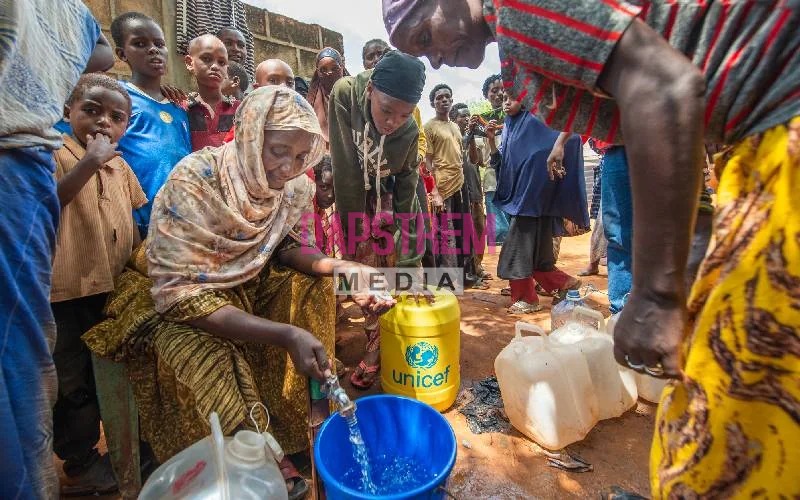
The situation has created an urgent need for food, clean water, shelter, healthcare and sanitation services. Host communities have also had to share their limited resources with people arriving from across the border.
The humanitarian impact is particularly serious because the wider region already faces challenges associated with poverty, limited infrastructure and recurring shortages of essential services. A sudden arrival of tens of thousands of people can overwhelm facilities that were not designed to accommodate such a large population.
Women and children make up a significant proportion of those seeking safety in Kenya. Their circumstances raise additional protection concerns, particularly where families are separated, accommodation is overcrowded or access to healthcare and basic supplies is limited.
Earlier reports from the United Nations and humanitarian partners indicated that many arrivals were staying with host families, while others were accommodated in temporary sites, public buildings and open spaces. Such arrangements can offer immediate protection but are difficult to sustain without adequate assistance.
The displacement has therefore become a cross-border humanitarian challenge requiring cooperation between the Kenyan and Ethiopian governments, international organisations and local humanitarian agencies.
The Eastleigh Voice+2
European Union releases emergency funding
As the humanitarian situation continues to develop, international partners have begun mobilising resources to support people affected by the violence.
On November 19, the European Union announced €550,000, equivalent to approximately KSh78 million, in emergency humanitarian assistance for people displaced by the conflict. The funding is intended to support the response in Kenya through the United Nations High Commissioner for Refugees (UNHCR) and the Kenya Red Cross Society.
The assistance will help provide essential services, including food, shelter, clean water and healthcare, to people who have fled the violence and crossed into Kenya.
The funding is an important intervention, particularly given the pressure facing host communities in Marsabit County. However, the scale of the displacement means that additional resources will likely be required to meet the needs of affected families.
Humanitarian agencies must also consider the needs of people who remain displaced within Ethiopia. While assistance directed towards those who have crossed into Kenya is necessary, hundreds of thousands of people inside Ethiopia also require shelter, food, healthcare and protection.
The emergency response will therefore depend on continued coordination between governments, humanitarian organisations and international donors.
The Eastleigh Voice+1
Islamic Relief prepares assistance for affected communities
Islamic Relief Ethiopia has said it is working to respond to the growing humanitarian needs, with plans to provide cash assistance, hygiene kits and psychosocial support to people affected by the conflict.
Cash assistance can help displaced families purchase essential supplies according to their immediate needs. For households that have lost their sources of income, such support may provide an important lifeline as they attempt to rebuild their lives.
Hygiene kits are also essential in displacement settings, where access to sanitation facilities and personal hygiene products can be limited. Providing these supplies can help protect families from health risks associated with overcrowded living conditions.
Psychosocial support is another important part of the response. People who have witnessed violence, lost relatives or watched their homes destroyed may experience significant emotional distress. Children, in particular, may struggle to cope with the sudden disruption of their lives.
Kedir Musema Hameza, head of programmes at Islamic Relief Ethiopia, said vulnerable civilians were bearing the greatest cost of the conflict.
He described the situation as a serious humanitarian emergency and appealed for additional funding to support suffering communities. He also indicated that the organisation had received reports from local sources suggesting that the fighting had subsided, while United Nations teams were travelling to assess the condition of displaced populations and the damage caused.
However, reports of a temporary reduction in fighting do not necessarily mean that affected communities can immediately return home. Families need assurances that their areas are safe, essential services are functioning and the risk of renewed violence has been reduced.
Islamic Relief’s response will therefore be important in addressing immediate needs while humanitarian agencies assess what additional assistance is required.
Islamic Relief Worldwide+1
Conflict threatens trade and livelihoods across the border region
Beyond the immediate humanitarian consequences, the Moyale conflict threatens economic activities across one of the important commercial corridors connecting Ethiopia and Kenya.
Moyale is strategically positioned along the Nairobi-Addis Ababa highway, a major route supporting the movement of goods and people between the two countries. The conflict has disrupted cross-border trade and created uncertainty for traders, transport operators and businesses that depend on regular movement along the route.
When insecurity affects a major border town, the consequences can spread across the wider economy. Transporters may avoid affected areas, businesses may suspend operations and traders can lose access to markets. Delays in the movement of goods can also increase costs for businesses and consumers.
Pastoralist communities are also facing serious challenges. Many families in the region depend on livestock for food, income and their general livelihoods. Displacement can separate families from their animals, disrupt access to grazing land and water sources, and make it difficult for herders to continue their usual activities.
For households that have lost homes and businesses, returning to normal life may take considerable time even after security improves. Rebuilding destroyed property, replacing livestock and restoring access to markets will require financial resources and sustained support.
The conflict therefore risks creating long-term economic hardship in an area where many residents already depend on fragile livelihoods.
Calls for peace and a lasting solution
The latest displacement figures have renewed attention on the need for a lasting political and security solution to tensions between the Somali and Oromia regions.
Although the immediate priority is protecting civilians and providing emergency assistance, humanitarian intervention alone cannot resolve the underlying disagreements that have contributed to the violence.
Authorities must address the territorial and administrative disputes through dialogue, mediation and peaceful engagement with affected communities. Local elders and community leaders could play an important role in rebuilding trust, particularly because they understand the historical relationships and grievances within the region.
There is also a need for effective protection of civilians and accountability for attacks against people and the destruction of property. Communities should not be forced to live under constant fear because of disagreements over territorial boundaries or administrative control.
A sustainable peace agreement would need to address the concerns of affected communities while ensuring that no group feels excluded from decisions concerning the region. It would also require a commitment from relevant authorities to prevent further clashes and protect residents regardless of their ethnic background.
For Kenya, the developments also underline the importance of maintaining close cooperation with Ethiopia on border security and humanitarian assistance. The two countries share important economic and social connections, and instability in the border region can have consequences for both sides.
The international community will also need to maintain pressure for peaceful engagement while supporting relief operations for people who have already lost their homes and livelihoods.
A humanitarian crisis that could have lasting consequences
The displacement of nearly 700,000 people highlights the devastating consequences of unresolved conflicts in communities where territorial disagreements and competition over resources can quickly escalate into violence.
Behind the figures are families who have lost their homes, children whose education has been interrupted, business owners who have lost their investments and vulnerable residents who now depend on humanitarian assistance.
For many displaced people, the greatest challenge will not simply be finding temporary shelter. It will be rebuilding their lives after losing the security, stability and livelihoods they previously depended on.
The situation also presents a difficult test for Ethiopian authorities, humanitarian organisations and neighbouring Kenya. Their response will determine whether affected communities receive adequate protection and support as they attempt to recover from the violence.
While reports of reduced fighting offer some hope, a temporary lull cannot replace a lasting peace agreement. Without meaningful efforts to resolve the underlying disagreements, the region could remain vulnerable to renewed violence and further displacement.
For now, the immediate priority is to ensure that families fleeing the conflict receive food, clean water, shelter, healthcare and protection. Humanitarian agencies also need sufficient funding to reach communities that remain isolated or unable to access essential services.
The Moyale crisis is a reminder that civilians often pay the highest price when political, territorial and community disagreements turn violent. Nearly 700,000 people have already been forced from their homes, and thousands more remain vulnerable to the consequences of the conflict.
A lasting solution will require more than emergency relief. It will demand genuine dialogue, effective leadership, protection of civilians and a commitment to peaceful coexistence between communities on both sides of the border.