Where Is Africa Heading? Russia-Africa Relations Raise Questions About Leadership, Sovereignty and the Continent’s Future
Africa’s relationship with powerful foreign nations continues to raise difficult questions about the continent’s independence, diplomatic priorities and ability to defend its own interests. While African leaders frequently speak against foreign interference and unequal international relationships, their conduct at high-level diplomatic meetings sometimes raises questions about whether the continent is negotiating from a position of strength.
The latest debate surrounding the Russia-Africa Summit has renewed these concerns, particularly over the willingness of African leaders to challenge powerful international partners when issues affecting ordinary Africans are at stake.
At the centre of the debate is a troubling contradiction. African leaders often complain about being summoned to meetings by powerful countries, yet they continue attending such engagements, sometimes without publicly confronting their hosts over matters that directly affect African citizens.
The summit provided another opportunity for African leaders to discuss trade, security, investment, development and international cooperation with Moscow. However, it also raised questions about the treatment of Africans recruited into Russia’s war against Ukraine and whether their governments are doing enough to protect them.
For a continent that has repeatedly demanded respect, equality and sovereignty in international affairs, the question is no longer simply who invites African leaders to diplomatic meetings. It is whether those leaders are prepared to use such platforms to demand accountability and defend the interests of their people.
The Moscow summit and the question of African dignity
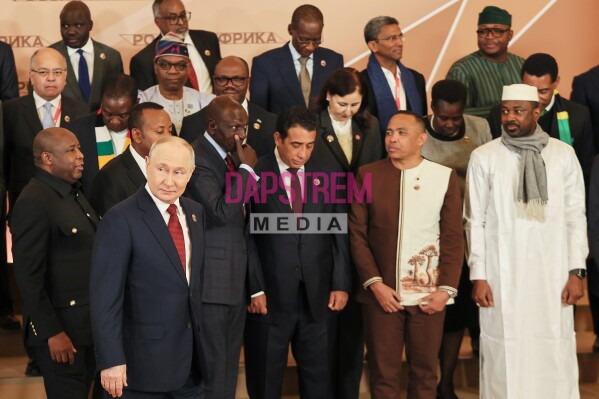
The third Russia-Africa Summit, held in Moscow on October 28 and 29, 2026, brought together delegations from 48 African countries, including 22 national leaders. Russian President Vladimir Putin used the gathering to promote closer relations with the continent and present Moscow as a more reliable partner than Western powers.
The meeting focused on trade, security, agriculture, energy, infrastructure, technology and diplomatic cooperation. Russia also sought to strengthen its influence in Africa at a time when its war against Ukraine continues to attract international criticism and Western pressure.
Putin portrayed Russia as a country interested in building equal partnerships with African states. He referred to the Soviet Union’s historical support for African liberation movements and argued that Moscow was different from former colonial powers.
He also criticised Western countries, accusing them of exploiting Africa’s resources and using debt to restrict the continent’s development. In remarks to African leaders, he spoke of what he described as active attempts by Western countries to push African nations back into debt bondage through unfavourable financial arrangements.
His message was carefully framed around Africa’s historical experience with colonialism, economic exploitation and unequal international relationships. It appealed to a long-standing frustration among African governments and citizens who believe the continent has not received fair treatment in the global economic and political system.
Putin also promised greater cooperation in technology, industrial production, agriculture, transport and infrastructure. He said Russia was prepared to support local production rather than simply purchase African raw materials.
These are issues that matter to African economies. The continent needs investment, industrialisation, affordable financing, reliable energy, infrastructure and opportunities for its growing population.
However, the important question is whether such promises will translate into measurable benefits for ordinary Africans. Diplomatic speeches can create expectations, but the real value of international partnerships is determined by the agreements signed, the jobs created, the infrastructure delivered and the economic opportunities made available to citizens.
The summit also offered Russia an opportunity to strengthen its international relationships and demonstrate that it is not isolated despite the war in Ukraine. For Moscow, African support and cooperation carry diplomatic, economic and strategic importance.
Reuters+3
The uncomfortable question of Africans fighting in Ukraine
Perhaps the most troubling issue surrounding the summit was the growing number of African nationals reportedly recruited into Russia’s war against Ukraine.
Across the continent, families have raised concerns about young men who travelled to Russia after receiving promises of employment, security work, education or attractive salaries, only to find themselves involved in a devastating military conflict.
Investigations and reports from several countries have exposed recruitment networks that allegedly target vulnerable job seekers. Some recruits reportedly travelled believing they had secured civilian employment. Others were promised training or opportunities that appeared legitimate. Once in Russia, some say they were pressured, deceived or forced into signing military contracts and sent to the battlefield.
The scale of the problem is alarming. In March 2026, Reuters reported that Ukraine estimated more than 1,700 Africans were fighting on Russia’s side, although analysts believed the actual figure could be higher. Ghana had also reported that more than 50 of its citizens had been killed after being lured into the conflict.
A report by the Africa Center for Strategic Studies published in May 2026 described an extensive recruitment pipeline involving online networks and deceptive employment offers. It warned that Africans were being exposed to human trafficking, coercion and foreign interference through recruitment schemes connected to Russia’s war effort.
Investing.com+1
Kenya has been particularly affected by the revelations. A report by the country’s intelligence agency indicated that more than 1,000 Kenyans had been recruited into Russia’s military, although the exact number of citizens involved remained unclear publicly.
Families have been left searching for missing relatives, seeking information about those reportedly deployed to the battlefield and demanding assistance from the government.
Some survivors have described travelling to Russia for civilian jobs before being handed military equipment and sent to dangerous front-line positions. Others have reportedly struggled to escape after discovering the true nature of the work they had accepted.
These accounts raise serious questions about recruitment agencies, human trafficking networks and the protection available to African citizens seeking employment abroad.
The issue is not simply about whether Africans have the right to travel to Russia or work for foreign employers. It is about whether they are being given truthful information, whether their consent is genuine and whether vulnerable individuals are being exploited to supply manpower for a war they never intended to join.
For African governments, protecting citizens abroad should be a central diplomatic responsibility. A government’s obligation to its people does not end at its borders.
Yet, despite the seriousness of the allegations, many African governments have been cautious in their public dealings with Moscow. Reuters reported in March that several governments were reluctant to adopt a confrontational approach, partly because they did not want to damage diplomatic relations with Russia or appear to take sides in the Ukraine conflict.
That caution is understandable in the complicated world of international diplomacy. However, it should never become an excuse for failing to defend citizens whose lives may be at risk.
Putin’s ice cream moment and the symbolism of diplomacy
Another moment that attracted attention during the summit was Putin’s decision to offer Russian ice cream to visiting African delegation leaders.
Footage released by the Kremlin showed the Russian president touring an exhibition alongside African representatives before offering them ice cream at a booth belonging to Russian broadcaster RT.
On the surface, it was an ordinary moment of hospitality. However, in the context of international diplomacy, even seemingly small gestures can carry political symbolism.
The image of African leaders receiving ice cream from Putin attracted attention because of the wider issues surrounding the summit. While Russia was presenting itself as a trusted partner, concerns about African recruits reportedly being sent to fight in Ukraine remained unresolved.
This created an uncomfortable contrast between the friendly public atmosphere of the gathering and the difficult experiences described by families searching for relatives who travelled to Russia.
The concern is not that African leaders should reject hospitality or refuse diplomatic courtesies. International relations involve personal engagement, cultural exchanges and symbolic gestures.
The real concern is whether such engagements provide opportunities for meaningful discussions about difficult issues or simply create attractive images that conceal unresolved problems.
Diplomacy should not be reduced to photographs, handshakes, gifts and carefully delivered speeches. Its most important purpose should be securing tangible benefits and protecting the interests of citizens.
Africa cannot continue allowing powerful nations to define its interests
One of the biggest challenges facing Africa is its continued dependence on external powers for financing, security, technology, infrastructure and access to international markets.
For decades, different global powers have competed for influence across the continent. Western countries have maintained longstanding political and economic relationships with African governments, while China has expanded its presence through infrastructure financing, trade and investment.
Russia has also increased its engagement through military cooperation, energy agreements, mining interests, agricultural exports and political partnerships.
Each power has its own interests. None should be expected to engage with Africa purely out of generosity.
The United States and European countries often present their partnerships through democracy, human rights, development assistance and trade. China emphasises infrastructure, investment and economic cooperation. Russia frequently highlights military cooperation, sovereignty and its historical opposition to Western colonialism.
These approaches differ, but they share one important feature: powerful countries pursue their national interests.
Africa must therefore develop the ability to negotiate with all of them without becoming politically dependent on any single partner.
The continent should not replace Western dependency with Russian dependency, or exchange one form of external influence for another.
A genuinely independent Africa should be able to cooperate with Moscow, Washington, Beijing, Brussels and other international partners while maintaining clear priorities of its own.
Such independence requires strong institutions, transparent agreements, accountable leadership and governments capable of rejecting arrangements that undermine their citizens’ interests.
It also requires African leaders to understand that international friendships are not substitutes for national development.
A country should not support another government’s position simply because it receives military equipment, development financing or diplomatic backing in return.
Equally, African governments should not reject beneficial partnerships simply because they come from countries with which Western governments have disagreements. The continent’s foreign policy should be guided by its own interests rather than the rivalries of powerful nations.
The contradiction in Africa’s calls for sovereignty
African leaders regularly demand a fairer international order. They call for greater representation in global institutions, an end to economic exploitation and respect for national sovereignty.
These demands are legitimate.
Africa remains underrepresented in important global decision-making institutions despite its population, natural resources and growing economic importance.
At the United Nations, the continent continues to push for meaningful representation in the Security Council. Its governments have also repeatedly called for reforms in international financial institutions, including the International Monetary Fund and the World Bank.
At the Moscow summit, Kenyan President William Ruto argued that the global order must reflect current realities and give Africa a stronger voice in international decision-making.
This is an important position. Africa should have a meaningful role in decisions affecting international peace, security, trade and finance.
However, the continent’s credibility in demanding respect internationally also depends on how its leaders defend the interests of their own citizens.
Sovereignty cannot simply mean the freedom of governments to maintain relationships with powerful countries. It must also mean the ability to protect citizens from exploitation, trafficking, deception and foreign interference.
When young Africans are reportedly recruited under false promises and sent into a war thousands of kilometres away, their governments should be able to demand answers.
When African countries enter economic agreements, citizens should know what their governments have negotiated and how those agreements will benefit them.
When foreign companies extract natural resources, African governments should ensure that local communities receive fair benefits and that environmental and labour standards are respected.
The language of sovereignty must therefore translate into practical protection, economic opportunity and accountable governance.
Africa’s diplomatic problem is bigger than Russia
It would be misleading to present the concerns surrounding the Moscow summit as a problem involving Russia alone.
Africa has a much wider challenge with the way it engages powerful international partners.
For decades, the continent has experienced relationships in which external interests have sometimes taken priority over local development.
Natural resources have been extracted without sufficient benefits reaching surrounding communities. Loans have financed projects whose economic returns have sometimes failed to justify their costs. Political and military partnerships have also created difficult questions about accountability and national independence.
At the same time, African governments have not always demonstrated the institutional strength necessary to negotiate better arrangements.
Weak governance, corruption, political instability and poor accountability have made it easier for external actors to exploit existing divisions and pursue their interests.
The problem is therefore not simply that foreign powers are influential. It is also that African institutions have sometimes struggled to protect the continent’s interests.
A strong Africa would approach every international relationship with clear priorities, technical expertise and the confidence to say no when necessary.
It would not need to choose between Russia and the West. It would engage both while insisting on fair terms.
It would also avoid allowing foreign governments to use Africa as a battleground for geopolitical competition.
The continent has enough domestic challenges to address without becoming an extension of rivalries between major world powers.
What African leaders should be demanding
The Russia-Africa Summit should have provided an opportunity for African leaders to raise difficult questions alongside discussions about trade, security and investment.
The recruitment of African nationals into Russia’s military should be treated as a serious diplomatic and humanitarian concern.
African governments should demand transparency about recruitment practices, investigate suspected trafficking networks and strengthen the protection of citizens travelling abroad for employment.
They should also establish effective systems for assisting nationals who find themselves trapped in dangerous circumstances overseas.
Kenya, Ghana, South Africa and other affected countries have a particular responsibility to cooperate in investigating recruitment networks, sharing information and pursuing those involved in deception and exploitation.
African leaders should also demand that foreign governments respect their citizens’ rights, regardless of the political or military relationships between states.
Beyond the recruitment issue, African governments must ensure that economic agreements produce measurable benefits.
Promises of investment should be followed by clear financing arrangements, implementation timelines, employment opportunities and transparent accountability mechanisms.
Partnerships involving mining, energy, agriculture and infrastructure should prioritise local value addition rather than leaving African economies dependent on exporting unprocessed raw materials.
The continent also needs to strengthen regional cooperation. Individual African countries negotiating separately with powerful nations may struggle to secure favourable terms compared with a united regional bloc.
The African Union and regional economic communities should therefore play a stronger role in coordinating diplomatic and economic priorities.
A united Africa would have greater bargaining power and a better opportunity to influence international decisions.
Where is Africa heading?
The question raised by the Moscow summit goes beyond whether African leaders should attend meetings hosted by powerful countries.
Africa needs international partnerships. It needs investment, technology, infrastructure, trade, education and security cooperation. There is nothing inherently wrong with maintaining strong relationships with Russia or any other global power.
The problem emerges when diplomatic engagement becomes an exercise in pleasing powerful partners rather than advancing the interests of African citizens.
African leaders cannot continue demanding respect while avoiding difficult conversations whenever those conversations risk upsetting influential international partners.
They cannot speak passionately about sovereignty while young citizens are reportedly deceived into travelling abroad and ending up on foreign battlefields.
They cannot condemn colonial exploitation while failing to scrutinise modern economic arrangements that may leave their countries dependent and vulnerable.
The continent must move beyond symbolic diplomacy and embrace a more confident, coordinated and accountable foreign policy.
The future of Africa should not be determined in Moscow, Washington, Beijing, London or Brussels. Those capitals will continue pursuing their national interests, as they should.
Africa’s responsibility is to define its own.
The continent has a young population, vast natural resources, significant agricultural potential and enormous opportunities for industrialisation. Its 54 countries also possess considerable collective influence in international institutions.
What remains essential is leadership capable of turning these advantages into genuine economic and political power.
The Moscow summit has once again exposed the contradiction between Africa’s ambitions and its diplomatic conduct. The continent wants respect, but respect must also be demanded through action.
Ultimately, the question is not whether African leaders should shake hands with Putin, accept his hospitality or listen to his criticism of the West.
It is whether they can sit across the table from any powerful leader and confidently ask the difficult questions on behalf of the people they represent.
Africa does not need to choose a master between East and West. It needs leaders prepared to put Africa first.