Kenyan Man Francis Mogambi Arrested in US Over KSh2.6 Million Student Loan Fraud
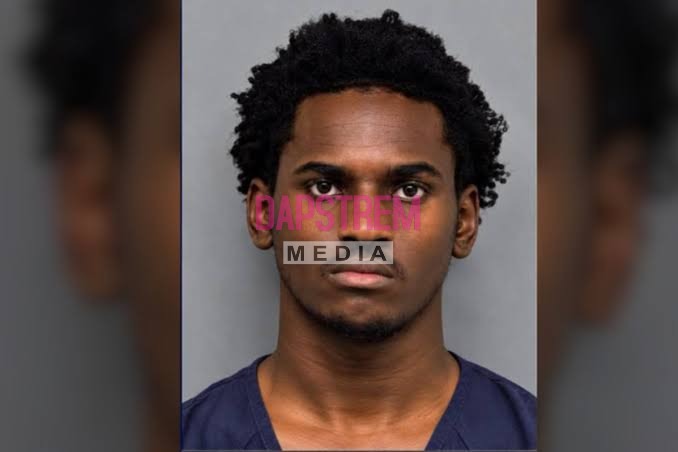
A Kenyan national, Francis Smith Mogambi, has been arrested in the United States over allegations that he used stolen identities belonging to American citizens to obtain student financial assistance through fraudulent college enrolments.
Mogambi, who was living in Lincoln, Nebraska, is accused of participating in a scheme that involved enrolling unsuspecting Americans in online colleges without their knowledge and collecting government-funded student financial aid in their names.
The investigation initially attracted attention after police in Nebraska uncovered approximately $20,397 (about KSh2.56 million) in allegedly forged student aid cheques linked to Mogambi.
However, the case has since expanded into a wider federal investigation targeting networks accused of stealing American identities and exploiting the country’s education funding system.
On October 29, 2026, the United States Department of Justice announced that Mogambi had been indicted on ten federal counts relating to the alleged theft of government money and aggravated identity theft.
The charges form part of a nationwide investigation known as Operation Ghostbusters, which targets criminal networks accused of creating fictitious students to fraudulently obtain federal education assistance.
According to the US Department of Justice, Mogambi allegedly worked with associates in Kenya to obtain personal information belonging to American citizens, use the identities to enrol fictitious students in educational institutions and redirect financial aid payments.
Prosecutors allege that he retained 30 per cent of the proceeds and transferred the remaining money to his co-conspirators in Kenya.
The case has raised concerns about the growing threat of identity theft and international financial fraud, particularly schemes that exploit digital education systems and government assistance programmes.
How the alleged student loan fraud was uncovered
The investigation into Mogambi began after authorities in Nebraska received information about suspected fraudulent student financial aid transactions.
According to an arrest affidavit cited by the Daily Nation, the Lincoln Police Department was contacted in April after a report of suspected fraud was made at the University of Nebraska-Lincoln Student Union.
Investigators subsequently received information from a witness who was familiar with the alleged operation.
The witness reportedly told police that Mogambi had been receiving financial aid cheques issued in the names of individuals allegedly enrolled in online colleges without their knowledge.
Rather than the money being delivered to the purported students, the cheques were allegedly endorsed to Mogambi and deposited into his personal bank accounts.
Police began examining the transactions and reviewing documents connected to different colleges and universities.
Investigators reportedly discovered that several cheques issued in the names of different students had been endorsed for payment to Mogambi.
The cheques allegedly carried signatures that appeared similar and were suspected to have been written by the same individual.
According to the affidavit, some of the documents were linked to institutions including Grand Canyon University, American Public University, Colorado Technical University, Ultimate Medical Academy and Chemeketa Community College.
The findings raised questions about how several individuals who supposedly attended different educational institutions could have their student aid payments directed to the same person.
Investigators subsequently obtained financial records from several banks to establish the extent of the transactions.
The institutions included Bank of America, Wells Fargo, US Bank and Chase Bank.
After reviewing the financial records and cheque documents, police established that approximately $20,397, equivalent to about KSh2.56 million, had been obtained through the allegedly forged cheques.
How fake students were allegedly enrolled in American colleges
According to the federal indictment, the alleged scheme involved obtaining personal information belonging to American citizens and using it to create fraudulent student applications.
The suspects allegedly used stolen identities to enrol individuals in educational institutions without their knowledge or consent.
These fictitious students are commonly described as ghost students because they appear in institutional records but do not genuinely participate in their education.
After the fraudulent enrolments, applications for federal student financial assistance were allegedly submitted using the stolen identities.
Once the applications were processed and the financial aid approved, payments were issued in the names of the purported students.
The money was then allegedly redirected to accounts controlled by the suspects.
In some instances, institutions reportedly issued cheques representing financial aid refunds after deducting tuition and other education-related charges.
Investigators allege that Mogambi received and deposited some of these payments into his personal accounts.
The scheme allegedly allowed criminal networks to access government funds intended to support genuine students seeking financial assistance for higher education.
The Federal Student Aid programme is administered by the US Department of Education through the Free Application for Federal Student Aid, commonly known as FAFSA.
The programme allows eligible students to apply for different forms of financial assistance, including federal grants and loans.
However, investigators say criminals have exploited the system by creating fraudulent applications and enrolling individuals who never intended to attend the institutions.
The alleged operation therefore targeted not only the American government but also citizens whose personal information was used without their permission.
Mogambi allegedly offered another person $2,000 weekly
One of the most striking details contained in the investigation concerns allegations that Mogambi attempted to recruit another individual into the suspected fraud operation.
According to the federal indictment, Mogambi allegedly discussed the scheme openly and told an individual that he received approximately $2,000 every week.
The amount is equivalent to roughly KSh259,000 at the exchange rate used in the earlier reporting.
The indictment further alleges that Mogambi sought to establish a business that would allow him to cash larger cheques without attracting tax obligations.
The witness who spoke to Nebraska police had earlier reported that Mogambi offered to pay him approximately $2,000 weekly to participate in the alleged operation.
Investigators also reportedly recovered photographs of cheques and other documents from Mogambi’s residence.
The evidence is expected to form part of the prosecution’s case as proceedings continue.
The allegations suggest that the suspected operation may have involved recruiting additional individuals to facilitate the collection and movement of financial aid payments.
However, the prosecution will still be required to establish the circumstances surrounding the alleged recruitment attempt and the individual responsibilities of those involved.
Ten federal charges announced against the Kenyan
On October 19, 2026, a federal grand jury in Nebraska returned a ten-count indictment against Mogambi.
The indictment contains five counts of theft of government money and five counts of aggravated identity theft.
According to the US Department of Justice, the alleged offences occurred between November 2025 and May 2026.
Prosecutors claim that Mogambi worked with associates in Kenya to obtain stolen American identities and use them to fraudulently access federal student assistance.
He is accused of retaining 30 per cent of the proceeds while transferring the remaining money to associates in Kenya.
The federal indictment also places the alleged financial loss at approximately $20,000 in intended losses for the Nebraska case.
This figure is close to the $20,397 in allegedly forged cheques established during the earlier Nebraska police investigation.
Mogambi was arrested after the federal charges were filed and detained pending trial.
The court reportedly considered his risk of failing to appear and the potential threat he posed to the public when making the detention decision.
The charges are serious because aggravated identity theft and theft of government money carry significant penalties under American federal law.
However, an indictment does not amount to a conviction. Mogambi remains presumed innocent unless the prosecution proves the charges against him in court.
How Mogambi entered the United States
The Justice Department also provided details about Mogambi’s immigration history.
According to the department, he entered the United States on May 15, 2024, after winning the Diversity Visa lottery.
He was issued a Diversity Visa, commonly known as a Green Card lottery visa, and subsequently received a permanent resident card.
The Diversity Visa programme allows eligible individuals from countries with historically lower rates of immigration to the United States to apply for permanent residency through a lottery system.
Mogambi’s immigration history has attracted attention because the alleged offences occurred after his arrival in the country.
The Justice Department included the information as part of its announcement detailing the federal case.
His immigration status, however, is separate from the criminal allegations, which will be determined through the judicial process.
Kenyan associates allegedly received part of the proceeds
The investigation has also raised questions about the alleged involvement of individuals operating from Kenya.
According to prosecutors, Mogambi did not act alone but worked with associates who allegedly helped obtain the personal information used to create fraudulent student applications.
The prosecution claims that after receiving the financial aid payments, Mogambi retained a portion and transferred the remainder to his co-conspirators in Kenya.
This aspect of the case has placed attention on the international nature of the alleged operation.
Investigators believe the suspected network relied on individuals operating in different locations to obtain identities, submit applications, receive payments and transfer money across borders.
The Justice Department has indicated that investigations into Kenyan connections are ongoing.
Kenya’s Directorate of Criminal Investigations, Asset Recovery Agency and Office of the Director of Public Prosecutions are among the local institutions assisting American authorities in the wider investigation.
The cooperation is intended to help identify suspects, trace financial transactions and recover funds allegedly obtained through fraudulent activities.
Operation Ghostbusters expands US crackdown on student aid fraud
Mogambi’s case forms part of a much larger American investigation known as Operation Ghostbusters.
The operation was launched to investigate suspected networks exploiting the federal student financial aid system through fake student accounts and stolen identities.
On October 29, 2026, the US Department of Justice announced the first enforcement actions under the investigation.
Authorities revealed that five defendants had been charged across three federal districts, namely Nebraska, New Jersey and Virginia.
The defendants are accused of participating in separate but related schemes involving fraudulent applications for federal student assistance.
The Justice Department said the wider investigation had uncovered more than $32 million in losses from similar ghost student schemes, with millions more suspected.
Investigators also identified approximately 830,840 potentially fraudulent Federal Student Aid identification accounts associated with nearly $130 million.
The Department of Education was advised to disable the potentially fraudulent accounts to prevent further exploitation.
Authorities estimate that the wider fraud could exceed $200 million, although investigations are still ongoing.
The FBI has expanded its work across several field offices, with more than 40 open cases involving investigations in 26 FBI field offices and more than 20 US Attorneys’ Offices.
The scale of the operation demonstrates the seriousness with which American authorities are treating the alleged exploitation of government-funded education programmes.
More than KSh97 million in cryptocurrency seized
The investigation has also resulted in the seizure of more than $750,000, equivalent to approximately KSh97 million, in cryptocurrency linked to a Kenyan national connected to the wider fraud network.
According to the Justice Department, the seizure followed cooperation between American investigators and Kenyan law enforcement agencies.
US officials visited Kenya in September 2026 to strengthen cooperation on extradition, prosecution and the recovery of assets allegedly stolen from American taxpayers.
The cryptocurrency seizure was described by the department as the first international seizure of its kind in the history of its National Fraud Enforcement Division.
Although the seizure is connected to the wider investigation, authorities have not identified the account holder as Mogambi in the announcement. It is therefore important not to attribute the seized cryptocurrency directly to him.
The development nevertheless demonstrates how investigators are following suspected proceeds across international financial systems.
Cryptocurrency transactions can be traced through blockchain analysis, allowing investigators to identify suspicious wallet activity and follow the movement of digital assets.
The cooperation between Kenya and the United States could lead to further investigations and possible asset recovery actions as authorities continue examining the alleged network.
Victims discover student loans they never applied for
One of the most troubling aspects of the suspected scheme is the impact on Americans whose identities were allegedly used without their knowledge.
According to the Nebraska investigation, some victims only discovered the alleged fraud after student loans appeared on their credit records.
A victim from Wisconsin reportedly informed investigators that he discovered he had been enrolled at Colorado Technical University after finding a student loan on his credit report.
He told police that he had never enrolled at the institution and had no knowledge of any financial aid cheques issued in his name.
Other alleged victims similarly told investigators that they had never applied for student assistance or authorised anyone to enrol them in educational institutions.
The situation can have serious financial consequences because fraudulent loans may appear on victims’ credit histories and create difficulties when they seek legitimate financial services.
Victims may also be forced to spend time proving that they never applied for the loans or received the money.
For the American government, the scheme represents the alleged theft of public funds intended to support students who genuinely need assistance.
For affected citizens, it represents a violation of personal identity and the possibility of carrying financial obligations they never agreed to assume.
A warning about international financial and identity fraud
The case involving Mogambi highlights the growing risks associated with identity theft and digital financial fraud.
As educational institutions increasingly rely on online applications and digital learning platforms, criminals may attempt to exploit weaknesses in verification systems.
The alleged ghost student scheme demonstrates how stolen personal information can be used to create false records, access government benefits and redirect payments.
It also highlights the importance of protecting personal information, monitoring financial records and reporting suspicious activity.
American authorities have urged individuals who suspect their identities were used in fraudulent student aid applications to contact the Department of Education’s Office of Inspector General.
The FBI has also indicated that it will continue working with international partners to investigate individuals suspected of participating in similar schemes.
For Kenya, the case underscores the importance of cooperation with foreign law enforcement agencies as financial crimes increasingly cross national borders.
As investigations continue, authorities are expected to examine financial records, identify other suspected participants and determine whether additional charges should be brought against individuals connected to the alleged operation.
Mogambi’s case will now proceed through the American judicial system, where prosecutors will be required to present evidence supporting the ten federal charges.
The outcome could provide further details about the alleged scheme, the individuals involved and how the stolen identities were used to obtain government financial assistance.
For now, the case serves as a reminder that identity theft and financial fraud can have serious international consequences, particularly when public funds and unsuspecting citizens are targeted.