Hassan Omar Appears Before IEBC Committee, Defends ‘Dead Voters’ Remarks Ahead of 2027 Elections
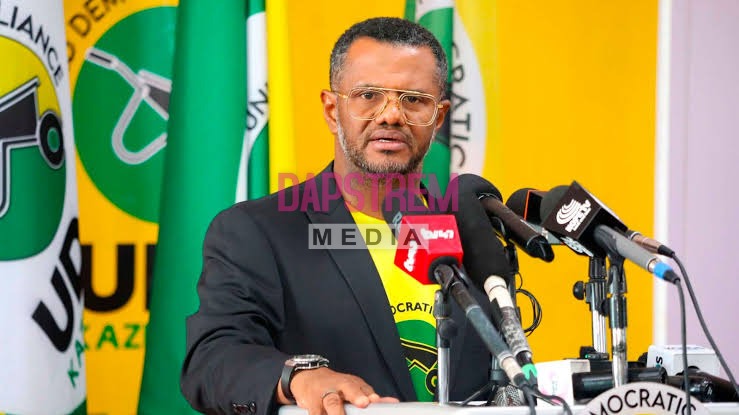
United Democratic Alliance (UDA) Secretary-General Hassan Omar has appeared before the Independent Electoral and Boundaries Commission (IEBC) Electoral Code of Conduct Enforcement Committee to defend controversial remarks he made about deceased voters during a political rally in Mombasa County.
Omar appeared before the committee at Anniversary Towers in Nairobi on Wednesday, October 21, 2026, following a summons issued by the electoral commission over statements he made on September 11. His remarks triggered public criticism after they were widely interpreted as suggesting that the fingerprints of deceased Kenyans could be used to cast votes in favour of President William Ruto during the 2027 General Election.
During the appearance, the former Mombasa senator maintained that his comments had been misunderstood and were intended to encourage voter registration and participation. Through his lawyers, he asked the committee to dismiss the allegations, arguing that the statements were figurative and did not amount to an endorsement of electoral malpractice.
The proceedings have placed one of the ruling party’s senior officials under scrutiny at a time when political activity is intensifying ahead of the next general election. They have also renewed attention on the responsibility of political leaders to use language carefully when addressing supporters, particularly when discussing elections, voter registration and the integrity of the ballot.
Omar’s appearance before the committee does not, by itself, amount to a finding that he breached electoral rules. The commission summoned him to respond to the allegations and present his explanation before it makes a determination.
What Hassan Omar Said at the Mombasa Rally
The controversy began during a political rally in Mombasa County on September 11, when Omar made remarks that appeared to suggest that even the fingerprints of deceased people could be used to secure votes for President Ruto.
Addressing supporters, the UDA secretary-general said in Swahili: “Hata mtu akiwa amekufa tuchukuwe kidole chake kabla hatujamzika kutoka kwa ile BVR tupige kura yake.”
The remarks were translated to mean that even if someone had died, their finger should be taken before burial and used with the biometric voter registration system to cast a ballot.
He also spoke about the importance of securing every vote, using language that critics interpreted as suggesting a willingness to use improper means to secure the president’s re-election.
The comments quickly attracted attention because biometric voter registration and the verification of voters are central to public confidence in Kenya’s electoral process. Any suggestion that deceased people could participate in an election raises questions about the credibility of voter records and the safeguards intended to prevent electoral fraud.
For critics, the remarks were particularly concerning because they came from a senior official in the ruling party, whose words could be interpreted as reflecting the party’s attitude towards the electoral process.
However, Omar subsequently rejected that interpretation, insisting that he was not advocating the literal use of deceased people’s fingerprints to cast votes. He argued that his message was intended to emphasise the importance of mobilising eligible voters and increasing participation in the election.
The dispute has therefore centred not only on the words used at the rally but also on how political statements should be understood, especially when they touch on the credibility of elections.
Omar Says His Remarks Were Figurative
In his defence before the IEBC committee, Omar maintained that the remarks were figurative and intended to encourage supporters to register and turn out to vote in large numbers.
His lawyers, Emmanuel Kibet and Adrian Kamotho, asked the committee to strike out the allegations, arguing that there was no sufficient evidence to establish a breach of the Electoral Code of Conduct.
They maintained that the statement should be understood in the context of a political rally, where leaders frequently use humour, exaggeration and figurative language to communicate their messages to supporters.
According to the defence, Omar was emphasising that every eligible voter mattered and that political victory depended on mobilising as many registered voters as possible.
His lawyers also argued that the remarks were not a practical instruction to interfere with voter records or use the identities of deceased people to cast ballots. They pointed to the IEBC’s responsibility for voter registration, biometric data and the administration of elections, arguing that Omar did not control those processes.
The defence further referred to historically low voter turnout in the Coast region, arguing that the remarks were intended to encourage greater participation among eligible voters.
The lawyers said the committee should dismiss the allegations entirely. However, they added that if it found grounds to impose a sanction, a formal warning would be sufficient.
Their position is that the statement was a political expression delivered in a figurative manner rather than an attempt to encourage electoral fraud.
The committee must consider that explanation alongside the actual words used, the context in which they were delivered and the standards governing political conduct. The ultimate determination rests with the electoral body, not with the interpretation advanced by either the politician or his critics.
IEBC Summons Omar Over Electoral Code of Conduct
The IEBC summoned Omar after the remarks attracted public attention and concerns about their possible implications for electoral integrity.
In its October 14 announcement, the commission directed him to appear before the Electoral Code of Conduct Enforcement Committee at Anniversary Towers on October 21.
The commission said the matter concerned statements allegedly made during the Mombasa rally about voting by deceased people. It indicated that the matter was being considered under the Electoral Code of Conduct contained in the Second Schedule of the Elections Act, 2011.
The summons provided Omar with an opportunity to respond to the allegations and explain the context of his remarks before the committee made its determination.
The process is significant because the IEBC has a responsibility to oversee elections and enforce applicable electoral rules. Its work involves more than organising polling stations and counting votes; it also includes responsibilities intended to protect the credibility of the electoral process and promote compliance with established standards.
Political parties and their officials are expected to conduct themselves in accordance with the rules governing election-related activities. Statements that could be understood as promoting unlawful conduct can therefore attract scrutiny, even when the speaker later argues that the language was intended as a joke or metaphor.
At the same time, a fair process requires the commission to examine the available evidence and consider the explanation presented by the person summoned. An allegation should not automatically be treated as a proven breach.
Omar’s appearance was therefore an opportunity for the committee to hear his defence and consider whether his remarks violated the applicable code.
The commission’s eventual decision will be important in establishing how the matter is resolved and what lessons political leaders may draw from the proceedings.
Omar Pledges Cooperation With the Electoral Commission
During his appearance, Omar also pledged that UDA and the broad-based government would comply with the requirements issued by the IEBC.
He expressed confidence in the commission’s independence and impartiality and said political leaders should be prepared to account for their statements when called upon to do so.
Omar further indicated that he would encourage UDA members to honour summonses from the electoral commission rather than ignore its proceedings.
The commitment comes at a time when the commission is preparing for the 2027 General Election and political parties are increasing their mobilisation activities.
His remarks appear intended to reassure the electoral body that the ruling party is prepared to cooperate with its work, even as he disputes the interpretation of the statement that triggered the summons.
Omar also promised to use simpler language during political campaigns to avoid statements that could be misunderstood or interpreted as incitement.
That pledge highlights an important challenge facing political leaders: the need to communicate forcefully to supporters without creating unnecessary confusion or raising doubts about their commitment to democratic processes.
Campaign rallies often involve passionate speeches, slogans and rhetorical devices intended to energise audiences. However, the political consequences of such language can extend beyond the crowd gathered at an event, especially when a statement is recorded, circulated online and interpreted by a wider public.
The controversy demonstrates how a phrase delivered during a rally can become a national issue and prompt formal scrutiny from an electoral institution.
For political parties, the lesson is that public messaging requires careful consideration, particularly when discussing sensitive issues such as voting rights, biometric registration and election outcomes.
Why the Remarks Raised Concerns About Electoral Integrity
The controversy has drawn attention to the importance of protecting public confidence in elections.
Free and fair elections depend on voters believing that the process is transparent, that eligible citizens can exercise their rights and that votes are counted according to the law. Public statements that appear to suggest manipulation of voter identities can undermine that confidence, even when the speaker later insists that the words were not meant literally.
The issue is particularly sensitive in Kenya, where electoral processes have frequently attracted intense public scrutiny and political competition can heighten concerns about fairness.
Biometric voter registration is intended to help identify and register eligible voters. The management of voter records, including the handling of deceased voters’ information, is part of the wider challenge of maintaining an accurate register.
However, the existence of biometric systems does not mean that a person’s fingerprint can automatically be used to cast a valid ballot. Voter registration, identification and the actual voting process involve distinct procedures and safeguards.
Omar’s defence relied partly on the argument that it was not possible to register a deceased person and have them vote in the manner suggested by his critics. His lawyers also maintained that the statement was intended to encourage living voters to participate in the election.
The committee will need to consider the language used and its context when assessing the alleged breach. Public confidence, however, can also be influenced by how political leaders discuss the process and whether they clearly reject any suggestion of unlawful interference.
Responsible political communication is therefore important not only during the formal campaign period but also in the months leading up to an election.
Leaders from all political camps have a role in encouraging peaceful competition, respecting electoral institutions and making it clear that votes should be secured through lawful mobilisation and the support of eligible voters.
The Political Implications Ahead of the 2027 General Election
Omar’s appearance before the IEBC comes as political parties begin laying the groundwork for the 2027 General Election.
As UDA secretary-general, he occupies an important position in the ruling party’s organisation and political mobilisation. His public statements can therefore attract significant attention from supporters, opponents and institutions responsible for overseeing political conduct.
The controversy has created an additional challenge for the party as it prepares to campaign for Ruto’s re-election. Rather than focusing solely on its political agenda, the party has had to address questions about the meaning of a senior official’s remarks and reaffirm its commitment to the electoral process.
For the opposition, the incident provides an opportunity to demand accountability and insist that all political actors respect the rules governing elections. Critics of the government may argue that statements touching on the use of deceased voters deserve particularly close scrutiny because of the implications for public confidence.
However, the matter should ultimately be resolved through the established process rather than political exchanges alone. The committee’s responsibility is to consider the allegations and the defence before determining whether any breach occurred.
The incident also illustrates the difficulties political parties face in controlling the interpretation of messages delivered at rallies. A statement intended to be humorous or motivational can be interpreted differently by audiences who are concerned about electoral fairness.
With the next election approaching, parties will be under pressure to demonstrate that their campaigns are based on lawful voter mobilisation, clear policy positions and respect for democratic institutions.
The way the IEBC handles the matter may also influence how similar complaints are approached in the future. Consistent and transparent enforcement of the electoral code can help reassure voters that political officials are subject to the same standards, regardless of their position or party affiliation.
What Happens Next?
Following Omar’s appearance, the key question is whether the IEBC committee will find that his remarks breached the Electoral Code of Conduct or accept his explanation that they were figurative.
Omar has asked the committee to dismiss the allegations, with his lawyers arguing that there is no sufficient evidence of wrongdoing. They have also requested that any sanction, should one be imposed, be limited to a formal warning.
The committee must consider the material before it and the representations made during the proceedings before reaching a decision. Until that determination is communicated, the allegations should not be treated as a finding of misconduct.
The case also raises broader questions about the boundaries of political rhetoric and the responsibility of leaders when discussing electoral competition.
Political speech is an important part of democracy, allowing candidates and party officials to mobilise supporters, criticise opponents and communicate their ambitions. However, the freedom to campaign does not remove the responsibility to respect the law and avoid language that could reasonably raise concerns about electoral malpractice.
For Omar, the proceedings offer an opportunity to clarify his intended message and demonstrate his willingness to cooperate with the electoral commission. For the IEBC, the case is an opportunity to show how it evaluates controversial political statements while safeguarding fairness and due process.
For Kenyans, the central issue is the protection of credible elections. Voters need confidence that their participation matters, that voter records are handled lawfully and that political leaders are committed to winning support through legitimate means.
As the country moves towards the 2027 General Election, the controversy serves as a reminder that the integrity of an election depends not only on the systems used to register voters and count ballots but also on the conduct of the people seeking public office.
Omar has defended his remarks as figurative language intended to encourage voter participation and has pledged cooperation with the IEBC. The committee’s determination will establish how the complaint is resolved, while the wider debate underscores the need for careful political communication and continued public confidence in Kenya’s electoral institutions.