Kenya’s opposition is entering a decisive phase of negotiations ahead of the August 10, 2027 General Election, with former Deputy President Rigathi Gachagua, Nairobi Senator Edwin Sifuna and Wiper leader Kalonzo Musyoka emerging as prominent figures in discussions over who should lead the campaign against President William Ruto.
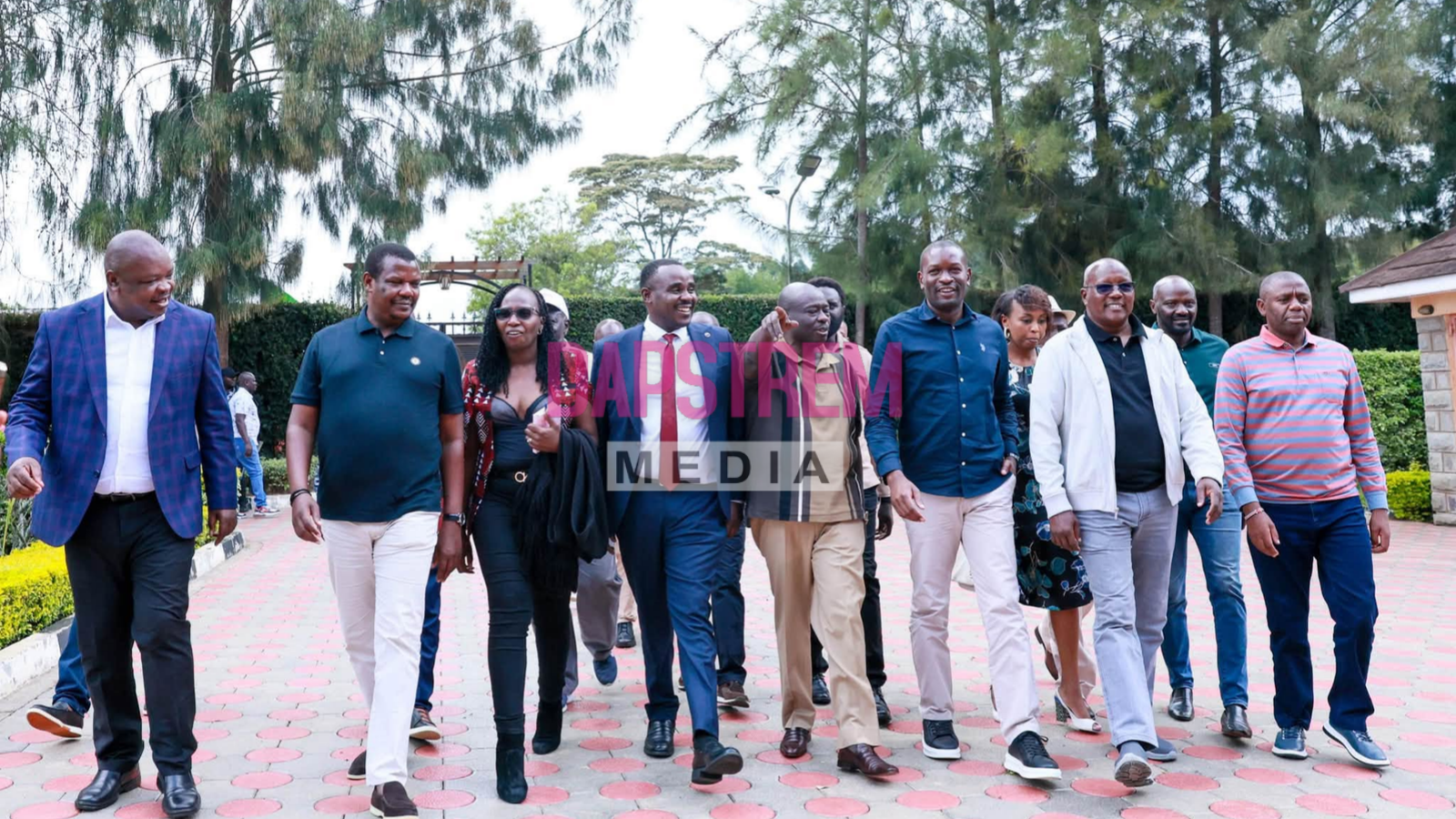
The latest development follows renewed consultations between Gachagua’s Democracy for the Citizens Party (DCP) and Sifuna’s Linda Mwananchi faction at Gachagua’s Wamunyoro residence in Nyeri County on October 20. The meeting signalled a fresh attempt to consolidate opposition forces behind a joint presidential ticket, although the final candidate remains undecided.
The emerging contest reflects a broader question confronting opposition leaders: how to reconcile competing presidential ambitions, regional political bases and different approaches to mobilising voters while presenting a unified alternative to the Kenya Kwanza administration.
With the election less than 10 months away, the negotiations are becoming increasingly important as political parties build their structures, recruit candidates and position themselves for the national contest.
Wamunyoro meeting signals fresh political realignment
The October 20 meeting brought together leaders associated with Gachagua’s DCP and Sifuna’s Linda Mwananchi movement, with discussions reportedly focusing on cooperation ahead of the 2027 election and the eventual selection of a single opposition presidential candidate.
According to Citizen Digital, the meeting narrowed the immediate field of potential contenders to Gachagua, Sifuna and Kalonzo, with the final decision expected next year. The discussions also explored cooperation between DCP and Sifuna’s political camp, including the possibility of joint rallies.
The talks are significant because the opposition has struggled to agree on a common presidential candidate despite repeated public commitments to unity. A key unresolved question is whether the different political formations will agree on a common coalition structure or negotiate separately before forming a broader alliance.
Gachagua has indicated that he is prepared to support a candidate other than himself if that person emerges as the strongest option through political calculations. His willingness to consider serving as Sifuna’s running mate has introduced greater flexibility into the debate over the presidential ticket.
“If we do our arithmetic and find that Sifuna is the one who will send this person home early, so be it,” Gachagua said during his recent engagements in the United States, according to The Standard. He also indicated that either politician could serve as the other’s deputy, depending on the eventual agreement.
The remarks suggest that the negotiations are no longer exclusively about which individual should lead the opposition, but also about how the competing camps can combine their political constituencies within a single ticket.
Gachagua banks on DCP and his political base
Gachagua, Kenya’s former deputy president, has been positioning himself as a central figure in efforts to organise an alternative political bloc to President Ruto. His DCP is among the parties seeking to shape the opposition’s coalition arrangements before the election.
Gachagua’s political strategy rests partly on consolidating support in the Mount Kenya region while building relationships with leaders from other parts of the country.
His experience in the national executive, having served as deputy president under Ruto before their political fallout and his subsequent impeachment in 2024, places him at the centre of the current opposition realignment.
However, his challenge is to translate regional support into a broader national coalition. The presidency requires more than a concentrated regional voting bloc, making alliances with politicians who command support in other regions an important consideration in the negotiations.
His outreach to Sifuna’s camp is therefore notable. Rather than insisting publicly that he must occupy the top position, Gachagua has said the opposition should consider whichever candidate can attract sufficient support across the country.
That position does not amount to a withdrawal from the presidential contest. Instead, it leaves open several possible arrangements, including a Gachagua-led ticket, a Sifuna-led ticket or another negotiated formula.
The immediate test will be whether DCP can reconcile its own ambitions with those of the other opposition parties while retaining its political identity.
Sifuna brings a generational dimension to the contest
Sifuna’s emergence has added a younger political figure to a field dominated by experienced national politicians. His political messaging, links to urban constituencies and association with demands for accountability have featured prominently in the debate over the opposition’s direction.
Sifuna’s potential candidacy comes amid continuing political debate over the participation of younger Kenyans in national leadership.
The Nairobi senator has become associated with the Linda Mwananchi movement, which has sought to mobilise citizens around governance, accountability and concerns about the country’s political and economic direction.
His supporters see an opportunity to connect opposition politics with younger voters, particularly those who have expressed frustration over unemployment, the cost of living and public accountability. However, the extent to which that support would translate into votes across all regions remains to be established.
Sifuna has also been linked to the development of The Equitable Party, a political vehicle intended to provide an organisational foundation for his national ambitions. The Standard reported on October 20 that Gachagua had congratulated him on the launch of the party and urged him to establish grassroots structures and recruit candidates.
That organisational question is important. Presidential campaigns require networks extending beyond public rallies and online visibility, including candidates at constituency level, party structures, campaign financing and the ability to mobilise voters throughout the country.
Sifuna’s challenge will be to demonstrate that his appeal can extend beyond his existing political networks and translate into a sustainable nationwide campaign.
His emergence also raises questions about how the opposition will accommodate demands for generational change alongside the interests of established political leaders.
Kalonzo maintains his claim to the opposition leadership
Kalonzo brings long experience in national politics and has played a prominent role in efforts to bring opposition parties together. He remains an important figure in the coalition negotiations and is associated with the Ukombozi Alliance.
Kalonzo’s position in the emerging contest is shaped by his long political career, his party’s presence in Ukambani and his continuing efforts to assemble a united opposition.
A former vice-president and a veteran presidential contender, he has repeatedly participated in opposition coalitions and negotiations over joint presidential tickets.
His leadership of the Ukombozi Alliance, which was rebranded from the Azimio la Umoja One Kenya coalition, provides an existing political platform through which opposition parties can pursue cooperation.
Nevertheless, the emergence of Sifuna as a potential flagbearer and the renewed engagement between DCP and Linda Mwananchi have complicated the coalition equation.
DCP has previously indicated that it would not simply join the Ukombozi Alliance as constituted, preferring to establish an arrangement with Sifuna’s camp before negotiating a wider coalition. Deputy party leader Cleophas Malala outlined that position in remarks reported by The Standard.
This leaves Kalonzo with two parallel tasks: maintaining the existing opposition alliance while negotiating with political groups that may prefer a different leadership arrangement.
His supporters have continued to make the case for his presidential candidacy, citing his experience and previous participation in opposition campaigns. The final decision, however, will depend on the terms agreed upon by the participating political formations.
What the opinion polls reveal
Opinion polling has added another dimension to the debate, although the available figures should be treated as snapshots of public preference rather than predictions of the election outcome.
A Politrack Research Team survey published by The Star on October 1, based on data collected between September 15 and September 25, 2026, reported the following presidential preferences:
Politrack presidential preference survey
September 15–25, 2026 · Reported national figures
William Ruto
45.1%
Edwin Sifuna
19.6%
Kalonzo Musyoka
10.3%
Fred Matiang’i
7.2%
Rigathi Gachagua
6.0%
Undecided
8.4%
Source: The Star, October 1, 2026 . The figures shown are selected results; they do not represent the complete distribution of responses.
The survey reported that 20,419 respondents participated through a text-based technology platform. Although the publisher reported a 95 per cent confidence level and a margin of error of plus or minus three percentage points, the survey’s recruitment method is important when assessing how representative the results are of the entire Kenyan electorate.
The reported figures place Sifuna ahead of Kalonzo, Gachagua and former Interior Cabinet Secretary Fred Matiang’i in that particular survey. They do not establish who will win the opposition nomination, and they should not be interpreted as a forecast of the 2027 election.
The distinction matters because party nominations and coalition negotiations are influenced by factors beyond national preference figures. These include regional voting patterns, party structures, the strength of parliamentary and county-level networks, campaign resources and the ability of candidates to reach agreements with other political leaders.
Moreover, a poll conducted before the opposition settles on a single candidate cannot establish how voters would respond to a final joint ticket.
The figures nevertheless illustrate why Sifuna’s emergence has become part of the coalition debate and why the other contenders cannot ignore public opinion when negotiating the presidential line-up.
The unity question: One candidate or competing ambitions?
The principal challenge facing the opposition is turning declarations of unity into a workable political agreement.
On September 28, Gatanga MP Edward Muriu said Gachagua, Kalonzo, Sifuna and Matiang’i had tasked him with preparing a draft coalition formula. The proposed agreement was intended to establish how the political groups would cooperate and settle on a single presidential candidate.
The initiative indicated that discussions were moving beyond public endorsements towards the question of how a coalition might operate.
However, the details of the proposed formula had not been made public in the report, and no completed agreement was confirmed. The October 20 Wamunyoro meeting therefore represents another stage in the process rather than proof that a final coalition deal has been reached.
Several issues remain central to negotiations:
Selection of the flagbearer: The parties must agree on whether to use polling, consultations, party nominations or another mutually accepted mechanism.
Choice of running mate: Leaders who do not secure the presidential ticket will need to decide whether to support the eventual candidate and on what terms.
Coalition structure: Political parties must determine how to cooperate without necessarily surrendering their identities or organisational independence.
Power-sharing arrangements: The parties will need to address their representation in campaign leadership, candidate selection and any proposed government structure.
A common policy agenda: Beyond opposing the incumbent, the coalition will need to explain how its policies would address economic pressures, governance, public services and accountability.
These questions are interconnected. A candidate-selection process perceived as unfair by one camp could weaken cooperation, while an agreement that distributes responsibilities transparently could help the parties manage competing interests.
The involvement of Matiang’i in earlier coalition discussions also suggests that the broader opposition field is not necessarily limited to the three names highlighted after the Wamunyoro meeting. Other political figures may remain relevant as negotiations develop.
What the contest means for Ruto’s re-election bid
President William Ruto remains the incumbent and is preparing to contest the 2027 election, while opposition parties seek a common approach to challenging his administration.
The latest negotiations are therefore taking place against the backdrop of a wider contest over the government’s economic record, governance, public accountability and the direction of the country.
The opposition’s potential advantage in forming a joint ticket is that it could bring different political networks under one campaign. But unity on paper would not automatically guarantee a unified voter base, effective campaign coordination or agreement on policy.
Conversely, competing presidential candidacies could leave opposition parties negotiating against one another while the incumbent campaigns with the advantages of an established governing party and national political organisation.
These are possibilities rather than settled outcomes. The available polling and coalition discussions do not establish how the eventual contest will unfold.
For the opposition, the immediate task is to turn political consultations into a credible, transparent process for selecting a candidate and developing a shared programme.
The flagbearer decision remains open
Gachagua, Sifuna and Kalonzo have emerged as prominent contenders in the latest phase of opposition negotiations, but their positions reflect different political constituencies, organisational structures and approaches to leadership.
Gachagua is working to consolidate DCP and build a broader coalition; Sifuna is seeking to translate his growing profile and Linda Mwananchi mobilisation into a national political platform; and Kalonzo continues to pursue unity through the Ukombozi Alliance while maintaining his own presidential ambitions.
The October 20 Wamunyoro meeting brought these competing considerations into sharper focus, but it did not produce a publicly confirmed flagbearer.
The next phase will depend on whether the leaders can agree on a selection formula, accommodate competing ambitions and establish a common campaign agenda before the election.
Ultimately, the central question is not simply which of the three politicians will emerge as the opposition’s presidential candidate. It is whether the different political formations can build an agreement that survives the nomination process and presents voters with a coherent alternative in August 2027.