President William Ruto has unveiled a new political rallying call, “Usawa ni Sawa, Mbele Pamoja,” as he seeks to reshape his re-election campaign ahead of the 2027 General Election, placing equality, equitable development and national unity at the centre of his message.
The slogan, which translates roughly to “Equality is fair, moving forward together,” marks an evolution from the “Hustler Nation” narrative that propelled him to State House in 2022. It comes at a time when the President faces mounting political pressure from opposition leaders, economic discontent and demands from young Kenyans for greater accountability.
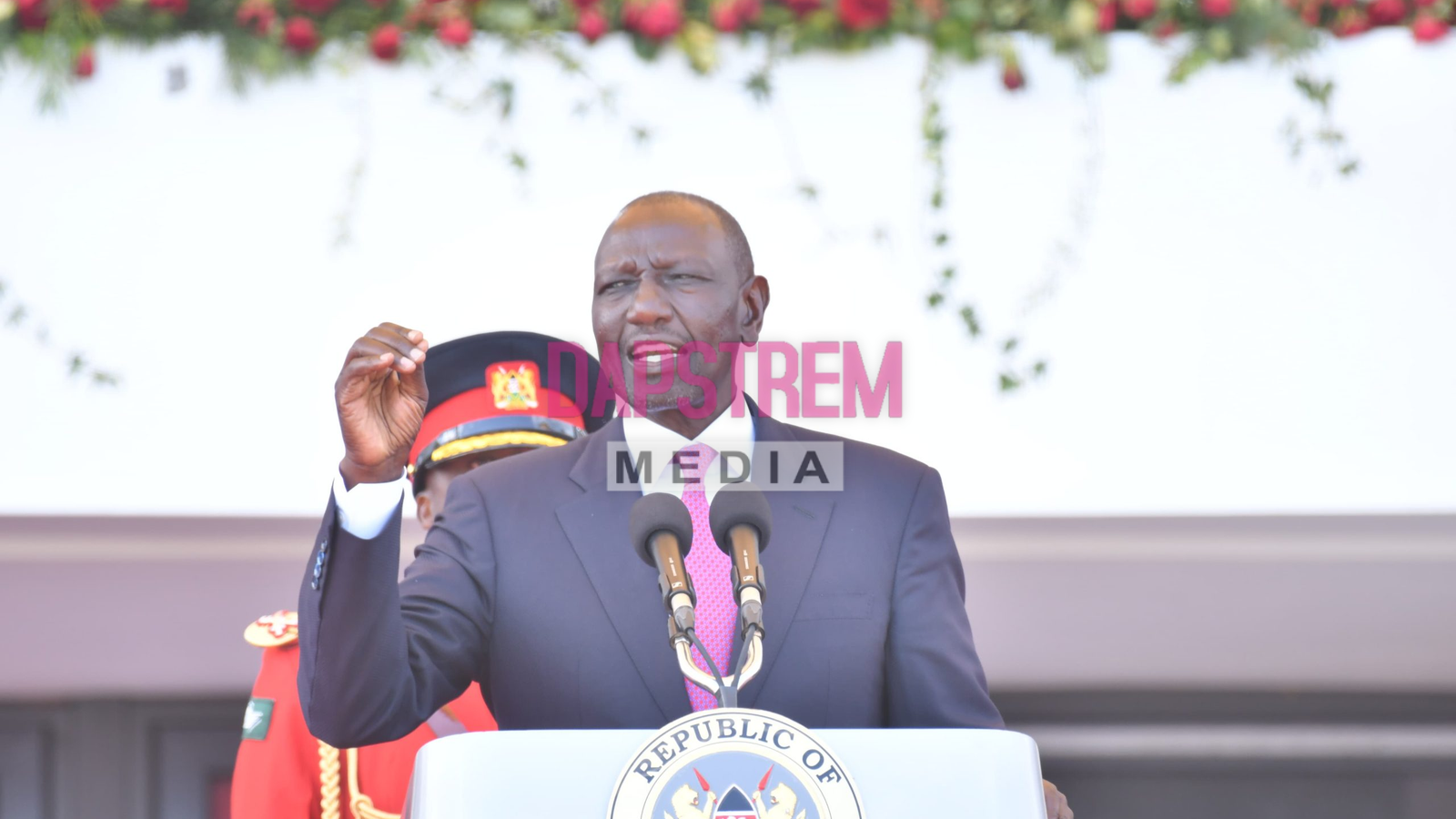
Ruto gave the new message prominence during Mashujaa Day celebrations at Kipchoge Keino Stadium in Eldoret on October 20, 2026, declaring that he would present Kenyans with a new vision focused on better livelihoods, job creation and expanded economic opportunities.
“I will present to Kenyans the Usawa agenda and a promise of better lives for Kenyans. I will place before Kenyans the next phase of our agenda,” the President said, according to The Standard.
His announcement signals an effort to move the political debate away from the personalities and alliances dominating the race and towards questions of development, opportunity and the distribution of national resources.
However, with the election less than a year away, the emerging slogan also raises a central question for Ruto’s campaign: can a promise of equality persuade voters who remain concerned about the cost of living, employment, taxation and the delivery of government services?
From ‘Hustler Nation’ to ‘Usawa ni Sawa’
Ruto’s political rise was built around a message that divided Kenya’s economic landscape between ordinary citizens and established political families.
During the 2022 campaign, he presented himself as the champion of the hustler the small trader, boda boda rider, mama mboga and struggling household against what he described as political dynasties that had dominated the country’s leadership and economic opportunities.
The message proved effective, helping him assemble a broad electoral coalition and defeat Raila Odinga in a closely contested presidential election.
According to official results from the Independent Electoral and Boundaries Commission, Ruto received 7,176,141 votes, or 50.49 per cent, against Odinga’s 6,942,930 votes, or 48.85 per cent.
Four years later, the political environment is different. Ruto is no longer campaigning as an outsider challenging the establishment. He is an incumbent seeking another five-year mandate and must defend his administration’s record.
The new slogan appears designed to broaden his appeal beyond the original hustler narrative by presenting his government as a vehicle for addressing regional inequalities, historical marginalisation and unequal access to economic opportunities.
In reporting published on October 16, Daily Nation described the shift as a reorientation towards equitable development, including the question of whether communities across the country have enjoyed fair access to public investment, jobs, land and economic opportunities.
The message has also been embraced by ruling-party supporters, with the United Democratic Alliance incorporating the slogan into its political mobilisation.
Rather than abandoning the promise of economic empowerment, Ruto appears to be reframing it around the idea that every region and community should benefit from Kenya’s development.
Why equality has become central to the campaign
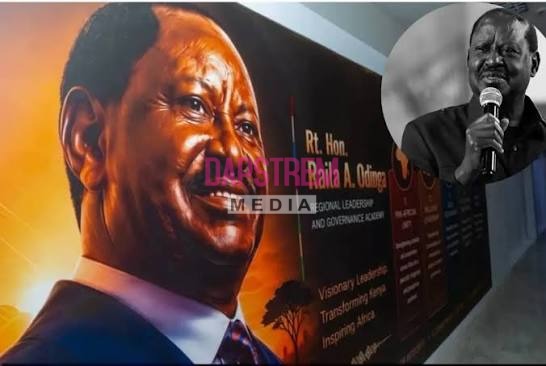
The President first popularised “Usawa ni Sawa” during a rally in Bondo, Siaya County, on October 7, shortly after presiding over the handover of the mausoleum of the late Raila Odinga.
The choice of location was politically significant. Siaya is part of the Nyanza region, historically associated with Odinga and a major centre of opposition politics.
Ruto used the occasion to call for an end to discrimination, tribalism and exclusion, arguing that the country should unite around equitable development.
The emphasis on inclusion comes against the backdrop of his broad-based political arrangement with Odinga, who died in October 2025. That rapprochement had already shifted the President’s messaging towards national unity and cooperation across political divides.
Health Cabinet Secretary Aden Duale has offered a more explicit political interpretation of the equality message, arguing that historically marginalised communities should unite to demand a fairer share of national resources.
In remarks reported by Daily Nation, Duale proposed a coalition bringing together communities in Nyanza, Western Kenya, pastoralist regions and the Coast.
The proposal suggests that “Usawa ni Sawa” could serve two purposes: a national message about fairness and a political strategy to attract voters from communities that have not traditionally formed the core of Ruto’s support.
Yet the historical argument behind the slogan is complex. Regional disparities in Kenya have been shaped by colonial land policies, post-independence development decisions, infrastructure investment and unequal access to capital and public services.
Sessional Paper No. 10 of 1965, which set out the principles of African socialism and national development, remains part of the debate over how public resources were distributed after independence.
Critics have argued that successive governments concentrated investment and economic opportunities in already advantaged regions, while other communities continued to experience marginalisation.
The administration’s challenge will be to show that its equality agenda goes beyond political rhetoric and addresses those longstanding disparities through measurable policies.
Opposition pressure grows
The new slogan comes as opposition leaders seek to organise against Ruto ahead of the 2027 election.
The President has repeatedly challenged his rivals to explain what they would do differently, arguing that political alliances without a clear development programme cannot deliver lasting change.
During his North Rift tour in October, he criticised opposition leaders for regrouping around political unity without presenting a coherent alternative agenda.
“They are now regrouping in the name of unity, but even if they unite and have no agenda, tribal arithmetic will not win them anything,” Ruto said during a stop in Kinyach, Baringo North, according to Daily Nation.
He has insisted that the next election should be a contest between competing programmes rather than ethnic loyalties.
The opposition, however, has found its own language of mobilisation. The slogan “Wantam,” shorthand for the demand that Ruto serve only one term, became prominent during the 2024 anti-tax protests and has continued to feature in political debate ahead of the next election.
Other slogans, including “Cousins,” have also been used in opposition circles to criticise political alliances and the distribution of power among established political families.
These competing messages show that the 2027 contest is already taking shape not only around personalities and coalitions but also around competing explanations of Kenya’s economic and political problems.
For Ruto, “Usawa ni Sawa” offers an opportunity to challenge his opponents to explain how they would deliver equality and development. For the opposition, the President’s record in office provides the basis for questioning whether his promises have translated into meaningful improvements.
The two sides are therefore likely to compete over who can credibly claim to represent ordinary Kenyans and deliver better living standards.
Economic pressure remains a major test
Ruto’s political repositioning comes amid public dissatisfaction over the cost of living, taxation, employment and concerns about governance.
The 2024 protests against proposed tax increases marked a turning point in his presidency, with large numbers of young Kenyans taking to the streets to demand changes to government policy and greater accountability.
The demonstrations exposed a gap between the administration’s economic transformation agenda and the expectations of citizens struggling with household expenses and limited employment opportunities.
The Associated Press reported in July 2025 that discontent over economic pressures, corruption allegations and police conduct continued to weigh on the President’s popularity. Reuters also reported that the administration faced a difficult task in winning back young voters ahead of the 2027 election.
Those pressures make the new slogan a test of credibility as much as a communications strategy.
Ruto has defended flagship programmes such as affordable housing, agricultural support, electricity connectivity and health insurance reforms as evidence of his administration’s commitment to economic inclusion.
During his October North Rift tour, he highlighted road construction, electricity connections, housing projects and investments in healthcare and education, arguing that government spending was reaching communities across the country.
He has also announced proposals intended to improve household incomes and expand opportunities for young people. At Mashujaa Day, he outlined plans for digital employment, road infrastructure and energy development, while proposing tax relief for lower-income workers and measures to make mobile phones more affordable.
These announcements could help strengthen the equality message if they are implemented effectively. But they will also invite scrutiny over funding, timelines and whether the benefits will reach households that need them most.
For voters, the central question is unlikely to be how memorable the slogan sounds at a rally. It will be whether their incomes improve, jobs become more accessible, essential services become more reliable and public resources are distributed fairly.
A new political coalition or a new campaign message?
The emphasis on equality may also signal a broader attempt to reshape Ruto’s electoral coalition.
In 2022, the hustler narrative helped him mobilise voters around economic empowerment while building support across several regions. His current approach seeks to expand that appeal by speaking directly to communities that believe they have historically received a smaller share of national development.
Duale’s call for a coalition of marginalised communities points to a possible political strategy behind the message, although the precise shape of any such alliance will depend on negotiations, party interests and the positions taken by regional leaders.
At the same time, the President’s broad-based political arrangement has changed the dynamics of government and opposition politics since 2024. The death of Odinga in 2025 has introduced further uncertainty into the political landscape, particularly over the future alignment of leaders and voters who supported him.
Ruto’s challenge is to demonstrate that his appeal to national unity is consistent with the composition of his political alliances and the distribution of public investment.
His opponents, meanwhile, will need to show that their own coalitions can offer a credible alternative rather than simply unite around opposition to the President.
The coming months are likely to reveal whether “Usawa ni Sawa” becomes a unifying national message or primarily a slogan for consolidating support ahead of the election.
The verdict will come from voters
Ruto’s new slogan arrives at a defining moment in his presidency. It allows him to present the next phase of his leadership as an effort to widen opportunity, correct regional imbalances and move beyond the political divisions that shaped the 2022 campaign.
But the message also raises expectations. By placing equality at the centre of his re-election pitch, the President is inviting voters to judge his government on whether development is reaching all communities and whether ordinary Kenyans are experiencing tangible economic gains.
His opponents will seek to turn dissatisfaction with the administration into a broader argument for political change, while the ruling party will point to infrastructure, housing, energy, healthcare and employment programmes as evidence of progress.
Ultimately, the strength of “Usawa ni Sawa, Mbele Pamoja” will depend on whether Kenyans believe that equality is being delivered in practice, not merely promised from political platforms.
As the 2027 General Election approaches, Ruto is betting that a message of fairness and shared progress can renew his appeal and help secure a second term.
The slogan may define his campaign. Whether it defines his political future will depend on what voters see in their daily lives.