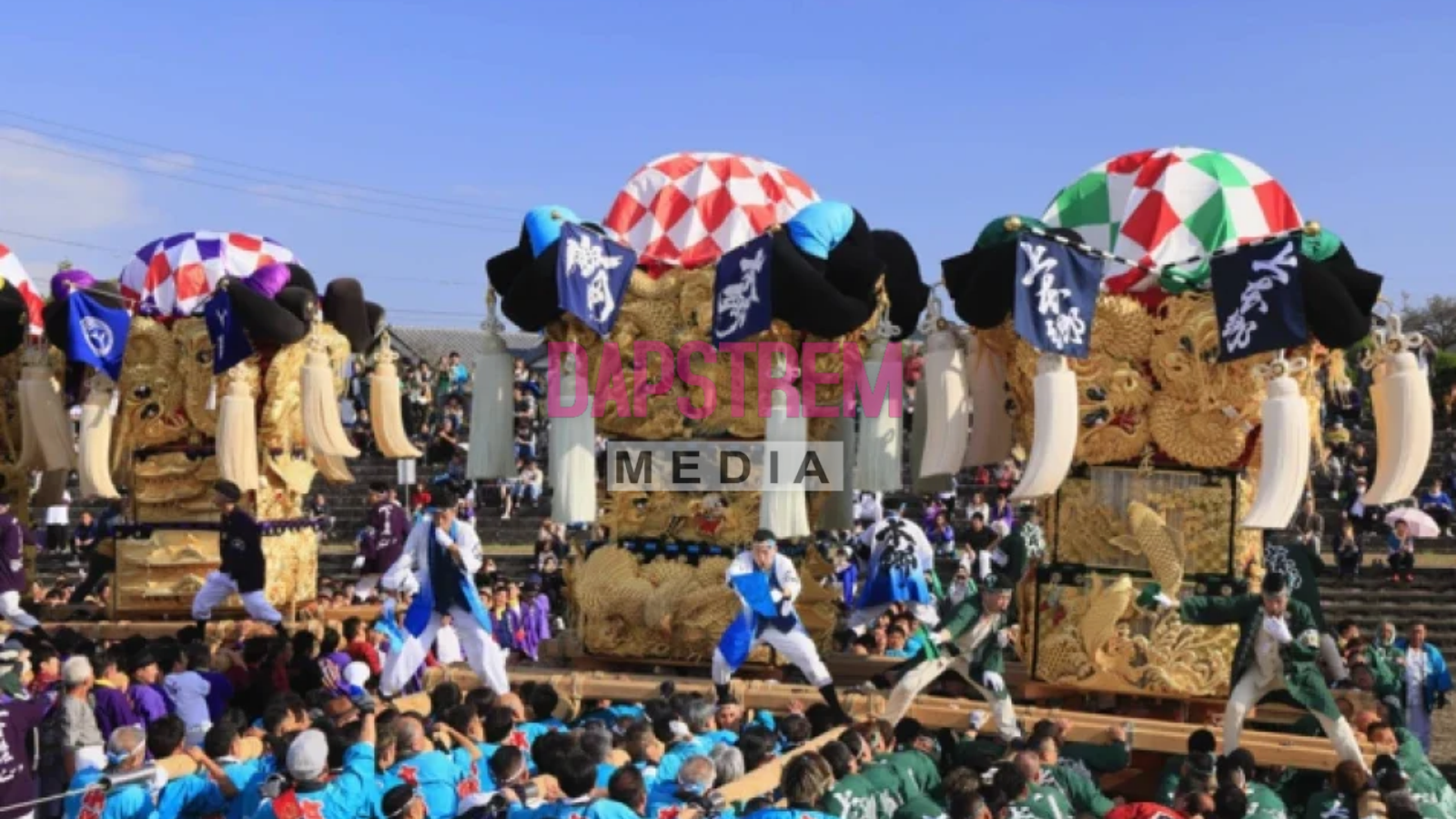
A deputy mayor in western Japan has died after being crushed beneath a massive traditional festival float, prompting renewed concerns about safety at the country’s centuries-old cultural celebrations.
Akihiro Nabae, 62, the deputy mayor of Saijo in Ehime Prefecture, was participating in the city’s annual autumn festival on Saturday, October 17, when he became trapped beneath a heavy wooden structure known as a taikodai.
Police said Nabae was among the participants carrying the float during a traditional contest on a riverbed in Saijo. He was rushed to hospital but was pronounced dead approximately an hour after the incident.
The accident occurred at around 5:45 p.m., when 11 festival floats were lined up side by side for a traditional display of strength and coordination. Local reports put the weight of the float involved at between two and three tonnes.
No other injuries were reported in the incident, according to police.
Authorities are investigating the circumstances surrounding the death, including whether the float toppled or Nabae lost his footing while participating in the event.
Nabae had only recently assumed the position of deputy mayor, having been appointed in July 2026. Before his appointment, he served as director of Saijo’s environmental department.
His sudden death has shocked local officials and residents, particularly because he was taking part in an event deeply rooted in the community’s cultural identity.
Saijo Mayor Mitsuyoshi Ochi expressed grief over the loss, saying he had hoped to work with Nabae to build a new administration for the city.
Ochi said the tragedy was difficult to believe and offered his condolences to Nabae’s family and colleagues.
The police investigation is expected to establish the sequence of events leading to the accident and determine whether additional safety measures are necessary.
What Is Japan’s Saijo Festival?
The Saijo Festival is a major annual cultural celebration in Ehime Prefecture, featuring elaborate portable structures carried through the streets and other designated areas.
The festivities are associated with four shrines in the city and date back to Japan’s Edo period, which lasted from 1603 to 1868.
The event is traditionally held to express gratitude to Shinto deities for a plentiful harvest. It features more than 100 floats and portable structures, including taikodai, mikoshi and danjiri.
The taikodai are particularly imposing structures, decorated with intricate designs and carried by teams of participants. During kakikurabe, teams demonstrate their strength and coordination by lifting, carrying and manoeuvring the floats.
Although the festival is an important expression of local heritage, the considerable weight of the structures and the physical demands placed on participants can create serious safety risks.
Fresh Concerns After Fatal Festival Accidents
Nabae’s death came less than two weeks after two men were killed in separate accidents involving traditional festival floats in Osaka Prefecture.
On October 10, a 51-year-old company executive died in Izumisano after a danjiri float overturned during a turn. On the same day, a 48-year-old man was killed in a similar accident in Izumiotsu.
The incidents left 16 other participants injured, according to Osaka police.
The floats involved in those accidents were approximately four metres tall and weighed around four tonnes. Investigators believe the structures lost their balance during yarimawashi, a manoeuvre in which teams pull the heavy floats around corners at speed.
Participants often position themselves alongside the structures to help prevent them from overturning, exposing themselves to significant danger if the floats become unstable.
The three deaths have intensified scrutiny of safety arrangements at traditional Japanese festivals, particularly events involving heavy structures, large crowds and physically demanding manoeuvres.
In February 2026, two other people reportedly died following a crowd crush during the annual Hadaka Matsuri, commonly known as the Naked Man Festival, in Okayama Prefecture. The festival involves thousands of participants competing to obtain sacred wooden objects.
The incidents have renewed questions about how organisers can preserve traditional celebrations while reducing risks to participants and spectators.
Investigation Continues
Police in Saijo are continuing to investigate the circumstances surrounding Nabae’s death. Authorities have not yet established whether the float fell on him or whether he lost his balance during the event.
The findings could help clarify the immediate cause of the accident and inform discussions about safety precautions at future celebrations.
For Saijo, the tragedy has cast a shadow over a festival that has been celebrated for generations. It has also raised difficult questions about the balance between preserving cultural traditions and ensuring that those who participate can do so safely.
As investigations continue, Nabae’s death serves as a reminder of the risks associated with handling massive festival structures and the importance of reviewing safety measures whenever such events result in fatalities.
The challenge facing organisers and authorities will be to protect participants without losing the cultural practices that remain central to local communities across Japan.