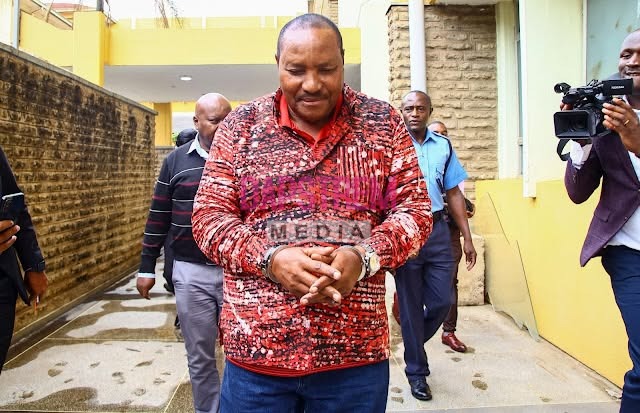
Blow to Waititu as High Court Upholds 12-Year Jail Term in KSh588 Million Graft Case, Convicts Him and His Wife of Money Laundering, and Maintains 10-Year Ban on Holding Public Office.
Former Kiambu Governor Ferdinand Waititu has suffered a major legal setback after the High Court upheld his 12-year prison sentence in a KSh588.7 million corruption case involving a road construction tender in Kiambu County. The ruling is a significant development in a case that has attracted public attention because of the former governor’s political profile, the amount of public money involved and the legal consequences facing those convicted.
In a judgment delivered on Wednesday, October 14, 2026, Justice Rose Ougo dismissed appeals by Waititu and his co-accused, Charles Chege Mbuthia and Luka Mwangi Wahinya. The court upheld their convictions and sentences arising from the irregular award of a multimillion-shilling road construction contract by the Kiambu County Government.
The court also upheld a 10-year ban preventing the convicted individuals from holding public office, whether through election or appointment. The decision represents another major setback for Waititu, who had challenged his conviction and the severity of the punishment imposed by the trial court.
In a further development, the High Court allowed the State’s cross-appeal against the acquittal of Waititu, his wife Susan Wangari and other accused persons on money-laundering charges. The court overturned the acquittals and entered convictions on the relevant counts, sending the matter back to the Chief Magistrate’s Court for mitigation and sentencing.
The ruling has intensified scrutiny of the case and renewed public debate about accountability in the management of county resources. It also demonstrates the legal consequences that can follow when public officials and individuals connected to government contracts are found guilty of corruption-related offences.
High Court Upholds Waititu’s 12-Year Prison Sentence
At the centre of the latest decision is Waititu’s unsuccessful attempt to overturn his conviction and 12-year prison sentence.
The former governor had challenged the findings of the trial court, arguing that the evidence had not been properly assessed and that the prosecution had failed to prove its case beyond reasonable doubt. He also questioned the legality and severity of the punishment imposed against him.
However, Justice Ougo rejected the appeals, finding no sufficient legal basis to interfere with the convictions and sentences. The judge upheld the trial court’s findings on the relevant corruption offences and dismissed the arguments advanced by the appellants.
The ruling means Waititu must continue serving his prison sentence rather than remain free under the bail arrangements previously granted while his appeal was pending.
The court also upheld the financial penalties imposed under the Anti-Corruption and Economic Crimes Act. Justice Ougo explained that the law provides for mandatory fines in corruption cases and permits additional penalties linked to the financial benefit obtained from an offence or the loss suffered as a result of the criminal conduct.
Waititu had challenged aspects of the fines and default imprisonment terms, arguing that the punishment was unlawful, harsh and excessive. His co-accused also raised concerns about the computation and legality of their penalties.
The court, however, found no grounds to overturn the sentences, noting that an appellate court may interfere with a sentence only in specific circumstances. These include cases where the sentence is illegal, based on an incorrect legal principle or manifestly excessive or inadequate.
By dismissing the appeals, the High Court affirmed the trial court’s decision and left the convictions and penalties in place.
The decision is particularly significant because Waititu had pursued legal avenues to challenge the outcome of the trial. His unsuccessful appeal means the 12-year sentence remains in force, subject to any further lawful proceedings that may be available to him.
How the KSh588 Million Road Tender Case Unfolded
The case revolves around the award of a road construction contract valued at approximately KSh588.7 million by the Kiambu County Government.
According to court findings reported by Kenyan media, the prosecution established that the accused persons were involved in the irregular procurement of the road works. Waititu was found guilty of corruptly receiving KSh25 million from Testimony Enterprises Limited, the company associated with the tender.
The case brought together several individuals whose alleged roles were examined during the criminal proceedings. These included Waititu, former county transport chief officer Luka Mwangi Wahinya and businessman Charles Chege Mbuthia, who was linked to Testimony Enterprises Limited.
The prosecution’s case focused on the circumstances surrounding the contract award and the financial transactions connected to it. The trial court ultimately found the accused guilty of the relevant offences, leading to the sentences that were later challenged before the High Court.
Waititu’s conviction became one of the most prominent corruption cases involving a former county governor. The amount associated with the contract also placed public procurement and the management of county finances at the centre of public discussion.
County governments manage substantial public resources intended to support essential services, including roads, healthcare, water supply, education-related facilities and other local development projects. Procurement processes are therefore expected to follow established legal procedures that promote transparency, competition and accountability.
When contracts are awarded irregularly or public funds are diverted through corrupt practices, the consequences can extend beyond the individuals involved. Such conduct can undermine public confidence in government institutions and raise questions about whether development funds are being used for their intended purposes.
The Waititu case has consequently become part of a wider national conversation about corruption, public procurement and the responsibility of elected leaders to protect public resources.
It is important to distinguish the value of the road contract from the specific amount Waititu was found to have received. The contract was valued at approximately KSh588.7 million, while court reporting identified KSh25 million as the amount he was found guilty of corruptly receiving.
Court Convicts Waititu and His Wife of Money Laundering
Beyond upholding the corruption convictions, the High Court made another significant decision by overturning the earlier acquittals on three money-laundering counts.
Waititu, his wife Susan Wangari and other accused persons had previously been acquitted of the relevant money-laundering charges by the trial court. The State challenged those acquittals, arguing through a cross-appeal that the decision should be overturned.
Justice Ougo allowed the State’s challenge and set aside the acquittals, entering convictions against Waititu and Wangari on the three counts. The ruling also affected other accused persons connected to the money-laundering charges.
The decision marks a major change in the legal position of Waititu and his wife, particularly because the money-laundering charges had previously ended in acquittals at the trial stage.
Money laundering generally involves dealing with proceeds of crime in a way that conceals or disguises their illegal origin. Such offences can arise where the prosecution establishes the required legal elements concerning the handling or movement of criminal proceeds.
In this case, the High Court’s ruling means the acquittals could no longer stand. The court entered convictions on the relevant counts and directed that the matter return to the Milimani Anti-Corruption Chief Magistrate’s Court for mitigation and sentencing.
The distinction between conviction and sentencing is important. The High Court has now determined the appeals and entered convictions on the money-laundering charges, but the penalties for those counts are to be determined by the court with the appropriate sentencing jurisdiction.
The ruling therefore creates another stage in the legal proceedings, with the affected individuals required to appear before the Chief Magistrate’s Court for the next steps.
The court also directed that any sentences imposed on the money-laundering counts run concurrently with the sentences already imposed under the Anti-Corruption and Economic Crimes Act. This means the new terms are to be served alongside the existing sentences rather than consecutively, subject to the formal sentencing orders.
The outcome is a significant development in a case where both the corruption convictions and the separate money-laundering allegations have now resulted in convictions following the appellate proceedings.
Susan Wangari Faces Further Legal Consequences
The latest ruling has also brought renewed attention to Susan Wangari, Waititu’s wife, whose legal position has changed following the successful State appeal.
Wangari had been acquitted of the three money-laundering counts at the trial stage. However, the High Court overturned those acquittals and entered convictions against her on the relevant charges.
She had separately been convicted of graft-related offences and sentenced to one year in prison or a fine of KSh500,000. The new money-laundering convictions introduce a further sentencing process that will be handled by the Chief Magistrate’s Court.
The court directed that Wangari and the other affected individuals return for mitigation and sentencing. During mitigation, a convicted person is given an opportunity to present relevant information that the court may consider when determining an appropriate sentence, in accordance with the law.
The sentencing process will determine the penalties applicable to the money-laundering convictions. The High Court has already directed that any resulting terms run concurrently with the sentences imposed under the corruption law.
The decision illustrates how an appeal can affect the legal outcome of a case, including where the State challenges an acquittal rather than a conviction.
For Wangari, the overturning of the acquittals means the money-laundering charges have resulted in convictions at the appellate stage, despite the earlier outcome in her favour.
The ruling should not be confused with the separate sentences imposed for the original graft-related offences. Those convictions and penalties formed part of the earlier proceedings and were also addressed in the appeals dismissed by the High Court.
Ten-Year Ban on Holding Public Office Remains in Force
Another major consequence of the ruling is the court’s decision to uphold the 10-year ban preventing the convicted individuals from holding public office.
The restriction applies to public office obtained through election or appointment, according to reports of the judgment. The court upheld the order under Section 64 of the Anti-Corruption and Economic Crimes Act.
For Waititu, the restriction carries significant political implications. As a former governor who previously held an influential position in Kiambu County politics, he is now facing both the prison sentence and a legal barrier to returning to public office during the applicable period.
The ban also underscores the wider consequences of corruption convictions for individuals who have held public responsibilities. Public office carries obligations that extend beyond political popularity, including compliance with procurement laws, financial regulations and standards of integrity.
The legal restriction is separate from the prison sentence. While the custodial sentence determines the punishment involving imprisonment, the public-office ban limits eligibility to hold the specified positions for the period provided by the court and the law.
The ruling is likely to remain relevant to discussions about political accountability and the standards expected of individuals seeking elective or appointed public positions.
However, the precise effect of the restriction in any future political contest would depend on the applicable legal provisions and circumstances at the time. The immediate position established by the reported ruling is that the 10-year ban has been upheld.
Court Cancels Bail Arrangements as Waititu Returns to Custody
The High Court’s decision also brought an end to the bail arrangements that had allowed Waititu to remain out of custody while pursuing his appeal.
Earlier proceedings had seen the former governor granted bail pending appeal under conditions involving a bank guarantee equivalent to the fine imposed by the trial court. Reports indicate that the terms were later revised, allowing a KSh20 million cash bail option instead of the earlier KSh53.5 million bank guarantee arrangement.
The arrangement had enabled him to remain out of prison as the appeal proceeded. However, following the dismissal of the appeal and the court’s decision to cancel the revised bail terms, Waititu was ordered back into custody.
The change represents a significant personal and legal setback for the former governor, who had spent periods in custody before securing release pending the appeal.
The High Court directed that he be remanded while the remaining steps concerning the money-laundering charges proceed. Other convicted individuals were also directed to return to custody or continue serving their sentences as ordered.
The development shows the practical consequences of the appellate ruling. Beyond affirming the conviction and prison term, the court’s decision affects Waititu’s immediate liberty and the conditions under which he had been awaiting the outcome of his appeal.
The return to custody also places the focus on the next stage of the proceedings: mitigation and sentencing on the money-laundering counts.
What the Ruling Means for Accountability in Kenya
The case has wider significance because corruption involving public procurement can affect the delivery of essential services and public confidence in government.
Road construction contracts are intended to improve transport networks, support economic activity and connect communities to markets, schools, hospitals and other services. When procurement processes are compromised, the public risks losing the full benefit of funds allocated for development.
The legal process in the Waititu case has involved scrutiny of how a county contract was awarded, the financial transactions connected to it and the responsibilities of individuals linked to the procurement.
The High Court’s decision to uphold the convictions sends a clear message about the consequences of unsuccessful appeals in serious corruption cases. It also reinforces the role of the judiciary in reviewing convictions and sentences, while ensuring that the applicable legal standards are followed.
The ruling does not mean that every allegation of corruption automatically results in imprisonment. Criminal cases must be determined through evidence and the applicable law, and accused persons retain the right to challenge decisions through lawful procedures.
In Waititu’s case, the High Court considered the appeals and rejected the challenges to the convictions and sentences. It also allowed the State’s cross-appeal on the money-laundering acquittals, resulting in further convictions.
The case therefore illustrates two aspects of the justice system: the right of convicted persons to appeal and the State’s ability to challenge acquittals where it considers that the law and evidence support further review.
For members of the public, the outcome may also renew calls for stronger oversight of county spending, more transparent tendering processes and effective systems for detecting irregularities before public money is lost.
Preventing corruption requires more than successful prosecutions after wrongdoing has occurred. It also depends on robust internal controls, independent oversight, proper documentation, effective auditing and consequences for those who breach procurement rules.
County governments and other public institutions have a responsibility to ensure that contracts are awarded fairly and that public funds are used for their intended purposes. Stronger oversight can help reduce opportunities for irregular procurement and improve public confidence in development programmes.
The Waititu case is therefore likely to remain part of the national discussion about how Kenya can strengthen accountability and protect public resources.
What Happens Next in the Waititu Case?
Following the High Court ruling, the immediate next step concerns mitigation and sentencing on the money-laundering charges.
The Chief Magistrate’s Court is expected to handle that process because the High Court indicated that it was not exercising original sentencing jurisdiction over those counts. The affected individuals are to be produced before the lower court for the relevant proceedings.
The court will then determine the penalties applicable to the money-laundering convictions in accordance with the law. Any sentences imposed are to run concurrently with the existing sentences under the Anti-Corruption and Economic Crimes Act, as directed by the High Court.
Meanwhile, Waititu’s 12-year prison sentence remains upheld, and the 10-year public-office ban remains in force under the ruling reported on October 14, 2026.
The latest judgment closes the current appeal against the principal corruption convictions and sentences, while the separate sentencing process on the money-laundering charges remains to be completed.
The case has now reached a critical stage for Waititu, Wangari and the other accused persons affected by the decision. The final penalties on the additional counts will provide further clarity on the legal consequences of the High Court’s findings.
Conclusion
The High Court’s decision to uphold Ferdinand Waititu’s 12-year prison sentence in the KSh588.7 million graft case marks a major setback for the former Kiambu governor. Justice Rose Ougo dismissed the appeals against the corruption convictions and sentences, upheld the 10-year ban on holding public office and cancelled the bail arrangements that had allowed Waititu to remain free while challenging the judgment.
The court also overturned the earlier acquittals on money-laundering charges, convicting Waititu, his wife Susan Wangari and other affected accused persons on the relevant counts. The matter has been referred to the Chief Magistrate’s Court for mitigation and sentencing, with any new terms expected to run concurrently with the existing sentences.
Beyond the individuals involved, the ruling highlights the importance of accountability in public procurement and the management of county resources. It also reinforces the role of the courts in determining corruption cases through established legal procedures.
As the next sentencing stage approaches, attention will remain on the penalties to be imposed on the money-laundering counts and the wider implications of the judgment for public integrity, political accountability and the fight against corruption in Kenya.