CJ Koome Allows Justice Ondieki to Complete Sonko’s Sh20 Million Graft Case
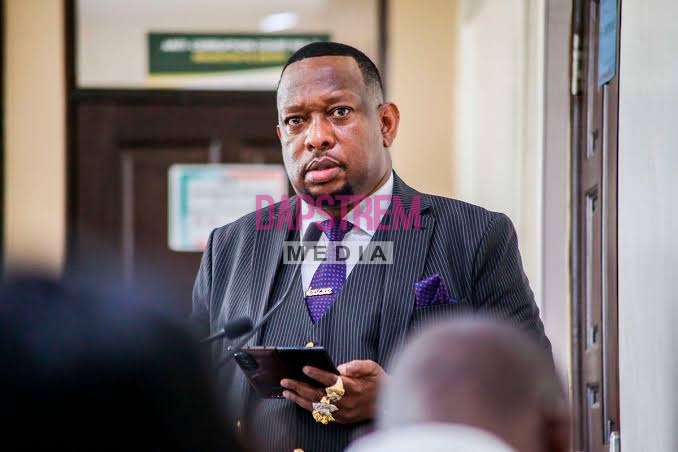
Chief Justice Martha Koome has approved an exceptional arrangement allowing Environment and Land Court Judge Charles Ondieki to return to the magistrate’s court and complete the Sh20 million corruption case involving former Nairobi Governor Mike Sonko. The decision clears the way for the judicial officer who handled much of the trial to conclude the remaining proceedings despite his elevation to the High Court bench.
The development marks a significant moment in a long-running legal battle that has attracted public attention because of Sonko’s former position as Nairobi governor, the nature of the corruption allegations and the time the case has taken to progress through the courts.
According to reports published on Wednesday, October 14, 2026, Sonko had requested the intervention of Chief Justice Koome after Justice Ondieki’s elevation left the case at a critical stage. The trial had already moved to the defence stage after the prosecution completed presenting its evidence.
Sonko’s request was based on the fact that Justice Ondieki had presided over substantial portions of the proceedings and was familiar with the evidence and arguments presented by both sides. Allowing him to finish the case could help preserve continuity and avoid unnecessary delays associated with transferring the matter to another judicial officer.
The decision comes as the former governor and his co-accused continue to defend themselves against allegations connected to a Nairobi County revenue-collection tender awarded in 2019. However, the charges remain allegations to be determined through the judicial process, and the decision allowing Justice Ondieki to complete the trial does not amount to a determination of guilt or innocence.
Sonko Had Asked CJ Koome to Allow Ondieki to Finish the Case
The request followed Justice Ondieki’s appointment to the High Court in May 2026. Before his elevation, he had been handling the case at the Milimani Anti-Corruption Court, where the proceedings had advanced considerably.
Sonko, through his lawyer Assa Nyakundi, wrote to Chief Justice Koome on June 9, 2026, asking that the judge be permitted to conclude the matter. The letter was also communicated to the Office of the Director of Public Prosecutions, with the court subsequently informed of the request.
When the case came up for further defence proceedings on June 29, the prosecution informed the court about the letter. State Counsel Wesley Nyamache explained that the matter had previously been before Ondieki and that the remaining proceedings involved the defence of Sonko and his co-accused.
Sonko’s lawyer confirmed that the former governor wanted the same judicial officer to complete the case because he had already heard much of the evidence.
The request placed the Judiciary in a delicate position. On one hand, judicial officers are assigned to particular courts and must respect the administrative arrangements governing their appointments. On the other, transferring a nearly completed trial to a different judicial officer can create practical challenges, particularly where the incoming officer must familiarise themselves with a lengthy record.
The Chief Justice’s approval provides a route for the proceedings to continue under the judicial officer who had handled the matter before his promotion. It also demonstrates the importance of considering the progress already made in a case when deciding how best to manage a transition between judicial appointments.
Why the Decision Matters for the Sh20 Million Case
The case has been in the courts for several years and has passed through different stages, including earlier proceedings that resulted in acquittals on some charges and subsequent legal challenges.
The prosecution alleges that Sonko and businessman Antony Ombok were involved in the irregular acquisition of Sh20 million linked to Web Tribe Limited and a Nairobi County revenue-collection contract. The allegations relate to transactions connected to the county government during Sonko’s tenure as governor.
The prosecution previously called witnesses to support its case before the court directed the accused to present their defence on the charges that remained. Justice Ondieki was therefore already familiar with the evidence presented by the prosecution and the issues the defence needed to address.

That background helps explain why Sonko sought to have him return to conclude the proceedings. A judicial officer who has followed a case from earlier stages may have a detailed understanding of the testimony, documentary evidence, legal arguments and disputes between the parties.
Nevertheless, the objective of continuity must remain consistent with the law and the rights of everyone involved. Both the prosecution and the defence must have a fair opportunity to present their respective cases, and the eventual decision must be based on the evidence and applicable law.
The approval does not determine whether the allegations are true. Rather, it addresses who will handle the remaining proceedings and allows the trial to move towards its conclusion.
A Case That Has Faced Several Legal Turns
Sonko’s Sh20 million corruption case has experienced a complicated legal journey, including earlier decisions that were later challenged.
In December 2022, a trial court acquitted Sonko and his co-accused after finding deficiencies in the prosecution’s case. The prosecution subsequently challenged the decision, arguing that the court had relied on an earlier charge sheet instead of the amended charges.
The matter returned to the trial court after the High Court set aside the earlier decision and directed that a fresh determination be made based on the evidence on record.
In January 2025, Justice Ondieki acquitted Sonko and his co-accused on two counts involving conspiracy to commit corruption. The court, however, placed them on their defence over other charges, including money laundering and conflict of interest.
The distinction is important because an acquittal on particular counts does not automatically dispose of every charge in a case. Where other charges remain active, the proceedings may continue until those matters are determined or otherwise resolved through the legal process.
The case therefore continued despite the earlier acquittals, leaving the accused to answer the remaining allegations.
The latest decision allowing Justice Ondieki to complete the proceedings represents another development in that journey. It provides an opportunity for the remaining defence evidence to be heard and for the court to move towards a determination of the outstanding charges.
Sonko’s Defence and Allegations of Political Interference
During the proceedings, Sonko has maintained that his prosecution was politically motivated. He has alleged that powerful individuals interfered with his case following his fallout with political leaders during his time in public office.
According to reports, the former governor presented video and audio recordings that he said supported his claims of interference. He also alleged that meetings had been held to discuss efforts to undermine him and influence legal proceedings involving his leadership of Nairobi County.
These claims form part of Sonko’s defence and have not been established as facts by the court. They should therefore be treated as allegations rather than proven findings.
The claims nevertheless illustrate the wider political attention surrounding the former governor’s legal battles. Sonko has remained a prominent and often controversial figure in Kenyan politics, and his court appearances frequently attract public interest.
For the Judiciary, the central responsibility is to ensure that the case is determined independently, fairly and according to the law. Claims of political interference, where raised, must be assessed through the appropriate legal processes and against the available evidence.
The decision to allow Justice Ondieki to finish the case should similarly be understood within the administration of justice. It is not, by itself, evidence that either Sonko’s allegations or the prosecution’s accusations have been proved.
The Importance of Completing Long-Running Court Cases
The development also brings renewed attention to the challenge of managing cases that take several years to conclude.
Lengthy proceedings can place considerable pressure on accused persons, witnesses, prosecutors, defence lawyers and the courts. Witnesses may struggle to recall events as time passes, documents may become more difficult to retrieve, and repeated changes in judicial officers can create additional administrative work.
For defendants, a prolonged case can also mean living for years with unresolved allegations. For the public, delays can weaken confidence in the justice system, particularly when cases involve public officials and alleged misuse of public resources.
At the same time, the demand for speed cannot override the requirement for a fair hearing. Courts must give the parties sufficient opportunity to present evidence, challenge testimony and make legal submissions. A quick conclusion is not necessarily a just conclusion if it comes at the expense of due process.
The challenge is therefore to strike a balance between efficiency and fairness.
Allowing the judicial officer who handled much of the trial to complete it may help reduce disruption. However, the arrangement must operate within the applicable judicial rules and preserve the independence of the court.
The public will ultimately be interested in whether the remaining proceedings are completed without unnecessary delays and whether the final determination clearly explains the court’s findings on the outstanding charges.
What Happens Next in Sonko’s Graft Case?
With Justice Ondieki cleared to complete the proceedings, attention now turns to the remaining defence evidence and the steps required before the case can be concluded.
The court must hear any outstanding testimony, consider the submissions made by the prosecution and defence, and determine the remaining charges according to the evidence and the law. The precise timing of the final determination will depend on the progress of the hearings and any further directions issued by the court.
The case also involves co-accused persons, including businessman Antony Ombok, whose position must be considered in accordance with the charges and evidence applicable to each accused person.
It is important to distinguish between the administrative decision allowing Ondieki to return to the lower court and the substantive judgment that will eventually determine the outstanding charges. The former concerns the management of the trial; the latter concerns whether the prosecution has proved the allegations to the required legal standard.
Until the court reaches a final determination on the outstanding charges, Sonko and the other accused persons retain their right to a fair hearing and the presumption of innocence in relation to those charges.
The outcome will be closely watched because the case involves alleged corruption connected to the management of public affairs in Nairobi County. It also highlights the broader responsibility of public institutions to ensure accountability while respecting the legal rights of individuals facing prosecution.
A Significant Development in a Closely Watched Trial
Chief Justice Koome’s approval allowing Justice Ondieki to complete Sonko’s Sh20 million graft case is a notable development in a trial that has faced several legal turns since it began.
The decision responds to a request for continuity after Ondieki’s elevation to the High Court and creates a path for the remaining proceedings to continue under a judicial officer familiar with the case.
For Sonko, the priority is to complete his defence and have the outstanding charges determined. For the prosecution, the responsibility remains to support its case with admissible evidence. For the Judiciary, the task is to ensure that the trial proceeds fairly, efficiently and independently.
The case is also a reminder that high-profile corruption proceedings can be complex and that earlier rulings on some charges do not necessarily settle every issue before the court.
Ultimately, the significance of the latest development will be measured not simply by the decision to allow Justice Ondieki to return, but by whether the remaining proceedings are concluded in accordance with the law. Kenyans will be watching for a clear and fair determination of the outstanding allegations as the long-running case moves towards its next stage.