A nightmare start for Manchester United
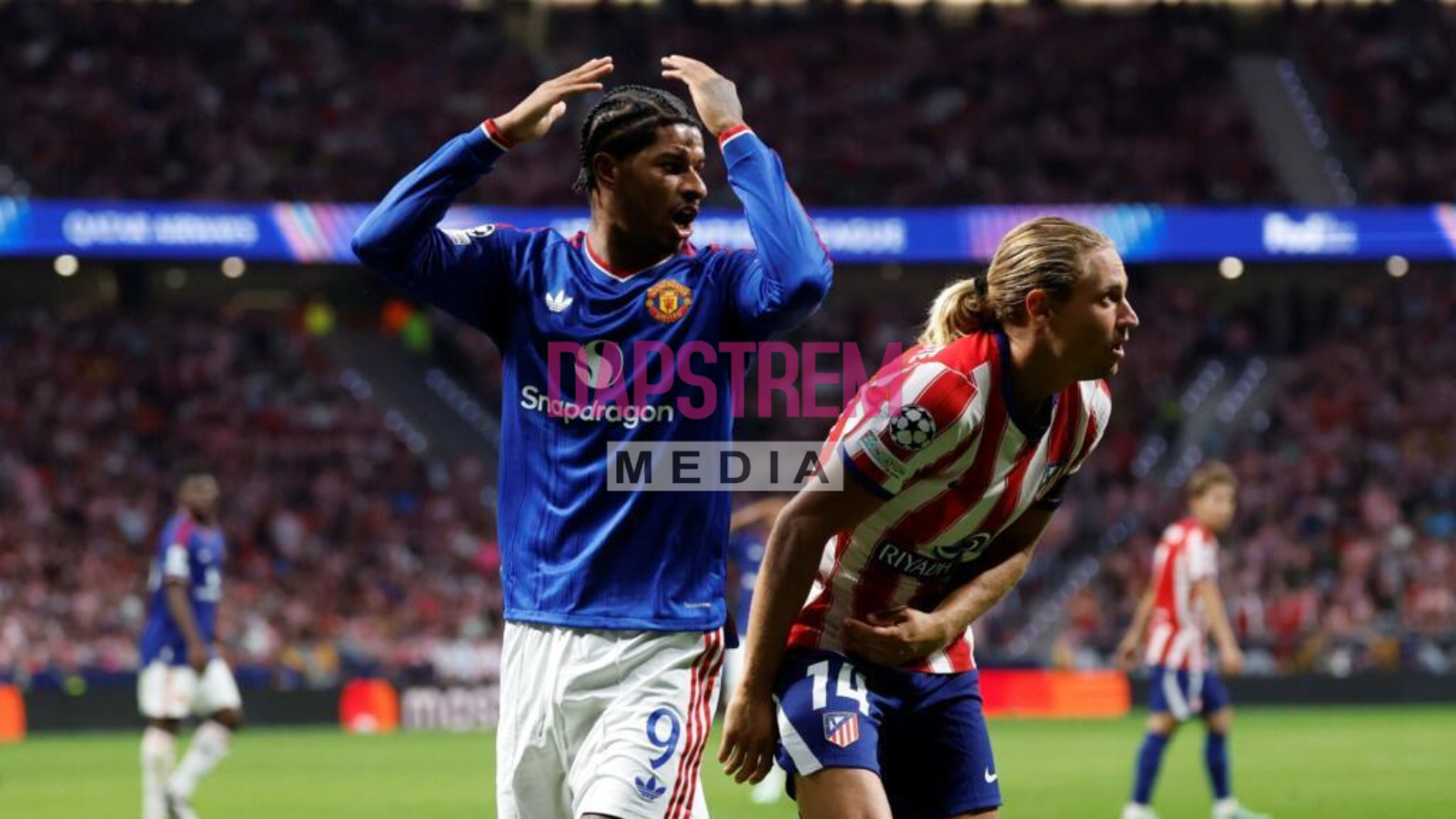
Manchester United travelled to Madrid hoping to produce a statement performance in the Champions League, but their evening began in the worst possible fashion. Before they could settle into the contest, Atlético Madrid had already exposed their defensive weaknesses.
Just 47 seconds into the match, Álex Baena found space behind United’s defence and delivered the ball to Pablo Barrios. The midfielder took his opportunity, sending a low shot towards goal. A deflection off Ayden Heaven complicated the attempt, and goalkeeper Senne Lammens could not prevent the ball from crossing the line.
The Metropolitano erupted.
Atlético had struck almost immediately, giving Diego Simeone’s side the perfect platform to execute their game plan. United, managed by Michael Carrick, were forced to chase the match from the opening minute, while the home side could use their lead to dictate the tempo.
According to the match report from Al Jazeera, the early goal added further pressure to United’s difficult run of form.
United fight back as Oblak stands firm
Despite the disastrous start, Manchester United showed flashes of attacking quality.
Bryan Mbeumo attempted to spark a response, using his skill to create shooting opportunities. However, Atlético goalkeeper Jan Oblak was alert, making important interventions to preserve his team’s advantage.
Marcus Rashford also threatened, but United struggled to convert their promising movements into goals. Bruno Fernandes tried to influence the contest, while Youri Tielemans helped create opportunities through his passing.
Atlético were dangerous at the other end, too. Alejandro Grimaldo struck a free-kick against the woodwork, reminding United that their defensive problems were not limited to the opening goal.

The hosts appeared to have doubled their lead shortly before half-time when Johnny Cardoso found the net. However, the referee reviewed the build-up with the assistance of VAR and disallowed the goal because of an alleged handball by Marcos Llorente.
The decision became one of the most debated moments of the match. It offered United a reprieve, allowing them to reach half-time still within touching distance of their opponents.
Yet the scoreline did not tell the whole story. Atlético had threatened repeatedly, while United needed to improve their defensive organisation and become more clinical in front of goal.
The second half: United search for a way back
United returned for the second half knowing that one goal could transform the contest.
For a period, they remained competitive. Atlético continued to create opportunities, but United also threatened an equaliser. Julián Álvarez struck the post after the restart, while Fernandes later sent a dangerous effort against the crossbar.
Those moments offered a reminder that Atlético had not completely put the match beyond their opponents. Had United found the net during that spell, the pressure would have shifted back onto Simeone’s side.
Instead, the game turned decisively against the visitors.
Leny Yoro’s red card changes everything
With the match still finely poised at 1–0, defender Leny Yoro was sent off following a VAR review in the 74th minute.
The incident involved Atlético substitute Jonathan David, who was attempting to break through on goal. The referee reviewed the challenge and dismissed Yoro for denying a goalscoring opportunity.
United’s task immediately became more difficult. They had to pursue an equaliser while reorganising their defence with ten men against an Atlético side that thrives on exploiting spaces during transitions.
The dismissal was a major turning point. Although the visitors could still have resisted Atlético’s pressure, the numerical disadvantage reduced their options and increased the likelihood of defensive gaps emerging.
For Simeone, the opportunity was clear: attack quickly, force United backwards and take advantage of the extra space.
Atlético needed only a few minutes to make that advantage count.
Ademola Lookman delivers the decisive blow
In the 79th minute, Atlético produced the move that settled the contest.
Alejandro Grimaldo helped drive the attack forward, and Jonathan David found himself in a promising position. Lammens initially denied David’s attempt, but the rebound fell into the path of Ademola Lookman.
The forward reacted quickly and finished into the unguarded goal.
The stadium erupted again. Atlético had their second goal, and United’s hopes of rescuing a result were effectively extinguished.
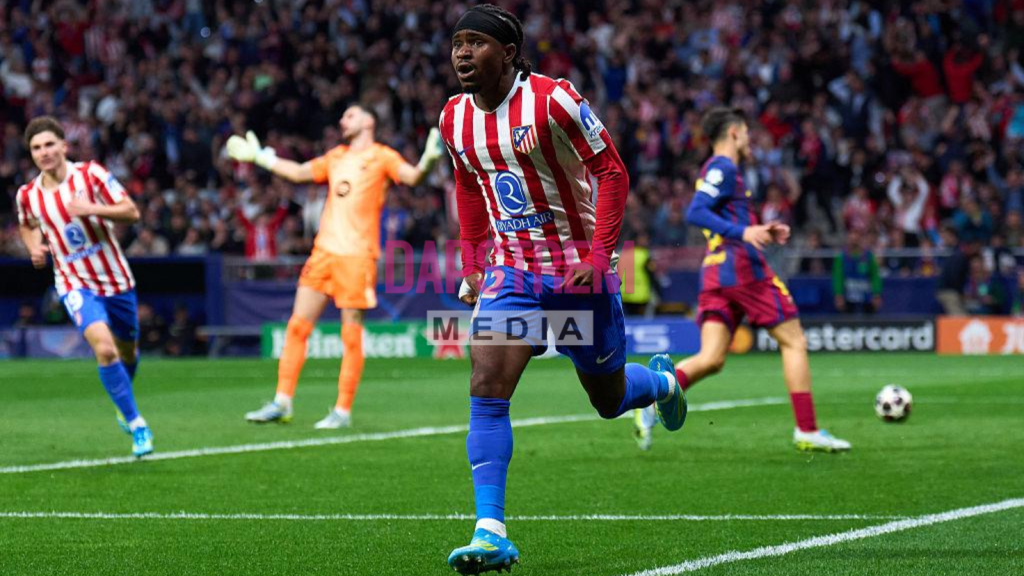
Lookman’s contribution demonstrated the importance of attacking depth in elite football. Introduced from the bench, he brought fresh energy and made the most of the opportunity presented to him. His goal rewarded Atlético’s persistence and punished a United defence already weakened by Yoro’s dismissal.
United almost found a consolation when former Atlético player Matheus Cunha got an opportunity late in the match, but Oblak produced another important save.
The final whistle confirmed a deserved home victory, leaving United to reflect on missed chances, defensive errors and the consequences of the red card.
What the result means for both clubs
For Atlético Madrid, the victory was an important response in their Champions League campaign. Barrios provided the early breakthrough, the team maintained pressure throughout the match, and Lookman supplied the decisive finish.
Simeone’s side demonstrated the value of combining defensive discipline with direct attacking football. They did not need to dominate every phase of the contest; they needed to exploit the opportunities that mattered.
For Manchester United, the defeat raised further questions about defensive stability and consistency. The early concession put them on the back foot, while Yoro’s dismissal made an already difficult situation considerably worse.
United created opportunities, including efforts from Mbeumo and Fernandes, but their attacking moments were not enough to overcome Atlético’s organisation and Oblak’s goalkeeping.
The numbers underline the competitive nature of the encounter: Opta’s analysis recorded 11 shots and 1.42 expected goals for Atlético, compared with nine shots and 0.98 expected goals for United. Atlético were more productive overall, even though the difference in opportunities was not enormous.