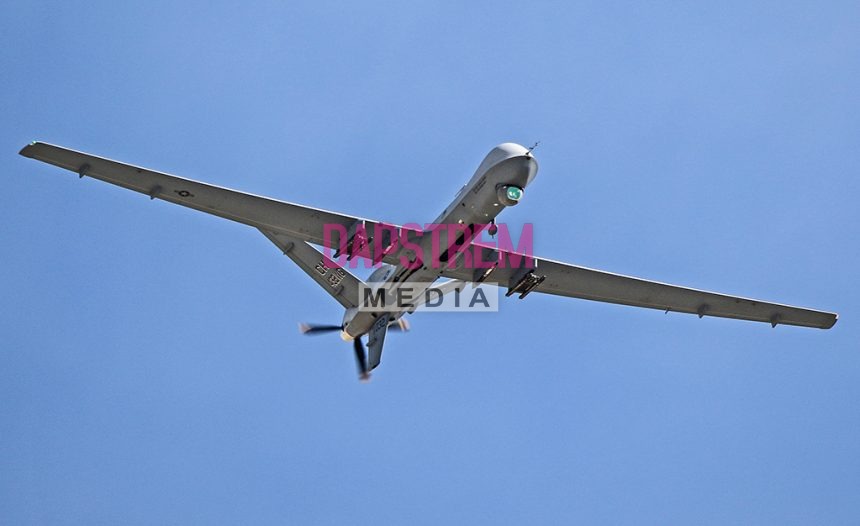
Saudi Arabia Intercepts Three Drones Near Riyadh as Houthis Threaten Painful Retaliation, Raising Fears of Further Attacks on Major Cities, Oil Facilities and Critical Infrastructure Amid Escalating Middle East Tensions.
Saudi Arabia has intercepted and destroyed three drones north of its capital, Riyadh, as tensions with Yemen’s Houthi movement continue to intensify following a series of deadly attacks on Saudi territory. The latest interception, announced on Tuesday, October 13, 2026, highlights the growing security threat facing the kingdom as the conflict increasingly affects major cities, airports, oil infrastructure and regional transportation networks.
According to the Saudi-led coalition supporting Yemen’s internationally recognised government, its forces intercepted and destroyed the three unmanned aerial vehicles north of Riyadh. Major General Turki Al-Maliki, the coalition’s spokesperson, announced the development without immediately disclosing where the drones originated or what their intended targets were. The announcement came amid heightened alert following repeated Houthi missile and drone attacks against Saudi Arabia.
The interception represents another significant development in a rapidly escalating confrontation that has placed Saudi Arabia’s air defences under intense pressure. It also comes as the Houthis threaten a “harsh and painful” response if Saudi-led forces launch attacks against Sanaa, Yemen’s capital, raising fears that further military action could trigger another round of retaliation.
The latest exchange of threats has increased concerns about the safety of civilians, the security of vital infrastructure and the possibility that the conflict could expand beyond its current front lines.
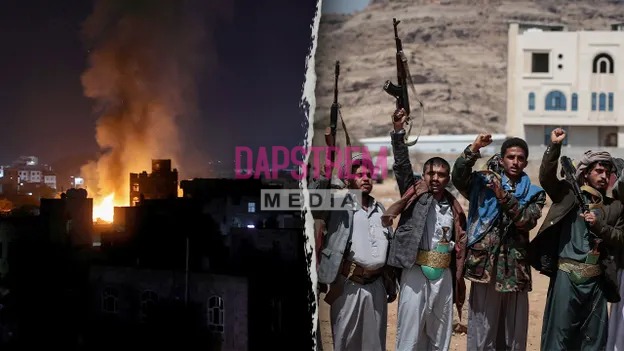
Three Drones Intercepted as Security Threats Grow
The Saudi-led coalition confirmed that its forces intercepted and destroyed three drones north of Riyadh on Tuesday. However, officials did not immediately provide further information about the drones’ launch locations, their intended targets or whether they were carrying explosives.
The lack of additional details means it remains unclear whether the drones were specifically targeting the capital or another strategic location in the surrounding area. Although the interception occurred amid the escalating confrontation with the Houthis, the available announcement did not independently establish who launched the three drones.
Nevertheless, the incident comes against the backdrop of a sustained campaign of missile and drone attacks attributed to the Houthi movement, which has increasingly threatened Saudi cities and strategic facilities.
Saudi Arabia has previously relied on sophisticated air-defence systems to intercept incoming missiles and unmanned aircraft. However, the latest attacks demonstrate the difficulty of protecting an extensive territory containing airports, oil facilities, military installations, pipelines and densely populated urban areas.
Drones present a particular challenge because they can be relatively inexpensive to deploy compared with the defensive systems required to detect, track and destroy them. Repeated attacks can also force a country to spread its air-defence resources across numerous locations, increasing the pressure on military planners.
The interception therefore offers a reminder that preventing an attack from reaching its target does not eliminate the wider threat. Saudi Arabia must continue monitoring its airspace and protecting strategic facilities while preparing for the possibility of additional attacks.
Houthis Threaten a Painful Response if Sanaa Is Attacked
The latest drone interceptions came as the Houthis issued a warning against possible Saudi-led military operations targeting Sanaa.
On Tuesday, the Saudi-led coalition called on residents near a state oil company facility and nearby storage areas in the Yemeni capital to evacuate ahead of unspecified operations. Coalition spokesperson Turki Al-Maliki said the warning was intended to protect civilians, but did not explain precisely what operations were planned.
In response, Houthi military spokesperson Yahya Saree warned that any attack on Sanaa would trigger a “harsh and painful” response against the Saudi capital. The movement also warned that Saudi Aramco oil facilities could be considered legitimate targets and urged civilians and workers to stay away from them.
Mohammed al-Bukhaiti, a spokesperson for the Houthi political bureau, separately warned that attacks on Saudi Arabia could continue if Riyadh did not respond to calls to end the war. The statements illustrate how both sides are increasingly using warnings and threats to signal their willingness to escalate the confrontation.
The evacuation warning is particularly significant because Sanaa is a densely populated city where military operations near industrial facilities could endanger civilians. Oil installations and storage areas can also pose additional hazards if damaged, depending on the nature of the facility and the materials involved.
For residents, the warnings create uncertainty about whether further airstrikes are imminent and which locations could be affected. People living close to potential targets may be forced to leave their homes, interrupt their work and seek temporary shelter elsewhere.
For Saudi Arabia, the Houthi threat against Riyadh represents a direct challenge to the kingdom’s security. For Yemen, the prospect of renewed strikes against Sanaa raises fears that civilians could once again bear the heaviest cost of a conflict that has already caused years of displacement, economic hardship and destruction.
Neither side’s warnings alone establish what will happen next. However, the increasingly direct threats against major cities and vital infrastructure suggest that the confrontation has entered a particularly dangerous phase.
Riyadh Faces Renewed Security Concerns After Deadly Airport Attacks
The interception of the three drones comes only days after a series of deadly attacks affected King Khalid International Airport in Riyadh, one of Saudi Arabia’s most important transportation hubs.
The airport attacks have become a central part of the latest escalation, exposing the potential consequences of the conflict for civilians and international travel. Reports published in recent days have described deaths, hundreds of injuries and significant disruption to airport operations following missile and drone strikes.
On October 12, Al Jazeera reported that the Houthis had claimed responsibility for attacks involving missiles and drones against Saudi positions, including an attack on King Khalid International Airport. The report said Saudi authorities had intercepted a ballistic missile directed towards Riyadh during another incident, while the Houthis also claimed to have targeted an airbase near the Yemeni border.
The airport attacks have raised serious questions about how effectively Saudi Arabia can protect critical infrastructure from repeated aerial assaults. They have also demonstrated that even when a country possesses advanced military technology, it may struggle to prevent every incoming weapon from reaching a populated or strategically important location.
Reuters reported on October 12 that Saudi Arabia had stopped issuing public warnings about imminent military attacks days before a series of strikes on Riyadh airport that killed at least 18 people and injured more than 300, according to its report. The absence of public alerts raised concerns among officials and analysts about emergency communication and the ability of residents to prepare for incoming threats.
The issue of public warnings is especially important during periods of repeated attacks. Timely alerts can give people an opportunity to move away from windows, seek shelter and follow emergency instructions. They can also help airports, hospitals, businesses and other institutions activate contingency plans.
However, issuing warnings during an extended security crisis can be difficult. Frequent alerts may disrupt daily activities and create anxiety, while failing to communicate a genuine threat can leave civilians exposed to danger.
Saudi authorities therefore face the challenge of maintaining public confidence without understating the seriousness of the security situation. The recent airport attacks have made that balance more difficult.
The interception of the three drones may demonstrate that Saudi air defences remain capable of neutralising incoming threats. Nevertheless, the wider pattern of attacks means the kingdom cannot assume that every future missile or drone will be stopped before causing damage.
Why the Conflict Between Saudi Arabia and the Houthis Is Escalating
The latest confrontation is rooted in Yemen’s prolonged conflict and the wider struggle for influence across the Middle East.
The Houthis, an armed political and military movement that controls Sanaa and substantial parts of northern Yemen, have fought Yemen’s internationally recognised government for years. Saudi Arabia has supported the government and previously led a military coalition intervening in the conflict.
The war has evolved over time, involving changing front lines, regional rivalries, missile attacks, drone warfare and threats to international shipping. Although periods of reduced fighting have raised hopes for a negotiated settlement, the underlying disagreements have remained unresolved.
The current escalation has been intensified by the wider regional conflict involving Iran and the United States. Recent reporting has connected the renewed fighting around Yemen to the broader confrontation, although the specific circumstances and responsibility for individual attacks must be assessed separately.
Saudi Arabia views attacks on its cities, airports and oil facilities as a direct threat to national security. The Houthis, meanwhile, have framed their military actions as retaliation against Saudi operations and its role in the conflict.
These competing positions create a cycle in which military action by one side prompts threats or attacks from the other. Saudi-led strikes can be followed by Houthi missile launches, while attacks against Saudi territory can prompt further military operations in Yemen.
Such cycles are difficult to contain because each side may feel compelled to respond to demonstrate strength, deter future attacks or reassure its supporters. Yet retaliation can also widen the conflict, increase civilian casualties and make negotiations more difficult.
The situation is further complicated by the involvement of outside powers and the strategic importance of the Arabian Peninsula. Developments in Yemen can affect Saudi security, relations with Iran, international maritime routes and the interests of countries seeking to prevent a broader regional war.
For this reason, the interception of three drones near Riyadh should be understood not as an isolated military incident but as part of a wider confrontation whose consequences extend beyond the immediate battlefield.
Saudi Arabia’s Air Defences Under Pressure
Saudi Arabia has invested heavily in military equipment and air-defence capabilities to protect its cities and strategic infrastructure. Yet the repeated attacks attributed to the Houthis demonstrate the challenges involved in defending a country of its size against different types of aerial threats.
Ballistic missiles, cruise missiles and drones can require different detection and interception methods. A coordinated attack involving several types of weapons can also complicate the task facing air-defence operators, particularly when threats approach different locations or arrive within a short period.
The cost of defence is another important consideration. Interceptor missiles and advanced radar systems can be expensive, while some drones may be produced and deployed at comparatively low cost. This creates a financial imbalance in which an attacker may force a defender to expend valuable resources responding to repeated threats.
Saudi Arabia must also decide how to distribute its defensive capabilities. Protecting Riyadh, international airports, oil installations, military bases, energy pipelines and other infrastructure requires extensive planning and coordination.
A decision to strengthen protection around one facility may require resources that could otherwise be deployed elsewhere. Even a well-equipped military cannot guarantee complete protection of every site at all times.
Reuters quoted Saudi analyst Ali Shihabi discussing the difficulty of defending the kingdom’s vast territory, which includes airports, pipelines and oil facilities. The report highlighted the challenge of having sufficient air-defence coverage and interceptors to protect all potential targets simultaneously.
The latest interceptions may therefore be encouraging for Saudi defence officials, but they do not remove the need to assess vulnerabilities and prepare for future attacks.
Authorities may face pressure to improve detection, coordinate intelligence, review emergency procedures and strengthen protection around civilian facilities. They must also consider how to communicate credible security information to residents without creating unnecessary panic.
The longer the attacks continue, the more difficult it may become to maintain normal operations while ensuring that essential facilities remain protected.
Threats to Oil Facilities Raise Global Economic Concerns
One of the most serious aspects of the latest escalation is the threat against Saudi Arabia’s oil infrastructure.
Saudi Arabia is among the world’s most important oil producers, and its energy sector plays a major role in international markets. The country’s oil facilities, processing plants, export terminals and transport networks are central to its economy and to the wider global energy system.
The Houthis’ warning that Saudi Aramco facilities could be targeted has raised concerns that the conflict could extend beyond airports and military installations to critical energy infrastructure. The group has also urged workers and civilians to stay away from such facilities.
Any successful attack that significantly disrupts oil production, processing or transportation could have consequences beyond Saudi Arabia. Energy markets often respond to the possibility of supply interruptions, particularly when tensions affect major producers or important shipping routes.
Even when supplies remain available, uncertainty can influence oil prices, insurance costs, shipping decisions and investor confidence. Companies may reconsider travel, postpone projects or introduce additional security measures when they believe their personnel and assets could be exposed to attacks.
The consequences would not necessarily be limited to the oil industry. Higher energy costs can affect transportation, manufacturing, electricity generation and the price of goods. Countries that rely heavily on imported fuel may be particularly vulnerable to prolonged disruptions or sharp price increases.
However, the interception of three drones does not by itself indicate that oil production has been disrupted. The immediate announcement did not identify their intended targets or confirm that any energy facilities were threatened in that particular incident.
The wider concern stems from the Houthi movement’s explicit warnings about oil installations and the ongoing pattern of attacks against Saudi territory.
Saudi authorities will therefore have to weigh the need to deter further attacks against the potential economic consequences of a prolonged military confrontation. Protecting energy infrastructure is a security priority, but preventing the conflict from disrupting production and international trade is also an important economic consideration.
International Flights and Travel Face Growing Uncertainty
The renewed attacks have also raised concerns about aviation safety and the reliability of travel to and from Saudi Arabia.
King Khalid International Airport serves Riyadh and connects the Saudi capital with destinations across the world. Disruptions at such a major airport can affect passengers, airlines, cargo operations, business travel and tourism.
When missiles or drones threaten an airport, authorities may temporarily suspend flights, restrict airspace or introduce additional security measures. Airlines may also cancel services or reroute aircraft while assessing the risks to passengers and crews.
The Associated Press reported on October 13 that Yemen’s Houthi-controlled Foreign Ministry had warned airlines against using Saudi airports, while Air India announced the cancellation of flights to and from Riyadh, Dammam and Jeddah until October 17. Such decisions illustrate how the conflict can affect transportation beyond the locations directly involved in the fighting.
Airlines must consider not only whether an airport is operational but also whether the surrounding airspace can be used safely. They may need to adjust schedules, reposition aircraft, arrange passenger accommodation or provide refunds when services are disrupted.
For passengers, the effects can include missed connections, delayed journeys, unexpected expenses and uncertainty about when flights will resume. Foreign workers and families travelling between Saudi Arabia and their home countries may face additional difficulties if services are suspended.
Businesses can also experience losses when executives, technical staff or essential supplies cannot reach their destinations on time. Cargo operators may have to change routes, increasing costs and delivery times.
These concerns are particularly important for Saudi Arabia as it seeks to attract international investors, tourists and skilled workers. Reliable aviation links are essential to the kingdom’s ambitions to expand its economy beyond oil and strengthen its position as a destination for business and international events.
The recent attacks have placed those ambitions under pressure. A prolonged security crisis could make airlines, event organisers and investors more cautious, even if Saudi authorities maintain that normal economic activities should continue.
The interception of the three drones may help prevent another incident, but confidence in aviation safety will depend on whether authorities can reduce the frequency of attacks and provide credible assurances to travellers.
Economic Ambitions Face a Difficult Security Test
Saudi Arabia has been pursuing an ambitious economic transformation intended to diversify its economy, attract foreign investment and expand sectors such as tourism, technology, entertainment and infrastructure.
Riyadh has become a major venue for international business meetings and investment events, while the kingdom has sought to position itself as a destination for global companies and large-scale projects.
The latest attacks create a difficult challenge for those plans. Investors assess not only the potential returns from a market but also the security of employees, facilities, transportation networks and supply chains.
The Washington Post reported on October 13 that the deadly Houthi attacks on Riyadh’s airport had raised questions about the kingdom’s ability to balance its immediate security requirements with its long-term economic ambitions. The report noted that attacks on critical infrastructure could undermine efforts to present Saudi Arabia as a stable destination for international investment.
Security concerns do not automatically mean that investors will abandon Saudi Arabia. The kingdom retains significant financial resources, an established energy sector and major economic projects that may continue despite the current crisis.
However, sustained attacks can increase the cost of doing business. Companies may require additional insurance, reconsider staff travel, delay investments or demand stronger security guarantees before committing to projects.
International events can also be affected if participants fear that travel arrangements may be disrupted or that venues could be exposed to security threats. Even when organisers proceed as planned, some attendees may choose to participate remotely or withdraw.
Saudi leaders therefore face a difficult calculation. A strong military response may be intended to discourage further attacks, but a prolonged confrontation could also disrupt the economic stability the government is trying to protect.
A diplomatic settlement, if achievable, could reduce those risks. Yet negotiations would require the parties to address the underlying security and political disputes that have repeatedly fuelled the conflict.
Civilians Remain Vulnerable on Both Sides
As military threats increase, civilians remain among the most vulnerable people in the confrontation.
In Saudi Arabia, attacks on airports and threats against cities create risks for passengers, airport employees, residents and people working near critical infrastructure. Even when incoming weapons are intercepted, debris, emergency responses and disruptions can affect daily life.
In Yemen, the threat of further Saudi-led operations raises concerns for residents living near industrial facilities, storage areas and other locations that could become targets. Evacuation warnings can help reduce the risk of civilian casualties, but leaving home is not always straightforward.
Some families may lack transportation, money or relatives who can accommodate them. Others may be unable to leave because of illness, disability, work responsibilities or the need to care for children and older relatives.
Yemen has endured years of conflict that have weakened essential services and damaged livelihoods. Further military escalation could add to the pressure on communities already facing economic hardship and limited access to healthcare, electricity and other basic necessities.
The danger is not limited to the direct effects of weapons. Repeated fighting can disrupt food distribution, increase transport costs, delay medical supplies and prevent people from earning an income.
Damage to oil facilities or other industrial sites can also create environmental and public-health concerns, depending on the location and extent of the destruction.
For these reasons, the threats against Sanaa and Riyadh should be treated with particular seriousness. Both cities contain large civilian populations, and attacks that affect residential areas or essential services could produce consequences far beyond their immediate military objectives.
The protection of civilians requires more than the successful interception of missiles and drones. It also depends on effective warnings, safe evacuation arrangements, respect for international humanitarian law and efforts to prevent attacks on civilian infrastructure.
Could the Escalation Spread Across the Middle East?
The latest confrontation is unfolding amid wider instability across the Middle East, increasing concerns that further attacks could draw additional countries into the crisis.
Saudi Arabia’s security relationship with other regional and international partners is likely to become increasingly important as it evaluates its options. Military cooperation can help improve surveillance, intelligence sharing and defensive capabilities, but greater involvement by outside powers may also complicate efforts to contain the conflict.
The Associated Press reported on October 13 that Turkish and Pakistani military leaders had discussed regional developments as the two countries considered possible support for Saudi Arabia under a trilateral defence agreement. The report said Turkey had indicated that it was also pursuing diplomatic efforts and had ruled out sending combat troops.
Such discussions reflect the importance of Saudi security to regional partners. However, the precise nature of any additional support will depend on political decisions and the evolution of the conflict.
A wider military response could strengthen Saudi Arabia’s ability to defend its territory, but it could also prompt further retaliation from the Houthis or other actors involved in the broader regional confrontation.
There are also concerns about the security of maritime trade. The Red Sea and the Bab el-Mandeb Strait are important routes for international shipping, connecting the Mediterranean region with the Indian Ocean through the Suez Canal and the Gulf of Aden.
Threats to shipping in these waters can force vessels to change routes, increase insurance premiums and raise delivery costs. If attacks on Saudi infrastructure occur alongside disruptions to maritime traffic, the economic consequences could become more severe.
The wider conflict therefore carries risks that extend well beyond Saudi Arabia and Yemen. Countries across Africa, Asia, Europe and the Middle East depend on stable energy supplies and reliable shipping routes.
For African economies, including countries that import petroleum products, a sustained rise in global energy prices could increase transport and production costs. The extent of any impact would depend on the duration and scale of disruptions, as well as movements in global oil prices and exchange rates.
The situation remains fluid, and the interception of three drones does not establish that a wider regional war is inevitable. However, the combination of repeated attacks, threats against strategic infrastructure and the possibility of additional military involvement makes de-escalation increasingly important.
Diplomacy Remains a Possible Route Out of the Crisis
Despite the latest military developments, diplomatic efforts remain essential to preventing the confrontation from becoming more destructive.
Saudi Arabia and the Houthis have a long history of conflict, but both sides would face significant costs if attacks continued indefinitely. Saudi Arabia must protect its population and infrastructure while maintaining economic confidence. The Houthis, meanwhile, risk provoking a stronger military response and increasing the hardship experienced by people in areas under their control.
Negotiations would need to address the security concerns driving the confrontation, including attacks against Saudi territory, military operations in Yemen and the future of Yemen’s political settlement.
Confidence-building measures could include reducing attacks on populated areas, protecting airports and energy infrastructure, establishing reliable communication channels and supporting efforts to prevent miscalculations.
International actors could also encourage restraint and support diplomatic initiatives aimed at preventing further escalation. Such efforts would need to account for the wider regional conflict, since developments involving Iran and the United States may influence the calculations of the parties involved.
However, diplomacy will be difficult if each side believes that continued military pressure offers greater advantages than compromise. Threats and retaliatory attacks can harden positions, weaken trust and make it politically harder for leaders to pursue negotiations.
The immediate priority is to prevent further harm to civilians and avoid actions that could trigger a broader confrontation. A durable solution would also require addressing the underlying conflict in Yemen rather than focusing solely on the latest exchange of missiles and drones.
What Happens Next?
The interception of three drones north of Riyadh marks another moment of heightened alert for Saudi Arabia as it confronts continuing threats from the Houthi movement.
The successful interception indicates that Saudi-led coalition forces were able to destroy the three drones reported on Tuesday. However, officials have not publicly established their launch point or intended targets, and the announcement does not resolve the broader security challenges facing the kingdom.
The most immediate concern is whether further attacks will follow and how Saudi Arabia will respond to the Houthis’ warning that any strike on Sanaa would provoke a painful retaliation against Riyadh.
Saudi authorities must balance the need to deter further attacks with the responsibility to protect civilians and prevent a prolonged confrontation from damaging the kingdom’s economy. The Houthis, meanwhile, face growing scrutiny over attacks that threaten civilian lives and essential infrastructure.
The next developments may depend on whether the Saudi-led coalition proceeds with the operations for which it issued an evacuation warning, whether the Houthis carry out further attacks and whether regional partners can encourage restraint.
Any escalation involving oil facilities, airports or major shipping routes could have consequences extending far beyond the immediate conflict zone. Conversely, effective diplomacy and a reduction in attacks could help restore confidence and limit further damage.
For now, the three intercepted drones serve as a reminder of the continuing volatility around Riyadh. The immediate threat may have been neutralised, but the wider confrontation remains unresolved, leaving Saudi Arabia, Yemen and the international community facing difficult choices over security, retaliation and the prospects for peace.
The central question is no longer simply whether Saudi Arabia can intercept the next incoming drone or missile. It is whether the kingdom and the Houthis can prevent an escalating cycle of attacks and counterattacks from causing further civilian casualties, destabilising regional trade and prolonging a conflict whose consequences are already being felt across the Middle East.