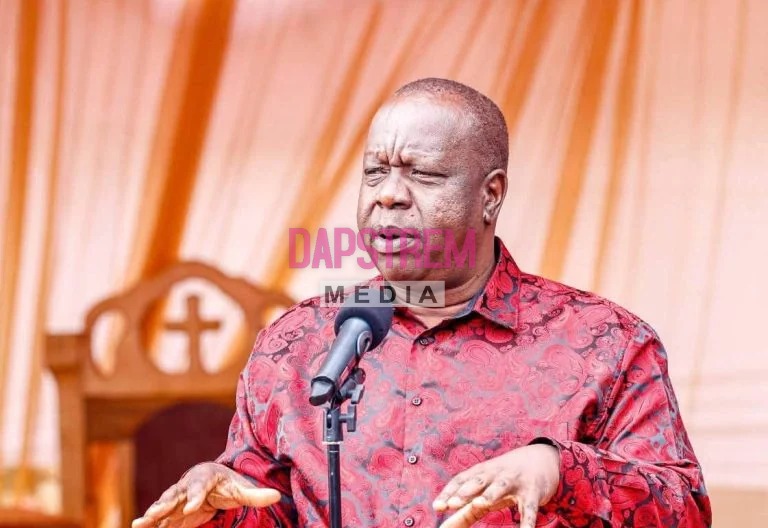


Jeremiah Kioni Resigns as Jubilee Deputy Party Leader, Signalling a New Political Chapter Ahead of 2027
Kenya’s political landscape has witnessed another significant development ahead of the 2027 General Election following the resignation of Jeremiah Kioni as Jubilee Party Deputy Party Leader. The former Ndaragwa Member of Parliament has officially ended his 11-year association with the political outfit, marking the conclusion of a long journey that saw him rise through the party’s ranks and become one of its most prominent officials.
Kioni announced his resignation in a letter dated November 25, 2026, addressed to Jubilee Acting Party Leader Fred Matiang’i. In the letter, he said his decision was effective immediately, explaining that it followed deep reflection on his political journey and the direction he intends to take in the coming years.
The announcement, made public on November 26, comes at a critical moment when political parties and influential leaders are repositioning themselves ahead of the next general election. Kioni’s departure is particularly significant because he was not merely a member of Jubilee but one of the leaders who played an important role in its organisational and political activities over the years.
His resignation also comes amid growing questions about Jubilee’s future, its leadership structure and its ability to remain a competitive political force following the changes that have taken place within the party.
An Eleven-Year Political Journey Comes to an End
In his resignation letter, Kioni reflected on the years he spent in Jubilee, describing the experience as a defining chapter in his political career. He acknowledged that the journey had been marked by both successes and difficult moments, but maintained that the party had provided him with an important platform to serve the Kenyan people.
He described his departure as a decision made with mixed emotions, expressing gratitude for the opportunities and responsibilities he had received during his time in the organisation.
Kioni’s political journey within Jubilee began more than a decade ago, during a period when the party was emerging as one of the most influential political formations in the country. Under the leadership of former President Uhuru Kenyatta and his then deputy, William Ruto, Jubilee became a dominant force in Kenya’s political arena, particularly during the 2017 General Election.
For Kioni, the party offered an opportunity to participate in national politics, build relationships with influential leaders and contribute to the development of a political movement that shaped the country’s leadership for several years.
His resignation therefore represents more than a change of political affiliation. It marks the end of a relationship that lasted through different political seasons, including Jubilee’s rise to power, its internal struggles, its defeat in the 2022 elections and its subsequent attempts to rebuild itself as an opposition party.
Kioni acknowledged that the experience had taught him valuable lessons about leadership, patience, humility and the importance of political institutions. He said he was leaving with gratitude for the people who supported him and with his head held high.
The former Ndaragwa MP also thanked Jubilee members, county officials, Secretariat staff and the National Executive Committee for their contributions throughout his time in the party.
His message suggested that despite the challenges experienced in recent years, he remained appreciative of the relationships and political experiences he had gained.
Kioni Thanks Uhuru Kenyatta for Leadership and Friendship
One of the most notable aspects of Kioni’s resignation letter was his tribute to former President Uhuru Kenyatta, whom he credited with providing leadership, guidance and friendship during his time in Jubilee.
Kioni expressed appreciation for the trust Kenyatta had placed in him, describing their relationship as one that extended beyond political titles and positions.
His remarks reflected the close association he developed with the former president during Jubilee’s years in government and during the party’s efforts to remain politically relevant after the 2022 electoral defeat.
Kioni’s relationship with Uhuru has been central to his political identity within Jubilee. He served as Secretary General during a period when the party faced significant organisational challenges and later became Deputy Party Leader as Jubilee sought to reorganise its leadership.
By publicly acknowledging Uhuru in his resignation letter, Kioni appeared keen to preserve the personal relationships and political lessons he had acquired during his long association with the former president.
He also wished Uhuru good health, peace and continued fulfilment, expressing the belief that political positions may change but genuine friendships can endure beyond party affiliations.
The tribute was particularly significant because Kioni’s departure comes at a time when Jubilee is undergoing a leadership transition and preparing for the next electoral cycle under a different political arrangement.
Fred Matiang’i and the Future of Jubilee
Kioni’s resignation also places the spotlight on Fred Matiang’i, who has taken over the leadership of Jubilee and is positioning himself as the party’s presidential candidate ahead of the 2027 General Election.
In his letter, Kioni congratulated Matiang’i on assuming the responsibility of leading the party and wished him success in his presidential campaign.
He urged him to lead with wisdom, courage and unity of purpose, while expressing hope that his campaign would inspire Kenyans and contribute to the country’s political future.
The message was cordial, but the resignation comes after Kioni had publicly raised concerns about his role within the party and his relationship with its new leadership.
In a November 15 interview with Inooro TV, Kioni indicated that he was considering leaving Jubilee after feeling excluded from important political activities. He claimed that despite holding the position of Deputy Party Leader, he had not been assigned specific responsibilities and was not involved in planning some of Matiang’i’s political engagements.
Kioni also said he had initially expected to work alongside Matiang’i, with the latter focusing on his presidential ambitions while he concentrated on strengthening Jubilee’s party structures.
However, he suggested that the arrangement changed after Matiang’i assumed both the party leadership and the presidential candidacy. Kioni said he did not want to engage in a confrontation that could undermine the party’s ambitions, choosing instead to consider a different political path.
He also questioned Jubilee’s popularity in the Mt Kenya region, arguing that the party was struggling to attract the grassroots support it once enjoyed.
SportZone+1
These earlier remarks provide important context to his resignation. Although Kioni did not present his departure letter as an attack on the party or its leadership, his decision follows a period of uncertainty about his political role and future within Jubilee.
The resignation may therefore be understood as the culmination of discussions and concerns that had been building over several weeks.
Jubilee Faces Another Challenge Ahead of the 2027 Elections
Jubilee’s political future remains one of the key questions arising from Kioni’s departure.
The party was once one of the most powerful political organisations in Kenya, having played a central role in the 2017 elections and the formation of the national government. However, its influence declined significantly after the 2022 General Election, when its preferred presidential candidate, Raila Odinga, lost to William Ruto.
Following the electoral defeat, Jubilee faced internal disagreements, leadership changes and questions about its continued relevance in the country’s political landscape.
The party has since attempted to rebuild its structures and prepare for the 2027 elections. The transition from Uhuru Kenyatta’s leadership to Fred Matiang’i was part of that effort, with the aim of establishing a new direction and presenting a fresh political alternative.
However, Kioni’s resignation highlights the difficulties that political parties often face when leadership transitions involve competing expectations and ambitions.
A party’s strength is not determined only by its presidential candidate or senior officials. It also depends on its organisational structures, grassroots networks, ability to attract candidates and capacity to maintain unity among its members.
The departure of a senior official who served as Secretary General for four years and Deputy Party Leader for almost one year could therefore have implications for Jubilee’s organisational stability.
While one resignation does not automatically determine the party’s electoral fortunes, it raises questions about whether Jubilee can maintain cohesion as it prepares for a demanding campaign season.
The party will need to demonstrate that it can manage internal disagreements, strengthen its grassroots presence and provide a clear political message to voters.
Kioni Announces Plans to Launch a New Political Platform
Despite leaving Jubilee, Kioni has made it clear that he is not retiring from politics.
In his resignation letter, he stated that his departure was not a farewell to public life or the end of his political journey. Instead, he revealed that he was preparing to launch another political platform through which he intends to continue pursuing his vision for Kenya.
The announcement is one of the most important elements of his resignation because it suggests that Kioni is seeking a new political identity rather than simply stepping away from party leadership.
A new platform could provide him with an opportunity to build political alliances, attract supporters and participate in the broader opposition efforts ahead of the 2027 elections.
However, establishing a new political vehicle is not an easy undertaking. Political parties require strong organisational structures, committed members, financial resources, clear policies and a credible leadership team.
Kioni will also need to determine how his proposed platform fits into the wider opposition landscape, where several leaders and parties are already positioning themselves for the next election.
The challenge will be to create a political organisation that can attract support beyond his existing networks and present a convincing alternative to voters.
His decision could also influence political conversations within the Mt Kenya region, where leaders are increasingly seeking platforms that can address local interests while contributing to national political negotiations.
For now, Kioni has not publicly provided all the details of the new platform, including its name, leadership structure or possible alliances. Those details are likely to become clearer as he moves towards formally announcing his next political step.
A Strategic Move in Kenya’s Changing Political Landscape
Kioni’s resignation comes at a time when Kenya’s political parties are beginning to reorganise ahead of the 2027 General Election.
The upcoming election is expected to be shaped by coalition negotiations, regional political calculations, party leadership contests and efforts to mobilise voters across the country.
For opposition leaders, the challenge is to develop a united and credible political alternative capable of competing with the incumbent administration.
For parties such as Jubilee, the challenge is to rebuild their influence after losing power and to convince voters that they remain relevant to the country’s political and economic concerns.
Kioni’s decision to leave may therefore become part of a wider pattern of political realignments as leaders assess whether their current parties offer the best platforms for their ambitions.
His departure also demonstrates how political relationships can change when leadership structures are reorganised and individuals reassess their positions within established parties.
Although Kioni expressed goodwill towards Matiang’i in his resignation letter, his move to establish a new platform could introduce another political player into the discussions surrounding the opposition’s future.
Whether the new platform will operate independently, join an existing coalition or eventually become part of a broader political alliance remains to be seen.
What is clear, however, is that Kioni intends to remain active in public affairs and continue participating in the national political conversation.
What Kioni’s Resignation Means for Jubilee and the Opposition
The resignation of Jeremiah Kioni marks an important moment for Jubilee as it seeks to rebuild itself ahead of the 2027 elections.
His departure closes an eleven-year chapter in which he held influential positions and contributed to the party’s political and organisational activities. It also highlights the challenges facing Jubilee as it navigates leadership changes and attempts to regain its electoral appeal.
For Kioni, the decision appears to represent an opportunity to pursue his political ambitions through a different platform. His experience as a former MP, party Secretary General and Deputy Party Leader gives him a political background that could shape his next move.
However, the success of that move will depend on his ability to build a strong organisation, establish meaningful alliances and connect with voters beyond the political circles he has previously occupied.
For Jubilee, the immediate task will be to maintain unity, strengthen its leadership structures and reassure members that the party remains capable of offering a credible political direction.
As Kenya moves closer to the 2027 General Election, Kioni’s resignation is likely to remain part of the broader conversation about political succession, party loyalty and the changing nature of opposition politics.
His departure is not simply the story of a senior politician leaving a party. It is also a reflection of the difficult choices leaders face when their political ambitions no longer align with the structures they once helped build.
With plans to launch a new political platform, Kioni has signalled that his political journey is far from over. The coming months will reveal whether his next chapter will reshape his influence, strengthen the opposition or introduce another significant force into Kenya’s increasingly competitive political landscape.