Kindiki Approves Nationwide Campaign Against Illicit Alcohol and Drugs as Kenya Intensifies War on Substance Abuse
Kenya is set to intensify its fight against illicit alcohol, drug abuse and the growing threat posed by substances that continue to destroy lives, families and communities across the country. Deputy President Kithure Kindiki has approved a new nationwide campaign aimed at strengthening efforts to combat the production, distribution and consumption of illegal alcoholic drinks and narcotic substances.
The campaign comes at a time when substance abuse remains a major concern, particularly among young people, with communities increasingly worried about the social, economic and health consequences of addiction. The government has repeatedly raised concerns about the proliferation of illicit brews, unregulated alcoholic products and drugs, which have been linked to premature deaths, criminal activities, school dropouts and the breakdown of families.
Kindiki’s approval of the new campaign signals renewed government commitment to tackling the problem through coordinated action involving security agencies, national and county administrations, communities and other stakeholders. The initiative is expected to strengthen enforcement, improve public awareness and address the networks responsible for distributing dangerous substances.
A national charter to guide the campaign
The new campaign is expected to operate under a national charter designed to provide a clear framework for the government’s war against illicit alcohol and drugs. The charter will guide enforcement operations, public engagement, coordination between government agencies and community participation in tackling substance abuse.
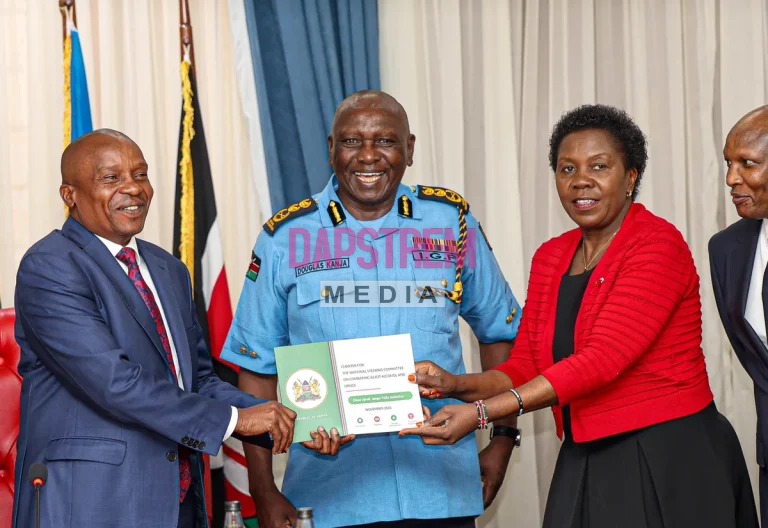
Kindiki received the charter from the National Steering Committee on Combating Illicit Alcohol and Drugs during a meeting that reviewed ongoing efforts and proposed additional interventions. The committee also presented recommendations aimed at strengthening the country’s response to the problem.
The government has approved the campaign theme “Okoa Jamii, Jenga Taifa,” which translates to “Save the Community, Build the Nation.” The theme reflects the government’s position that fighting alcohol and drug abuse is not merely a security operation but an important national responsibility.
The campaign is expected to be rolled out across the country, bringing together local leaders, security officers, community representatives, religious institutions, government agencies and other stakeholders.
The national charter is intended to establish a coordinated approach to the campaign, ensuring that different institutions work towards common objectives rather than conducting isolated activities that may have limited impact.
The Deputy President has directed the committee to begin nationwide activities, with particular emphasis on community-led initiatives. This approach is expected to encourage members of the public to actively participate in identifying and reporting illegal activities within their neighbourhoods.
The government believes that community involvement will be particularly important because illicit alcohol and drug networks often operate within residential areas, towns and rural communities where local residents may have information about their activities.
Government intensifies crackdown on illicit alcohol networks
The approval of the nationwide campaign comes amid an ongoing government crackdown targeting manufacturers, distributors and sellers of illicit alcoholic drinks and narcotic substances.
Authorities have been conducting intelligence-led operations targeting illegal manufacturing facilities, distribution networks and individuals suspected of supplying dangerous products to consumers.
In October, Kindiki reported that security agencies had conducted 125 operations within 10 days, including nine raids targeting illicit ethanol and 116 operations against illegal traditional brews. The government has also been considering tougher legal measures against manufacturers, distributors, financiers and other individuals involved in the illicit alcohol trade.
Kenya News Agency+1
The crackdown is expected to extend beyond the people selling illegal drinks at the retail level. Authorities are increasingly focusing on the networks behind the production, transportation and distribution of harmful alcoholic beverages.
The government has expressed concern that some illicit alcoholic products contain dangerous chemicals capable of causing serious health complications, permanent disability and death.
The campaign is therefore expected to target the entire supply chain, including those who manufacture dangerous products, transport them, finance their production and facilitate their distribution.
Kindiki has previously warned that the government considers the illicit alcohol trade a serious national threat, arguing that criminal networks are exploiting vulnerable communities while putting the lives of consumers at risk.
The renewed campaign is expected to strengthen coordination among agencies responsible for security, public health, standards enforcement, intelligence gathering and drug control.
The role of communities in fighting substance abuse
One of the key aspects of the new campaign is the emphasis on community participation. The government recognises that security agencies alone cannot effectively eliminate illicit alcohol and drug abuse without the support of ordinary citizens.
Local leaders, village elders, religious leaders, parents, teachers and youth organisations are expected to play a central role in educating communities about the dangers of substance abuse and helping authorities identify illegal activities.
The campaign is also expected to encourage parents to take a more active role in the lives of their children, particularly teenagers and young adults who may be vulnerable to peer pressure, unemployment, stress and other challenges that expose them to substance abuse.
Communities will be encouraged to report suspicious activities, including the manufacture and sale of illicit alcohol, while avoiding taking the law into their own hands.
The government has previously highlighted the importance of grassroots participation in its crackdown, including strengthening local administration and providing support to village elders involved in community-level enforcement.
The Standard+1
Religious institutions are also expected to contribute by offering counselling, guidance and support to individuals struggling with addiction.
Churches, mosques and other faith-based organisations have traditionally played an important role in addressing social problems in Kenyan communities. Their involvement could help strengthen prevention efforts while providing emotional and spiritual support to affected families.
The government is expected to work with such institutions to encourage behavioural change and promote responsible decision-making among young people.
Rehabilitation remains an important part of the fight
While enforcement against illegal alcohol and drug networks is expected to remain a central pillar of the campaign, the government has also recognised the importance of rehabilitation.
Substance abuse is a complex problem that cannot be solved entirely through arrests, raids and prosecution. Many individuals struggling with addiction require medical attention, counselling, rehabilitation and long-term support to recover.
The government has previously announced plans for national and county governments to collaborate in establishing at least one public rehabilitation centre in every county, with an estimated cost of approximately Sh60 million per facility. The proposal is intended to expand access to treatment and rehabilitation services across the country.
The Standard+1
The nationwide campaign could therefore provide an opportunity to strengthen the connection between enforcement and rehabilitation by identifying people affected by substance abuse and directing them towards appropriate support services.
Families dealing with addiction often face financial difficulties, emotional distress, stigma and uncertainty about where to seek help. Improved rehabilitation services could help ease some of these challenges.
The government is also expected to encourage public awareness campaigns explaining the dangers of drug abuse, the health consequences of consuming unsafe alcohol and the importance of seeking professional help.
The long-term success of the campaign may depend on whether individuals struggling with addiction are treated not only as people facing a social challenge but also as individuals who require support to rebuild their lives.
Young people at the centre of the campaign
The fight against illicit alcohol and drugs has increasingly become a major concern because of its impact on Kenya’s younger generation.
Substance abuse can interfere with education, employment, relationships and the ability of young people to contribute meaningfully to society. It can also expose them to criminal activities, violence, exploitation and serious health complications.
For many families, addiction has become a source of prolonged suffering, with parents struggling to support children whose lives have been affected by alcohol and drugs.
The government has repeatedly expressed concern that the proliferation of illicit substances is threatening the future of young people, particularly in communities where unemployment and economic hardship create additional vulnerabilities.
The new campaign is expected to place greater emphasis on educating young people about the risks of substance abuse and encouraging them to pursue productive activities.
Schools, colleges, universities, youth groups and community organisations could play a significant role in creating awareness and providing safe spaces for young people to discuss challenges affecting their lives.
However, experts and community leaders have often argued that prevention requires more than warnings and public campaigns. Young people also need access to employment opportunities, vocational training, sports, mentorship programmes and economic empowerment initiatives.
Addressing these underlying challenges could help reduce the vulnerability of young people to drug abuse and criminal networks.
Multi-agency coordination to strengthen enforcement
The new campaign is expected to bring together several government institutions to improve coordination and ensure that enforcement efforts are more effective.
The National Police Service, Directorate of Criminal Investigations, National Authority for the Campaign Against Alcohol and Drug Abuse (NACADA), Kenya Bureau of Standards, National Intelligence Service, Kenya Revenue Authority and other relevant agencies are expected to play important roles in the implementation of the campaign.
The involvement of different institutions is considered important because illicit alcohol and drug trafficking involve several stages, including production, transportation, distribution, financial transactions and retail sales.
By coordinating their activities, agencies could improve intelligence gathering, identify criminal networks and prevent illegal products from reaching consumers.
The government has also been considering legislative reforms aimed at strengthening enforcement and increasing accountability among individuals involved in illicit alcohol and drug trafficking.
Kindiki has previously indicated that the proposed legal changes would target not only manufacturers and sellers but also financiers and other individuals who facilitate the illegal trade.
Kenya News Agency+1
The new nationwide campaign is expected to build on these efforts by providing a broader framework for coordinated operations, community engagement and public awareness.
A renewed commitment to protecting Kenyan communities
The approval of the nationwide campaign marks another significant step in the government’s efforts to address illicit alcohol and drug abuse, which continue to pose serious challenges to public health, security and social development.
Through the “Okoa Jamii, Jenga Taifa” campaign, the government hopes to mobilise communities across the country to take a more active role in protecting families, young people and vulnerable individuals from the dangers of substance abuse.
The success of the initiative, however, will depend on how effectively the approved charter is implemented and whether the campaign translates into sustained action on the ground.
Kenyans will be watching to see whether the initiative leads to the dismantling of illicit alcohol networks, improved regulation, increased access to rehabilitation services and a reduction in substance abuse across the country.
For families affected by addiction, the campaign represents renewed hope that the government will take stronger measures to address a problem that has caused widespread suffering.
Ultimately, the fight against illicit alcohol and drugs will require a united effort involving the government, communities, families, educational institutions, religious organisations and the private sector.
The challenge is not simply to eliminate illegal substances from the market but to build communities where young people have opportunities, families receive support and individuals struggling with addiction can access treatment and recover.
With the new campaign approved and nationwide activities expected to begin, the government has placed renewed emphasis on protecting Kenyan communities from the destructive effects of illicit alcohol and drug abuse.
The effectiveness of the initiative will now depend on sustained enforcement, accountability, public participation and the government’s ability to address the underlying social and economic factors contributing to substance abuse.