Natembeya’s Aide Fights for His Life After Brutal Attack as Assailants Torch His Car in Trans Nzoia
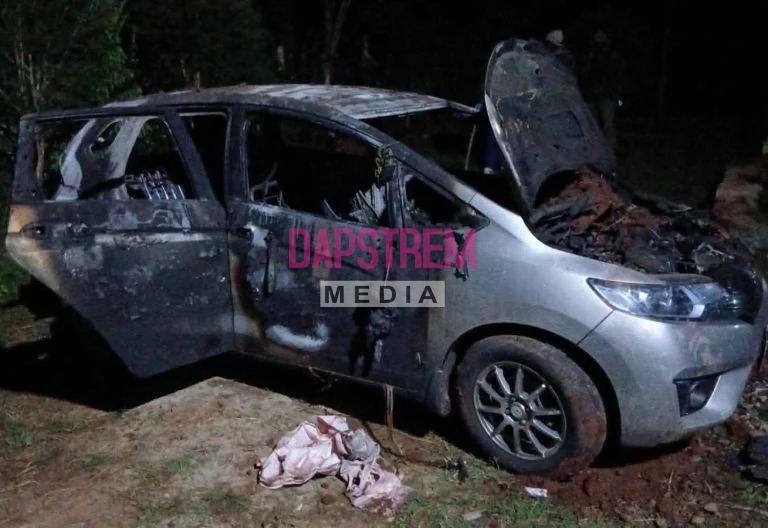
A communications officer attached to the office of Trans Nzoia Governor George Natembeya is fighting for his life in hospital following a brutal attack by unknown armed assailants who reportedly ambushed him outside his home, inflicted serious injuries and set his vehicle ablaze. The victim, identified as Amos Boaz Masika, popularly known as Hammer Hammer, was attacked on Monday night, November 16, 2026, as he arrived at his residence in the Chebarus area of Trans Nzoia County.
The incident has sparked widespread concern among political leaders, journalists, bloggers and supporters of the Linda Mwananchi Movement, with calls for security agencies to investigate the attack and bring those responsible to justice.
According to reports from family members, Masika was preparing to open the gate to his home when the attackers descended on him. The assailants reportedly used machetes to inflict serious injuries on his head, wrists and legs before setting his vehicle on fire.
The attack left his family traumatised, with relatives describing a frightening scene involving screams for help, a burning vehicle and a desperate attempt to rescue him from the assailants.
Masika was subsequently rushed to hospital, where he was admitted for specialised treatment. Reports indicated that his condition was critical, with medical teams attending to the severe injuries he sustained during the incident.
The attack has raised fresh concerns about the safety of individuals associated with political leaders, particularly at a time when political tensions are increasing ahead of the 2027 General Election.
It has also renewed debate about political intolerance, the protection of citizens and the responsibility of security agencies to ensure that Kenyans can freely express their political opinions without fear of violence.
Family Recounts Horrifying Moments During the Attack
Details emerging from Masika’s family have painted a disturbing picture of the events that unfolded outside their home on Monday evening.
According to his wife, Faith Cherop, the incident happened at approximately 8:30 pm after Masika arrived home and parked his vehicle outside the compound.
He reportedly went into the house to collect the keys needed to open the gate before returning to secure the vehicle and enter the compound.
However, before the family could complete the routine activity, they heard commotion outside followed by desperate cries for help.
Cherop said she heard her husband shouting that he was being attacked and immediately became concerned about what was happening outside.
When she rushed towards the scene, she reportedly found the vehicle engulfed in flames, while her young child was screaming beside the burning car.
Masika’s phone was also reportedly lying on the ground, further illustrating the chaos that had unfolded during the attack.
The family described the incident as extremely traumatic, particularly because the assault happened close to their home, a place where they expected to be safe.
His mother, Beatrice Masika, was also overcome with emotion as she recounted the attack on her son and expressed concern about his condition.
The family further claimed that approximately 10 assailants were involved in the incident, although the number and identities of the attackers had not been independently established.
Masika’s brother, Sam Masika, expressed suspicion that the incident could have been politically motivated, arguing that his brother’s political involvement might have exposed him to hostility.
He called on the government and relevant security agencies to investigate the incident and ensure that those responsible are arrested and prosecuted.
The family maintains that the attack was intended to cause serious harm and has demanded answers about why armed individuals could target someone outside his own home.
The circumstances surrounding the incident have raised concerns beyond the immediate family, particularly among residents who fear that violence could increasingly become part of the political environment.
People Daily+1
Masika’s Political Role and Association With Governor Natembeya
Masika is a communications officer associated with the office of Trans Nzoia Governor George Natembeya and is also known for his activities as a blogger and political commentator.
Popularly referred to as Hammer Hammer or Hammer Hammer Ke on social media, he has developed a public profile through his online commentary on political developments, governance and leadership.
He is also associated with the governor’s political communications network and the Linda Mwananchi Movement, which has become increasingly visible in Kenya’s political discussions.
His role has placed him within a political environment characterised by strong disagreements between competing political camps, particularly in the Western Kenya region.
Through social media platforms, Masika has participated in political discussions and communicated messages supporting Natembeya and his allies.
His visibility in political conversations has also made the latest attack particularly concerning to supporters who believe that individuals involved in political communication should be protected from intimidation and violence.
Following news of the incident, several political figures and social media users expressed shock, with many questioning how someone could be brutally attacked at his residence.
The attack has also revived concerns about the safety of bloggers and political communicators who frequently engage in public discussions about national and county leadership.
Political commentary, criticism and support for particular leaders are part of democratic participation. However, disagreements over political opinions should never result in physical violence or threats against individuals and their families.
Masika’s case has therefore become another reminder of the importance of protecting freedom of expression and ensuring that political competition remains peaceful.
At the time of reporting, the motive behind the attack had not been officially established, and no evidence had conclusively linked the incident to a particular political group or individual.
Previous Arrest Raises Questions About His Safety
The latest attack has attracted additional attention because it comes less than a month after Masika reportedly had a confrontation with detectives from the Directorate of Criminal Investigations (DCI).
On October 22, 2026, Masika was arrested by DCI officers near the Kitale Law Courts in an incident that attracted criticism from political allies and supporters of Governor Natembeya.
Reports indicated that he was arrested while in the company of two colleagues before being taken to court.
He was subsequently charged in a case involving alleged cyberbullying and released on cash bail as the legal proceedings continued.
His arrest generated public discussion, particularly among individuals associated with Natembeya and the Linda Mwananchi Movement, who questioned the circumstances surrounding his detention.
Masika is known for his political commentary on social media, where he has frequently discussed governance issues and criticised political leaders.
His supporters argued that the arrest raised concerns about the treatment of individuals who use online platforms to express political opinions.
The latest attack has consequently renewed questions about his personal safety and whether his political activities could have exposed him to threats.
However, investigators have not established any connection between his previous arrest and the latest assault.
It is also important to distinguish between the two incidents, as the circumstances surrounding the attack remain under investigation.
The family wants security agencies to establish whether the assault was motivated by personal differences, political disagreements or another reason.
For many of his supporters, the fact that Masika had previously been arrested and was later attacked at his residence has made the situation even more alarming.
They are demanding a comprehensive investigation that examines all possible motives without allowing political pressure or speculation to interfere with the search for justice.
The Standard+2
Political Leaders Condemn the Attack and Demand Justice
The attack has attracted condemnation from political leaders and members of the Linda Mwananchi Movement, who have described the incident as unacceptable and called for urgent action from security agencies.
Pauline Njoroge, the movement’s head of communications, was among those who publicly condemned the assault.
She confirmed that Masika works within Governor Natembeya’s communications team and expressed concern over the severity of the injuries he sustained.
Njoroge also questioned the growing reports of violence targeting individuals associated with political movements, warning that political differences should never become a justification for attacks.
She called for the protection of citizens and urged security agencies to investigate the incident.
Former Meru Governor and Linda Mwananchi Movement Deputy Party Leader Kawira Mwangaza also condemned the attack.
Mwangaza urged supporters of the movement to remain strong and avoid being intimidated by the incident.
She described the developments as disturbing and encouraged members to remain committed to their political activities despite the growing concerns over their safety.
Saboti Member of Parliament Caleb Amisi also condemned the assault and called on police to pursue those responsible.
Former National Assembly member and Democratic Action Party of Kenya Secretary General Eseli Simiyu expressed sadness over the incident, describing Masika as a political commentator who should not have been subjected to such violence.
Other political figures and bloggers have also expressed solidarity with the injured communications officer and his family.
Their reactions have highlighted the wider concern that attacks against individuals involved in political communication could discourage citizens from participating freely in public discussions.
The leaders have insisted that the government must ensure that individuals are protected regardless of their political affiliations or the opinions they express.
They have also called for the arrest and prosecution of anyone found responsible for organising or carrying out the assault.
However, while political leaders have raised suspicions about possible political motives, the identities of the attackers and the circumstances surrounding the incident remain matters for investigators to establish.
The Standard+2
Attack Comes Amid Rising Political Tensions in Western Kenya
The assault on Masika has occurred against a background of growing political tensions involving leaders and supporters associated with Governor George Natembeya.
The Trans Nzoia governor has increasingly become a prominent figure in national political discussions, particularly through his criticism of the national administration and his involvement in emerging political movements.
His association with the Linda Mwananchi Movement has also placed him among leaders seeking to influence the direction of Kenya’s opposition politics ahead of the 2027 General Election.
Natembeya has had public disagreements with President William Ruto over various political and governance issues, including disputes concerning the management and control of county projects.
The disagreements have contributed to a tense political atmosphere in the region.
The governor has also faced concerns surrounding his security arrangements after his security detail was withdrawn.
In a separate development, the High Court ordered Inspector General of Police Douglas Kanja to reinstate Natembeya’s seven-member security team after finding the withdrawal unconstitutional.
The ruling came amid concerns over the governor’s safety and his relationship with national authorities.
Although the court matter is separate from the assault on Masika, both developments have contributed to public discussion about security and political tensions surrounding the governor.
The latest attack has therefore raised questions about whether individuals working closely with political leaders are adequately protected, particularly in areas where political disagreements have become increasingly confrontational.
Nevertheless, investigators must establish the circumstances of Masika’s assault independently rather than assume that political tensions automatically explain the incident.
Kenya’s democratic system depends on the ability of political leaders, their supporters and ordinary citizens to express differing opinions without fear of violence.
The increasing concern surrounding political intimidation makes it important for authorities to act decisively whenever allegations of attacks emerge.
Attack Follows Other Incidents of Violence Targeting Political Supporters
The assault on Masika has also drawn attention because it comes days after other reported incidents involving individuals associated with Bumula MP Wanami Wamboka.
Two homes belonging to supporters of the legislator, Boniface Wakwabubi and Mwalimu Ben Wang’unda, were reportedly targeted in suspected arson attacks in Mwiyenga village, Bungoma County.
The incidents occurred amid political disagreements and growing tensions involving leaders associated with the Linda Mwananchi Movement.
Reports indicated that the families were asleep when suspected attackers set their homes on fire. Neighbours reportedly intervened and helped prevent the flames from spreading further.
The incidents prompted Wamboka and other political leaders to demand investigations, arguing that individuals should not be targeted because of their political affiliations.
The attacks have raised concerns about a possible pattern of intimidation targeting individuals associated with certain political camps.
However, investigators have not established a connection between the incidents in Bungoma and the assault on Masika in Trans Nzoia.
The developments have nevertheless intensified calls for security agencies to investigate all reported cases of political violence and ensure that those responsible face the law.
The situation is particularly concerning as political activities continue to increase ahead of the 2027 General Election.
Political disagreements are expected in any competitive democratic environment. However, when disputes begin involving threats, arson, physical assaults and destruction of property, they create an atmosphere that threatens peaceful political participation.
Leaders across the political divide have a responsibility to discourage violence among their supporters and promote peaceful engagement.
Security agencies must also demonstrate impartiality by investigating reported attacks regardless of the political affiliations of the victims or suspects.
The Star+2
Police Begin Investigations as Family Demands Accountability
Following the attack, security agencies in Trans Nzoia began processing the scene as investigations were initiated to establish what happened and identify the people responsible.
A senior police officer in the county confirmed that authorities were handling the matter and would provide further details as investigations progressed.
The family has urged police to move quickly, arguing that the attackers must be identified and brought before the courts.
Investigators are expected to examine the circumstances surrounding the assault, including the movements of the suspects, the damage caused to the vehicle and any available evidence that could help establish the motive.
The reported attempt to set the family home on fire has also raised concerns about the possibility of further danger to Masika’s relatives.
For the family, the immediate priority remains his recovery and the restoration of their sense of security.
The incident has also drawn attention to the need for stronger protection of citizens, particularly individuals who may face threats because of their public activities.
The police investigation will be important in determining whether the attack was connected to political disagreements, personal disputes or another motive.
It will also help establish whether the attackers intended to intimidate Masika, cause serious bodily harm or kill him.
So far, no individual or political organisation has been officially established as responsible for the assault.
The government therefore faces pressure to ensure that investigations are transparent, professional and free from political interference.
Growing Concerns Over Political Intolerance Ahead of 2027
The attack on Masika has renewed broader concerns about political intolerance in Kenya as the country approaches the 2027 General Election.
Political competition has increasingly become a subject of national debate, with leaders and their supporters positioning themselves for the next electoral contest.
However, reports of violence, intimidation and destruction of property have raised questions about whether political disagreements are being managed peacefully.
The Kenya Conference of Catholic Bishops has previously expressed concern over political intolerance, the use of hired groups to disrupt political activities and the failure to protect citizens from violence.
The bishops have urged security agencies to remain impartial and ensure that everyone enjoys the constitutional freedoms of expression, association and peaceful assembly.
Their concerns reflect the importance of maintaining a political environment in which citizens can support different candidates and movements without facing threats.
Kenya’s Constitution protects freedom of expression and the right to participate in political activities. These rights apply equally to government supporters, opposition supporters, bloggers, journalists and ordinary citizens.
The assault on Masika therefore raises important questions about the safety of people who use social media and other platforms to engage in political discussions.
As the country moves closer to the 2027 elections, security agencies will face increasing responsibility to prevent political violence and ensure that perpetrators are held accountable.
The government must also demonstrate that the law applies equally to everyone, regardless of political influence or connections.
Ultimately, the attack on Masika is a serious reminder of the dangers of political intolerance and the need to protect democratic participation.
As he continues receiving medical attention, his family, colleagues and political supporters are hoping for his recovery while demanding justice.
The biggest question now is who was behind the attack, why Masika was targeted and whether investigators will bring those responsible to justice.
For now, the incident has left the Trans Nzoia political community shaken and renewed calls for greater security as Kenya prepares for another highly competitive election season.