Kenya Wins ITU Council Re-Election with 136 Votes, Leads African Group
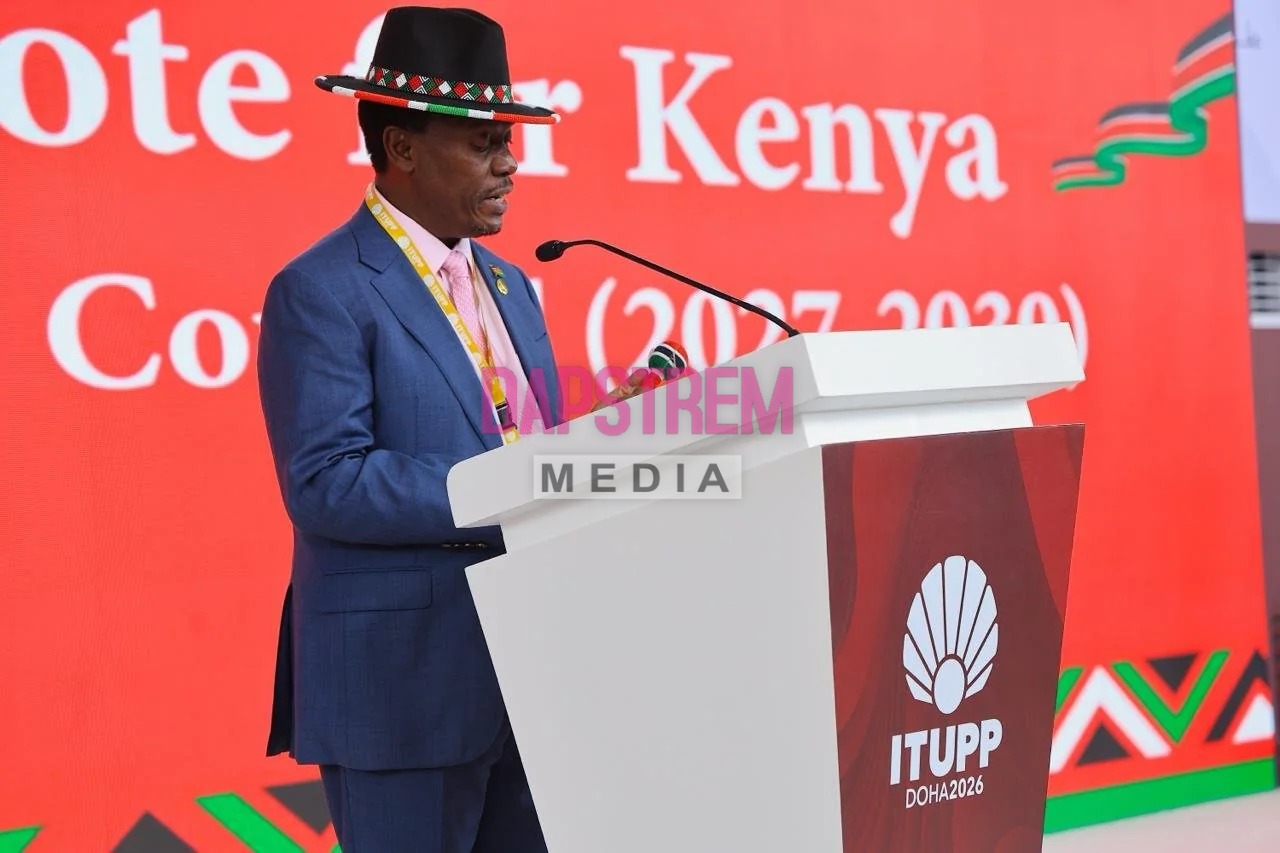
Kenya has secured a major diplomatic victory after winning re-election to the International Telecommunication Union (ITU) Council for the 2027–2030 term, receiving 136 votes and emerging as the leading country in Africa’s regional group. The outcome strengthens the country’s position in international telecommunications governance and gives it another opportunity to influence global policies shaping connectivity, technological innovation and the digital economy.
The successful re-election was announced on Monday, November 16, 2026, following the elections held during the ITU Plenipotentiary Conference in Doha, Qatar. Kenya’s victory comes after an intensive diplomatic campaign led by Information, Communications and the Digital Economy Cabinet Secretary William Kabogo, working alongside the Kenyan Ambassador to Qatar and the Communications Authority of Kenya.
The result is being viewed as a significant endorsement of Kenya’s growing influence in the information and communications technology sector. It also reinforces the country’s ambition to position itself as a leading digital hub in Africa while advocating for the continent’s interests in international technology discussions.
Kenya will now continue serving on the ITU Council for the next four years, from 2027 to 2030, joining other elected member states responsible for helping guide the organisation’s strategic direction.
The victory is particularly important because the ITU plays a central role in determining international telecommunications policies, coordinating global connectivity initiatives and promoting cooperation among countries on technological development.
Kenya emerges as Africa’s leading candidate
Kenya’s 136 votes placed it at the top of the African regional group, marking a strong performance in an election involving countries seeking representation on the ITU Council.
The outcome reflects the country’s sustained engagement with the international telecommunications organisation and its efforts to strengthen diplomatic relationships with other member states.
According to reports, Kenya’s campaign involved intensive outreach to delegates attending the conference in Doha. The Kenyan delegation held bilateral meetings, hosted diplomatic receptions and organised a high-level luncheon aimed at securing support for the country’s candidature.
The engagements brought together ministers, diplomats, heads of delegations and other representatives from ITU member states.
Kabogo spearheaded the campaign, highlighting Kenya’s achievements in digital transformation and its commitment to promoting inclusive connectivity across Africa and beyond.
The Cabinet Secretary described the re-election as renewed confidence in Kenya’s digital leadership, saying the country was ready to champion a more connected and inclusive world.
The campaign also received support from Kenya’s diplomatic mission in Qatar and the Communications Authority of Kenya, which played a role in presenting the country’s digital development agenda to international delegates.
Kenya’s strong performance demonstrates the importance of diplomatic engagement in international organisations, where countries must build partnerships and demonstrate their capacity to contribute to global policy discussions.
The victory also provides Kenya with an opportunity to strengthen its influence on decisions affecting telecommunications infrastructure, digital inclusion and emerging technologies.
What the ITU Council does and why Kenya’s seat matters
The International Telecommunication Union is a specialised agency of the United Nations responsible for issues relating to information and communication technologies.
The organisation brings together governments and other stakeholders to coordinate international telecommunications standards, promote connectivity and address challenges affecting the global digital environment.
The ITU Council serves as the organisation’s governing body between Plenipotentiary Conferences. It consists of 48 member states elected from five geographical regions.
The Council oversees the implementation of the organisation’s policies and strategic plans, monitors its activities and helps guide its work on telecommunications development.
Its responsibilities also include reviewing financial and administrative matters, supervising working groups and addressing emerging issues affecting the global telecommunications sector.
Kenya’s re-election therefore gives the country a continued opportunity to participate in discussions involving international connectivity, radio spectrum management, telecommunications standards and technological development.
The seat is also important for Africa because the continent continues to face challenges involving internet access, infrastructure development, affordability and digital inclusion.
By maintaining its representation on the Council, Kenya can help advocate for policies that take into account the needs of African countries, particularly those seeking to expand access to reliable and affordable digital services.
The ITU Council has 13 seats allocated to Africa, making the region an important part of the organisation’s global governance structure.
Kenya’s emergence as the leading African candidate in the latest election strengthens its position within the regional group.
A longstanding partnership with the ITU
Kenya’s re-election also reflects its longstanding relationship with the International Telecommunication Union.
The country has maintained an active partnership with the organisation for decades, participating in its initiatives and contributing to discussions concerning telecommunications development.
Kenya has been a member of the ITU Council since 1982 and has participated in various working groups and bodies within the organisation.
Over the years, the country has established a reputation as one of Africa’s prominent technology markets, particularly through its innovations in mobile financial services, telecommunications infrastructure and digital government platforms.
Kenya’s mobile money ecosystem has attracted international attention and helped demonstrate how digital technologies can improve financial inclusion and expand access to services.
The country has also made significant investments in fibre-optic infrastructure, mobile connectivity and digital public services.
These developments formed an important part of Kenya’s campaign as it sought to convince ITU member states that it could continue contributing meaningfully to the organisation’s work.
The government has argued that Kenya’s experience in digital transformation gives it the capacity to support international efforts aimed at expanding connectivity and promoting innovation.
The re-election provides an opportunity to build on this experience while strengthening cooperation with other countries.
Kenya highlights progress in digital transformation
During the campaign, Kabogo highlighted several developments in Kenya’s ICT sector, including the expansion of fibre-optic infrastructure, growth in mobile subscriptions and the increasing number of government services available online.
The Cabinet Secretary stated that Kenya had completed approximately 60 per cent of its target of constructing 100,000 kilometres of national fibre-optic cable.
The government has been pursuing the expansion of fibre infrastructure as part of its efforts to improve internet access in rural areas, urban centres and underserved communities.
Fibre-optic networks are important because they provide the high-capacity infrastructure required to support broadband internet, digital businesses, online education and other technology-driven services.
Kabogo also cited 88 million mobile subscriptions in Kenya, highlighting the importance of mobile connectivity in the country’s digital economy.
Mobile phones have become central to communication, financial transactions, business operations and access to government services.
However, the number of subscriptions does not necessarily represent the number of unique users, since individuals may hold multiple SIM cards.
The Cabinet Secretary further pointed to the expansion of the eCitizen platform, which now reportedly offers 24,000 government services, compared with 500 in 2022.
The platform has become an important part of Kenya’s digital government strategy, allowing citizens and businesses to access services online rather than relying entirely on physical offices.
The government has continued to promote digitalisation as a way of improving efficiency, reducing administrative delays and increasing access to public services.
These developments were presented as evidence of Kenya’s commitment to advancing digital transformation and supporting the ITU’s broader objectives.
Kenya pushes for Africa’s digital priorities
Beyond securing its own position on the Council, Kenya has also sought to advance Africa’s interests in global telecommunications governance.
The country has emphasised the need for stronger African representation in discussions concerning artificial intelligence, data governance, digital infrastructure and emerging technologies.
One of the major issues highlighted during the campaign was artificial intelligence.
As AI technologies continue to develop rapidly, countries are increasingly competing to establish the infrastructure, policies and regulatory frameworks needed to support innovation.
Kenya has called for greater support for Africa’s AI agenda, including the development of regional sovereign data centres, AI language models for African languages and data governance frameworks that reflect African interests.
The proposal is intended to address concerns that African countries could become heavily dependent on foreign technology providers without developing sufficient local capacity.
Regional data centres could help improve access to computing infrastructure while supporting the storage and processing of data within African jurisdictions.
AI language models designed for African languages could also improve access to digital services for communities that are often underserved by existing technologies.
Kenya has further advocated for fairer access to telecommunications infrastructure, including satellite orbits and radio spectrum resources.
These resources are essential for the development of mobile networks, satellite communications and other technologies supporting global connectivity.
The country’s re-election could therefore provide a platform for continuing these discussions and strengthening Africa’s participation in international digital policy debates.
Digital inclusion remains a major challenge
Despite Kenya’s progress in telecommunications and digital services, significant challenges remain.
Millions of people across the country still face difficulties accessing reliable internet connectivity, particularly in remote and underserved areas.
The cost of internet services, smartphones and other digital devices remains a concern for many households.
Digital literacy is also an important issue, with some communities lacking the skills required to fully benefit from online services and technology-driven opportunities.
The government has been pursuing initiatives aimed at expanding digital infrastructure and increasing access to technology.
These efforts include the expansion of fibre-optic networks, the establishment of digital hubs and the promotion of online government services.
However, the success of these initiatives will ultimately depend on whether they translate into affordable, reliable and accessible services for ordinary citizens.
Kenya’s continued participation in the ITU Council could help strengthen international cooperation on these challenges.
The country can also use its position to advocate for policies that promote affordable connectivity, infrastructure sharing and support for developing economies.
Digital inclusion is particularly important because internet access increasingly influences opportunities in education, employment, entrepreneurship and access to public services.
The diplomatic effort behind Kenya’s victory
Kenya’s successful re-election highlights the role of diplomacy in securing international representation.
The campaign was not limited to presenting the country’s achievements in technology. It also involved building relationships with other member states and engaging delegates on issues of mutual interest.
The Kenyan delegation conducted bilateral engagements and hosted events designed to strengthen partnerships with countries participating in the conference.
The luncheon reception hosted by Kabogo provided an opportunity to bring together delegates and discuss Kenya’s candidature.
Such engagements are common during international elections, where countries seek to demonstrate their commitment to cooperation and persuade other governments to support their candidates.
The Communications Authority of Kenya also played an important role in supporting the campaign by highlighting the country’s telecommunications development and its commitment to international cooperation.
The victory demonstrates how coordinated efforts involving government ministries, diplomatic missions and regulatory institutions can contribute to successful international campaigns.
It also reinforces the importance of maintaining strong relationships with other countries beyond the immediate election period.
What Kenya’s re-election means for the next four years
Kenya’s new term on the ITU Council will begin in 2027 and run until 2030.
During this period, the country will participate in decisions affecting the organisation’s strategic priorities and the future of global telecommunications.
The coming years are expected to bring significant developments in areas such as artificial intelligence, satellite connectivity, cybersecurity, digital infrastructure and telecommunications standards.
The increasing use of digital technologies in business, education, healthcare and government services is also expected to create new policy challenges.
Kenya will have an opportunity to contribute to international discussions on how these technologies can be developed and deployed in ways that promote innovation while protecting users.
The country can also continue advocating for the interests of African nations, particularly on issues involving infrastructure development, affordability and access to emerging technologies.
However, maintaining international influence will require Kenya to demonstrate continued progress at home.
The country’s digital development agenda will need to deliver practical benefits to citizens, businesses and communities.
Expanding connectivity, improving digital literacy, strengthening cybersecurity and supporting innovation will remain important priorities.
The re-election is therefore both a diplomatic achievement and an opportunity for Kenya to strengthen its domestic technology ecosystem.
A significant victory for Kenya and Africa
Kenya’s re-election to the International Telecommunication Union Council with 136 votes marks a significant achievement in its international engagement and digital development ambitions.
By emerging as the leading candidate in Africa’s regional group, the country has strengthened its position in global telecommunications governance and secured another opportunity to contribute to decisions shaping the digital economy.
The victory follows an intensive diplomatic campaign led by William Kabogo and supported by Kenya’s diplomatic mission in Qatar and the Communications Authority of Kenya.
It also reflects the country’s longstanding relationship with the ITU and its efforts to promote digital transformation, innovation and inclusive connectivity.
For Africa, Kenya’s continued representation offers an opportunity to advance regional priorities in discussions involving telecommunications infrastructure, artificial intelligence and digital inclusion.
As the country prepares to begin its new term in 2027, attention will turn to how it uses its position to influence global policies and translate its international commitments into tangible benefits.
The re-election provides Kenya with a stronger platform to advocate for a connected, inclusive and technologically empowered future for Africa and the wider world.