Cabo Verde’s Incumbent President José Maria Neves Declares Re-Election Victory After Securing Nearly 64% of the Vote
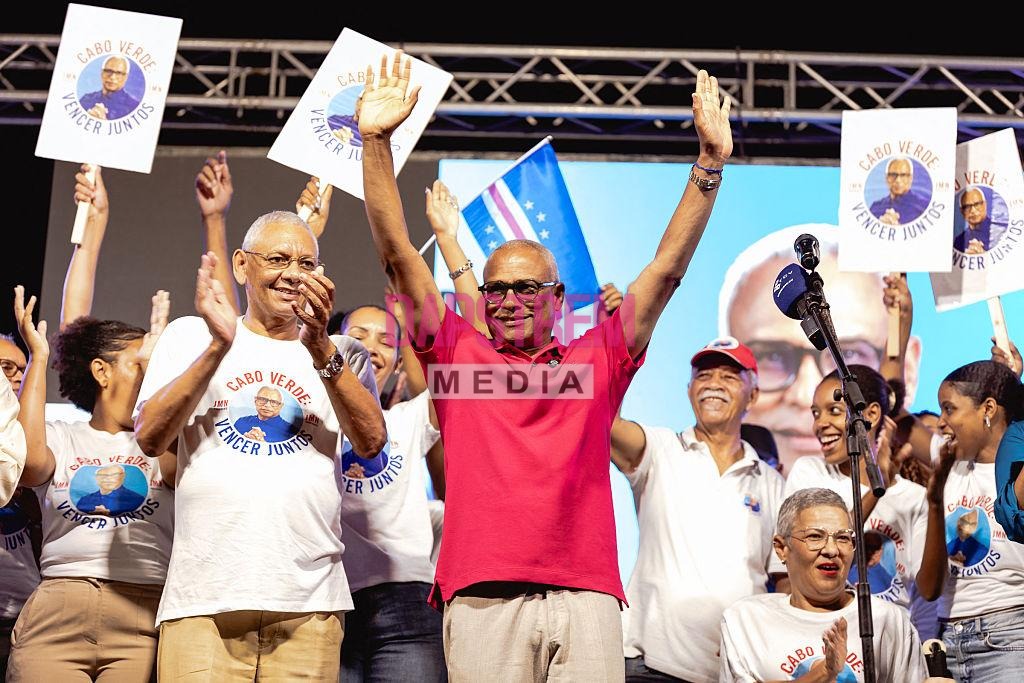
Cabo Verde’s incumbent President, José Maria Neves, has declared victory in the country’s presidential election after preliminary results showed him securing nearly 64 per cent of the votes, placing him firmly ahead of his main challenger and paving the way for a second five-year term in office. The election, held on Sunday, November 15, 2026, has reaffirmed Neves’ political standing in the West African island nation, which is widely recognised for its democratic stability, peaceful electoral processes and smooth transfers of power.
The Eastleigh Voice+1
The president announced his victory after provisional figures published on the official election results platform indicated that he had received approximately 63.8 per cent of the votes, equivalent to 80,018 ballots, with nearly 97 per cent of polling stations having completed the counting process. His performance placed him comfortably above the 50 per cent threshold required to secure an outright victory in the first round, eliminating the need for a second round of voting.
Neves, who first assumed the presidency in October 2021, described the outcome as a significant political achievement and expressed confidence in his ability to continue leading the country through the next five years. His victory comes at a time when Cabo Verde is facing several economic and social challenges, including rising living costs, unemployment, youth emigration and persistent inequalities among its population.
The election attracted considerable attention across Africa and the international community, particularly because of Cabo Verde’s reputation as one of the continent’s most stable democracies. The peaceful electoral process and the acceptance of the preliminary results by the leading opposition candidate have further highlighted the country’s commitment to democratic competition.
Neves Secures Decisive Victory Against Five Challengers
The preliminary election results showed Neves emerging as the clear winner after defeating five other candidates who contested the presidency. His main challenger, former Justice Minister Joana Rosa, secured approximately 31.6 per cent of the votes, making her the strongest opposition candidate in the race.
Rosa, who was backed by the opposition Movement for Democracy, conceded defeat and congratulated Neves following the announcement of the preliminary results. Her participation in the election was historic, as she became the first woman to contest the presidency of Cabo Verde since the country gained independence in 1975.
Despite her strong performance, Rosa was unable to overcome Neves’ substantial lead. The incumbent president secured nearly twice the share of votes obtained by his principal challenger, demonstrating a considerable advantage among voters who participated in the election.
Neves praised Rosa and the other presidential candidates for their participation in the democratic process, emphasising that the election should not be viewed solely as a contest between political parties but as an opportunity for the country to strengthen its democratic institutions.
The president also reiterated his commitment to representing all citizens, regardless of their political affiliations, social backgrounds or personal beliefs.
His victory speech reflected a message of national unity, with Neves insisting that the presidency should serve the interests of the entire population rather than only those who supported his candidacy.
The outcome has positioned Neves to continue serving as the country’s head of state for another five years, subject to the completion of the official electoral verification and validation process.
The Eastleigh Voice+1
President Promises Unity, Democracy and Inclusive Economic Growth
In his victory address, Neves placed national unity at the centre of his message, promising to remain an impartial president who would work for the benefit of every Cabo Verdean.
The incumbent president stated that his administration would continue promoting democracy, the rule of law, political stability and the protection of fundamental freedoms. He also pledged to support inclusive and environmentally sustainable economic growth as the country seeks to improve the living standards of its citizens.
Neves stressed that the presidency belongs to everyone and should not be restricted to the political majority that supported him during the election.
His remarks were aimed at reassuring opposition supporters and other citizens who may have voted for different candidates that their interests would remain important during his second term.
The president’s emphasis on unity is particularly significant given the competitive nature of Cabo Verde’s political environment. The country has experienced peaceful changes of government and has maintained a relatively strong democratic tradition compared with several other nations in West Africa.
Neves also indicated that he would continue serving as an independent and impartial figure within the country’s political system, acting as an arbiter and moderator when necessary.
His commitment to maintaining political stability is expected to remain an important part of his leadership as Cabo Verde navigates economic pressures and other national challenges.
The president’s re-election therefore presents an opportunity to strengthen existing democratic institutions while encouraging cooperation among political leaders, government officials and other stakeholders.
High Cost of Living and Unemployment Dominate Election Campaign
Although the election ended with a decisive victory for the incumbent president, the campaign was dominated by concerns over the economic conditions facing ordinary Cabo Verdeans.
The high cost of living has become a major concern for many households, with citizens struggling to manage rising expenses amid limited employment opportunities.
Unemployment, particularly among young people, has also emerged as one of the most pressing challenges facing the country.
Cabo Verde, an island nation located off the western coast of Africa, has a population of approximately 500,000 people. Despite its relatively small population and reputation for political stability, the country continues to face difficulties in creating sufficient employment opportunities for its citizens.
The situation has contributed to a growing trend of emigration, with many young Cabo Verdeans seeking better economic prospects abroad.
The country has a large diaspora, particularly in the United States and Portugal, where many citizens have relocated in search of employment, education and improved living standards.
The issue of emigration featured prominently during the presidential campaign, with candidates addressing the need to create an environment where young people can build their futures within the country.
Neves’ victory comes with expectations that his leadership will help strengthen economic opportunities, promote social inclusion and encourage young people to remain in Cabo Verde.
However, the president will need to work closely with the government and other institutions to address these challenges effectively.
The economic concerns raised during the campaign are unlikely to disappear immediately, and the coming years will be important in determining whether the country can make meaningful progress in improving employment opportunities and reducing the cost of living.
Low Voter Turnout Raises Questions About Public Participation
Despite the decisive outcome, the presidential election was marked by relatively low voter participation.
Preliminary figures indicated that only approximately 31.7 per cent of the country’s 418,000 registered voters participated in the election. This means that a significant majority of registered voters did not cast ballots.
The low turnout has raised questions about voter engagement, political participation and the factors influencing citizens’ decisions to stay away from polling stations.
Neves acknowledged the issue and suggested that several factors could have contributed to the reduced participation.
According to the president, high levels of emigration, movement of citizens between islands for employment and education, and outdated voter registration records may have affected the turnout figures.
Cabo Verde is an archipelago consisting of several islands, and movement between them can create logistical challenges for citizens seeking to participate in elections.
The large number of citizens living abroad also complicates electoral participation, particularly where voter registration and voting arrangements require additional coordination.
Neves promised to undertake a study into the low turnout, with the aim of understanding the reasons behind the reduced participation and identifying possible measures to improve the electoral process.
He also raised the possibility of updating electoral registers and considering electronic voting as part of efforts to improve participation.
The low turnout remains an important issue because democratic legitimacy depends not only on the outcome of elections but also on the ability of citizens to participate meaningfully in the political process.
Although Neves secured a comfortable majority among those who voted, encouraging broader public participation will remain a key challenge during his second term.
AP News+1
Joana Rosa Makes History as Cabo Verde’s First Female Presidential Candidate
The presidential election also marked a historic moment for women’s political participation in Cabo Verde following the candidacy of Joana Rosa.
Rosa, a former Justice Minister and a prominent opposition figure, became the first woman in the country’s history to contest the presidency.
Her candidacy represented a significant milestone in the country’s political development, opening a new chapter in the participation of women in the highest levels of national leadership.
Although she ultimately lost the election to Neves, Rosa secured approximately 31.6 per cent of the votes, making her the leading opposition candidate.
Her performance demonstrated that a considerable section of the electorate was willing to support an alternative political leadership.
Rosa’s participation was particularly important in a country that has maintained competitive elections since independence but had never previously presented a female presidential candidate.
Following the announcement of the preliminary results, Rosa conceded defeat and congratulated Neves, helping maintain the peaceful atmosphere surrounding the electoral process.
Her acceptance of the outcome was viewed as an important demonstration of democratic maturity, particularly in a region where disputed elections have sometimes resulted in political tensions and instability.
Rosa’s historic candidacy is also expected to inspire greater participation by women in Cabo Verde’s political institutions.
While the election did not produce the country’s first female president, it nevertheless created an important precedent that could influence future presidential contests.
The participation of women in political leadership remains a significant issue across Africa, with several countries continuing to face challenges in achieving gender balance in government and other decision-making institutions.
Rosa’s candidacy therefore carries importance beyond the immediate election results, as it represents a step towards expanding political opportunities for women in Cabo Verde.
Neves’ Political Background and Leadership Experience
José Maria Neves is an experienced politician whose career spans several decades in Cabo Verde’s public service and political institutions.
Before becoming president in 2021, Neves served as the country’s prime minister from 2001 to 2016.
During his time as prime minister, he was associated with the African Party for the Independence of Cabo Verde, commonly known as PAICV, a centre-left political party that has played a major role in the country’s political history.
Neves also served as a mayor and lawmaker before advancing to the highest levels of national leadership.
His political experience has given him considerable familiarity with the country’s governance structures, economic priorities and institutional challenges.
He studied public administration in Brazil before entering public service, a background that contributed to his professional development and political career.
Neves was first elected president in October 2021, becoming the country’s head of state after a successful presidential campaign.
His re-election in November 2026 represents a continuation of his leadership and gives him another five-year mandate to serve the country.
The victory also reinforces his political position at a time when the PAICV has regained significant influence within the country’s political system.
The party secured a parliamentary majority during the May 2026 legislative elections, ending a decade of rule by the Movement for Democracy.
This political development has created a new balance of power in Cabo Verde, with the PAICV holding a stronger position within the government and national institutions.
However, the country’s parliamentary system means that the president does not directly control all government policies.
The prime minister remains the principal executive authority responsible for directing government policy, while the president performs a largely ceremonial role, although the office retains important constitutional responsibilities, including the power to veto legislation.
Africanews+1
Cabo Verde’s Democratic Reputation Remains a Major Strength
Cabo Verde has continued to distinguish itself as one of Africa’s most stable democracies, particularly within the West African region.
The country has maintained a tradition of competitive elections, peaceful transfers of power and respect for democratic institutions.
Its political stability has helped strengthen its international reputation and contributed to its development as an important example of democratic governance on the continent.
The presidential election provided another opportunity for Cabo Verde to demonstrate its commitment to democratic principles.
The participation of multiple candidates, the competitive nature of the campaign and the acceptance of the preliminary results by the main opposition candidate highlighted the importance of peaceful political competition.
International election observers also participated in monitoring the electoral process.
The African Union deployed an Election Observation Mission to Cabo Verde ahead of the November 15 presidential election. The mission was tasked with assessing the conduct of the election and observing the electoral environment before, during and after voting.
w.peaceau.org
The presence of international observers is important in strengthening confidence in electoral processes and encouraging transparency.
For Cabo Verde, maintaining its democratic reputation is particularly valuable as the country continues to pursue economic development and strengthen its international partnerships.
The peaceful conclusion of the presidential election could also reinforce the country’s position as a reliable partner for international organisations, investors and other governments.
However, maintaining democratic stability will require continued attention to public participation, institutional accountability and the concerns of citizens who feel disconnected from the political process.
The low voter turnout during the election suggests that the country still has work to do in ensuring that a greater proportion of its population participates in national decision-making.
Neves’ second term will therefore present an opportunity to strengthen both democratic institutions and public confidence in the political system.
Economic Development and Tourism Remain Key Priorities
Cabo Verde has made notable progress in economic development over the years, with tourism emerging as one of the country’s most important economic sectors.
The World Bank classified the country as an upper-middle-income economy in July 2026, reflecting its economic growth and development achievements, particularly in tourism.
The tourism industry has played a significant role in generating revenue, supporting employment and attracting international visitors to the island nation.
Cabo Verde’s beaches, cultural heritage, music and natural attractions have made it an increasingly popular destination for tourists from Europe and other parts of the world.
However, the country’s economic progress has not eliminated several structural challenges.
Its geographical isolation, limited natural resources and dependence on external economic conditions continue to create vulnerabilities.
The cost of transporting goods between islands remains a concern, while affordable inter-island travel is also a challenge for many citizens.
These issues can affect the cost of doing business, access to essential services and the ability of people to move freely between different parts of the country.
The government will therefore need to continue exploring ways to diversify the economy, strengthen infrastructure and improve the business environment.
Although the president’s role is largely ceremonial under the parliamentary system, Neves can still influence national priorities through his constitutional responsibilities, public engagements and cooperation with the government.
His re-election comes at a time when Cabo Verde is seeking to build on its economic achievements while addressing the social inequalities that remain within the country.
The next five years could prove significant in determining whether the country can translate its economic growth into improved living standards for a larger proportion of its population.
What Neves’ Re-Election Means for Cabo Verde
The re-election of José Maria Neves represents a continuation of political leadership in Cabo Verde at a time when the country is navigating economic pressures, social challenges and changing public expectations.
His decisive victory demonstrates strong support among participating voters, while the performance of Joana Rosa highlights the continued competitiveness of the country’s political environment.
The election also reinforces Cabo Verde’s reputation as a country where political competition can take place peacefully and where candidates can accept electoral outcomes without triggering major political instability.
However, the results also reveal important concerns, particularly regarding low voter turnout, youth unemployment, emigration and the rising cost of living.
These challenges will remain central to the country’s development agenda during Neves’ second term.
The president has promised to promote national unity, strengthen democratic institutions and support inclusive economic growth. Delivering on these commitments will require cooperation with the prime minister, parliament, political parties and other national stakeholders.
As Cabo Verde moves forward, the focus will increasingly shift from the election campaign to the country’s long-term development priorities.
For Neves, the second term presents an opportunity to consolidate his political legacy while helping the country address the issues that matter most to its citizens.
The election has reaffirmed the country’s democratic credentials, but its ultimate significance will depend on whether the next five years bring meaningful improvements in employment, economic opportunities, public participation and the quality of life.
With the preliminary results placing him comfortably ahead of his challengers, José Maria Neves is set to continue serving as Cabo Verde’s president for another five years, pending the completion of the official electoral verification and validation process.