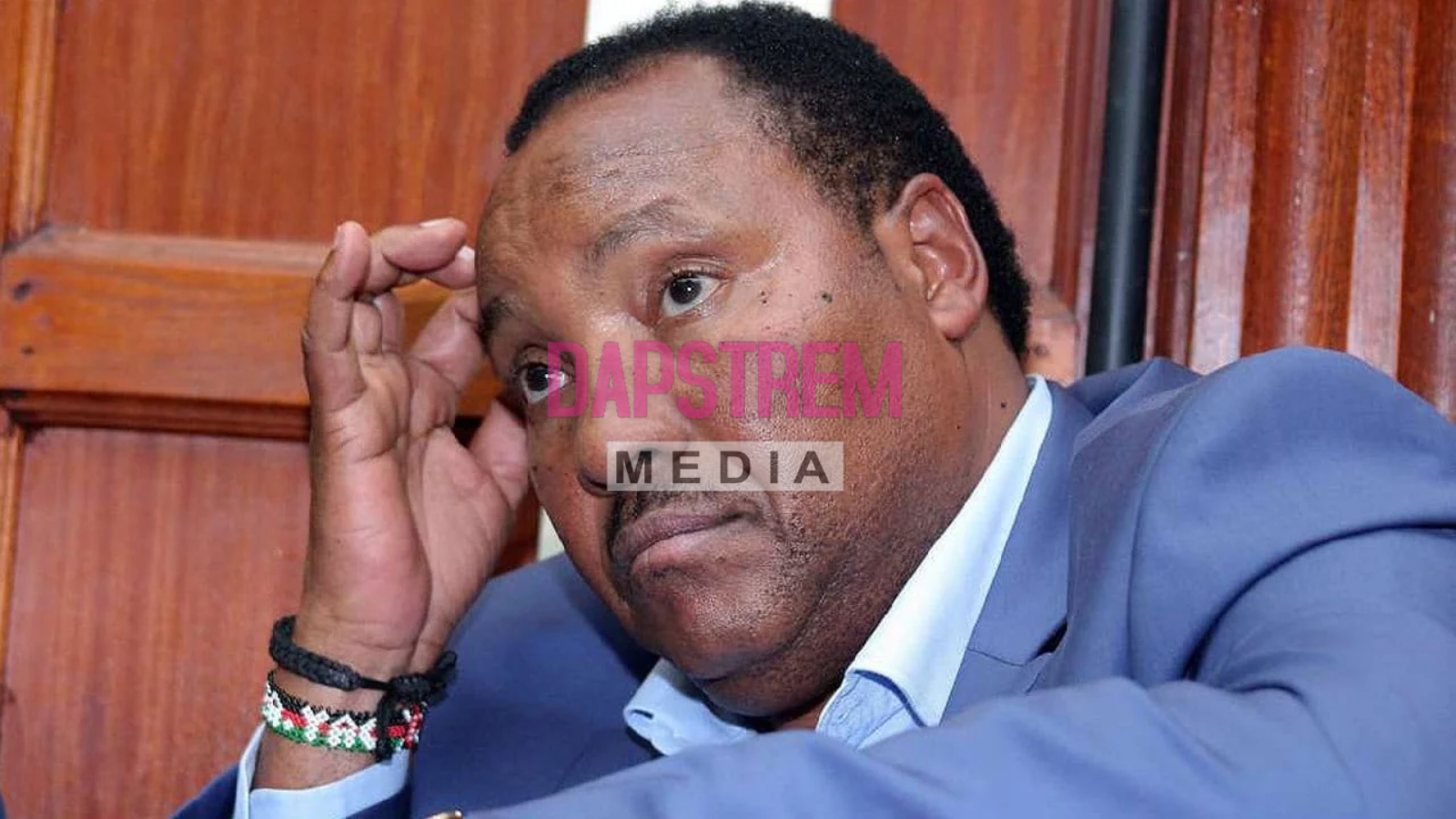
Former Kiambu Governor Ferdinand Waititu has been fined KSh21 million following his conviction on three money-laundering counts linked to the controversial KSh588.7 million road construction tender scandal.
The Milimani Anti-Corruption Court, presided over by Chief Magistrate Harrison Barasa, delivered the sentence on Monday, November 2, 2026, imposing financial penalties with alternative prison terms should Waititu fail to pay.
The former governor was fined KSh10 million on the first count, KSh6 million on the second and KSh5 million on the third, bringing his total financial penalty to KSh21 million.
Under the ruling, failure to pay attracts alternative prison terms of five years, four years and four years respectively. The sentences run concurrently, meaning the longest default prison term is five years rather than 13 years.
The latest ruling adds to Waititu’s legal troubles following his earlier conviction in a separate corruption case involving the same county road project.
KSh588.7 Million Road Tender at the Centre of the Case
The case revolves around a KSh588.7 million contract awarded by the Kiambu County Government to Testimony Enterprises Limited during the 2017/2018 financial year.
The contract involved upgrading gravel roads to bituminous standards across several areas, including Thika, Limuru, Gatundu North, Juja and Ruiru.
Prosecutors alleged that the procurement process was irregular and that proceeds from the contract were channelled through companies associated with Waititu and his co-accused.
Investigations by the Ethics and Anti-Corruption Commission (EACC) established that more than KSh25.6 million was channelled through Saika Two Estate Developers Limited, while KSh7.214 million was received through Bienvenue Delta Hotel.
The transactions formed part of the prosecution’s case on how money linked to the disputed road contract was allegedly transferred and handled.
Court Overturns Earlier Acquittal
The latest sentencing followed a High Court decision in October 2026 that overturned earlier acquittals on three money-laundering counts.
Justice Rose Ougo found that the prosecution had established the offences and directed that Waititu and his co-accused return to the Anti-Corruption Court for sentencing.
The development reopened a significant chapter in the corruption proceedings, which had attracted public attention because of the amount of money involved and Waititu’s former position as a county governor.
The money-laundering convictions were linked to the handling of proceeds from the disputed road construction contract.
Waititu’s Wife and Other Associates Also Penalised
Waititu was not the only person affected by Monday’s ruling. His wife, Susan Wangari Ndung’u, businessman Charles Chege Mbuthia, Beth Wangechi Mburu and companies associated with the road contract also received penalties.
The court imposed fines on the individuals and corporate entities according to their respective roles in the offences.
Waititu’s wife faced financial penalties totalling KSh22 million across the three counts, while Testimony Enterprises Limited and Saika Two Estate Developers Limited were also ordered to pay substantial fines.
Corporate entities were directed to settle their fines within 14 days, failing which the amounts would be recovered in accordance with the law.
Already Serving a 12-Year Prison Sentence
The latest penalties come as Waititu continues serving a 12-year prison sentence imposed in February 2025 following his conviction in the separate corruption proceedings arising from the same road tender scandal.
Importantly, the court directed that the new sentences run concurrently with the existing prison term, in accordance with the High Court’s earlier directions.
This means the latest ruling does not automatically add another five or 13 years to his existing sentence.
Waititu’s legal troubles have therefore deepened, with the KSh21 million fine presenting another financial consequence arising from the controversial Kiambu County procurement deal.
The case remains a significant development in Kenya’s efforts to hold public officials and their associates accountable for corruption and the alleged misappropriation of public resources.