Raila Odinga @1: Kenya Marks One Year Since the Death of a Political Giant as His Legacy Lives On
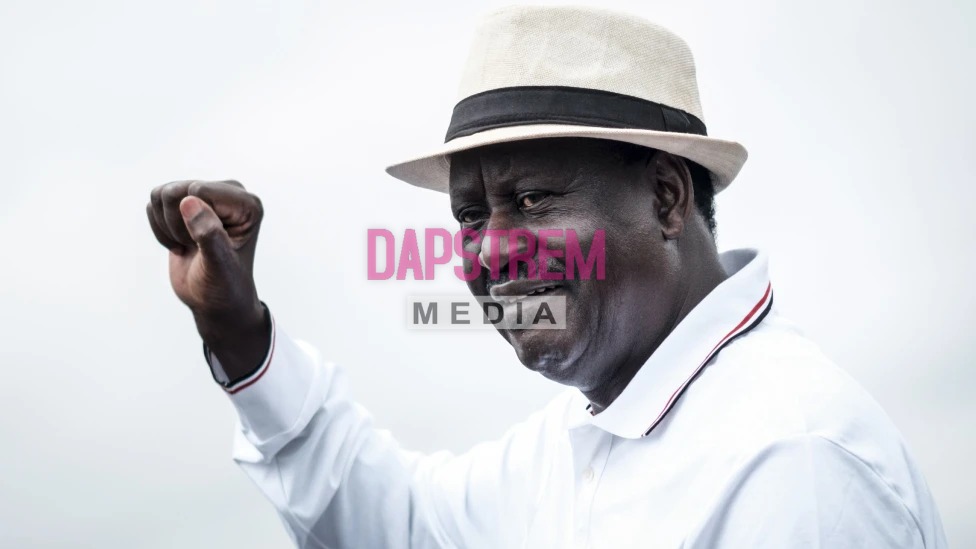
Kenya is today marking one year since the death of former Prime Minister Raila Amolo Odinga, a towering political figure whose decades-long career shaped the country’s democratic journey, opposition politics and national conversations about leadership, justice and constitutional reform.
The anniversary, falling on Thursday, October 15, 2026, brings together family members, political leaders, friends, supporters and ordinary Kenyans to remember a man whose influence extended far beyond the Orange Democratic Movement (ODM). Raila died in India on October 15, 2025, aged 80, leaving behind a complicated but enduring political legacy that continues to shape discussions about Kenya’s future.
Popularly known as Baba, Agwambo and Tinga, Raila occupied a unique place in Kenya’s political history. For some, he was a symbol of resistance, democratic reform and the struggle for political freedom. For others, he was a formidable political strategist whose ability to build alliances and mobilise supporters made him one of the country’s most influential politicians.
Regardless of political affiliation, his death marked the end of an era. His absence has been felt in political debates, party leadership, public gatherings and conversations about the direction Kenya should take ahead of the 2027 General Election.
Today’s commemoration is therefore more than a date on the national calendar. It is an opportunity for Kenyans to reflect on Raila’s life, his struggles, his achievements, the controversies that surrounded his political journey and the ideals he championed throughout his years in public service.
The main anniversary gathering is scheduled to take place at Migwena Cultural and Sports Grounds in Bondo, Siaya County, with the programme expected to bring together members of the Odinga family, political leaders, community representatives and supporters from different parts of the country.
The memorial activities have been organised around the themes of the people, the struggle and the aspiration, reflecting the central place ordinary citizens, democratic reform and national development occupied in Raila’s public life. The anniversary committee has encouraged Kenyans to use the occasion not only to mourn but also to celebrate his contribution to the country.
One Year Without Baba: A Nation Remembers
For many Kenyans, October 15, 2025, remains a painful date. The news of Raila’s death spread across the country and beyond, prompting an outpouring of grief from political leaders, religious figures, international dignitaries and citizens who had followed his political journey for decades.
His passing came after a lifetime spent at the centre of Kenya’s public affairs. Even when he was not holding government office, Raila remained a major force in national politics, frequently influencing the country’s political direction through his opposition campaigns, negotiations and calls for reform.
One year later, the grief remains personal for his family and close friends, while his supporters continue to reflect on the loss of a leader they regarded as a symbol of hope and perseverance.
For residents of Bondo and the wider Nyanza region, the anniversary carries a particularly emotional meaning. Raila was not only a national political figure but also the son of the late Jaramogi Oginga Odinga, a former Vice President and one of Kenya’s leading independence-era political figures.
The Odinga family has played a prominent role in Kenya’s political history across generations. Raila inherited a political environment shaped by questions of freedom, governance, equality and the relationship between citizens and the state.
Yet his identity was never limited to his family background. Over several decades, he developed his own political following, built national alliances and became one of the most recognisable figures in Kenya’s democratic evolution.
His supporters saw him as a leader who repeatedly returned to the political arena despite setbacks, imprisonment, detention and unsuccessful presidential campaigns. His opponents, meanwhile, often challenged his political strategies and questioned some of the alliances he pursued.
That contrast is part of what made Raila such a consequential figure. He inspired deep loyalty, attracted strong opposition and remained relevant through major changes in Kenya’s political landscape.
The first anniversary offers Kenyans an opportunity to consider all these dimensions of his life without reducing his story to either uncritical praise or political disagreement.
From Political Struggle to the Highest Levels of Government
Raila’s political journey unfolded during some of the most consequential periods in Kenya’s post-independence history.
Born on January 7, 1945, he grew up in a family closely associated with the country’s political development. His father, Jaramogi Oginga Odinga, was a leading independence figure who served as Kenya’s first Vice President before falling out with the government of founding President Jomo Kenyatta.
Raila later became an important political figure in his own right, building a career that brought him into conflict with successive governments and eventually into senior positions within the state.
His early political years were marked by intense struggles over power, political freedoms and the future of multiparty democracy. He was detained without trial during the one-party era, experiences that became central to his political identity and the way many supporters understood his commitment to democratic reform.
The period was difficult for him and his family. Political detention and restrictions on opposition activity shaped his outlook and placed him among the figures associated with the struggle to expand democratic space in Kenya.
As the country moved towards multiparty politics in the early 1990s, Raila became a prominent opposition leader. He served as the Member of Parliament for Lang’ata from 1992 to 2013 and later became Prime Minister under the Grand Coalition Government formed after the disputed 2007 presidential election.
His political journey also included service in government during the administrations of Daniel arap Moi and Mwai Kibaki. He held Cabinet positions and participated in different political arrangements, demonstrating an ability to move between opposition politics and government.
However, his most defining political ambition remained the presidency.
Raila contested the presidency several times, including in 1997, 2007, 2013, 2017 and 2022. Although he never became President, his campaigns repeatedly shaped national debates, mobilised large sections of the electorate and influenced the formation of political coalitions.
His supporters frequently described him as a leader who fought for democratic reforms and the inclusion of communities that felt marginalised. His critics argued that his political calculations and shifting alliances sometimes complicated the causes he championed.
Both perspectives form part of the historical debate surrounding his career. What is difficult to dispute is that few politicians in modern Kenya remained as influential for as long as Raila did.
His ability to survive political setbacks, negotiate with rivals and return to the national conversation made him a central character in Kenya’s political story.
Raila and the Struggle for Multiparty Democracy
One of the most enduring aspects of Raila’s legacy is his association with Kenya’s struggle for multiparty democracy.
During the one-party era, political competition was restricted, opposition activity faced considerable pressure and reform advocates demanded greater freedom to organise and challenge those in power.
Raila became associated with the wider movement seeking political pluralism, constitutional reform and stronger democratic institutions. His experiences with detention and political repression reinforced his reputation among supporters as a politician prepared to endure personal hardship for his political convictions.
The restoration of multiparty politics in the early 1990s opened a new chapter in Kenya’s history. However, the existence of multiple political parties did not automatically resolve questions about electoral credibility, institutional independence or the distribution of power.
Those issues continued to dominate political debates for years, with Raila frequently at the centre of campaigns demanding reforms.
His role in the opposition helped maintain pressure on successive governments over the conduct of elections and the need to strengthen democratic institutions.
The disputed 2007 presidential election became a particularly important moment in his career and in Kenya’s history. The violence that followed the contest exposed deep divisions and raised urgent questions about the credibility of electoral processes.
The ensuing political negotiations produced the National Accord and the formation of a Grand Coalition Government in 2008, with Raila becoming Prime Minister under a power-sharing arrangement with President Mwai Kibaki.
The arrangement was intended to help stabilise the country after the crisis. It also demonstrated the importance of negotiations and compromise in resolving political disputes.
Although the coalition government faced its own challenges, the period contributed to the wider national debate that eventually led to the promulgation of the 2010 Constitution.
Raila’s supporters regard his contribution to the democratic reform process as one of the defining achievements of his career. However, the constitutional reforms were the result of a broader national process involving many political leaders, civil society organisations, legal experts and citizens.
The Constitution of 2010 introduced far-reaching changes, including devolution, a strengthened Bill of Rights and a revised framework for distributing and exercising state power.
For many Kenyans, the Constitution remains one of the country’s most significant democratic achievements. Raila’s association with the reform movement is an important part of his political legacy, even as the implementation of the Constitution continues to generate debate.
The 2010 Constitution and the Promise of Devolution
The promulgation of the 2010 Constitution represented a turning point in Kenya’s governance.
Among its most significant changes was the establishment of county governments, intended to bring decision-making and public resources closer to citizens.
Devolution created opportunities for communities across the country to participate more directly in governance and demand accountability from leaders closer to home.
Raila was among the prominent political figures associated with the constitutional reform agenda, which sought to address long-standing questions about the concentration of power, historical marginalisation and the relationship between the national government and local communities.
The Constitution also established a more comprehensive Bill of Rights, strengthened institutional checks and balances and provided a framework for independent commissions.
However, the existence of a progressive constitutional framework does not guarantee that all its promises will automatically be fulfilled.
Kenya continues to face challenges involving corruption, public debt, unemployment, inequality, access to services and the cost of living. Questions also remain about the implementation of constitutional provisions and the accountability of public institutions.
As Kenyans commemorate Raila, the discussion about his legacy inevitably returns to whether the democratic and constitutional aspirations associated with his political career are being realised.
For his admirers, the anniversary should inspire renewed commitment to the Constitution and the institutions it established. For critics of the political establishment, it also provides an opportunity to question whether leaders have done enough to protect the reforms achieved over the years.
The broader lesson is that constitutional change is not completed when a document is signed. It requires sustained public participation, responsible leadership and institutions that operate according to the law.
Raila’s Years as Prime Minister
Raila’s tenure as Prime Minister from 2008 to 2013 placed him at the centre of government during a period of national recovery and institutional reform.
The Grand Coalition Government was formed following the 2007 election crisis, with the objective of restoring stability and addressing the political tensions that had threatened the country.
The coalition brought together leaders who had previously competed fiercely for power. Its formation demonstrated the difficult compromises required to govern a country emerging from a major political crisis.
As Prime Minister, Raila participated in national policy discussions, government coordination and efforts to implement reforms. His position also provided him with an opportunity to work within the executive rather than exclusively through opposition politics.
The coalition was not without disagreements. Differences between political leaders, disputes over responsibilities and wider questions about governance complicated its work.
Nevertheless, the period remains a significant chapter in Raila’s career because it showed that his political influence extended beyond campaigning and opposition leadership.
It also demonstrated the complexities of coalition government, where leaders must reconcile different political interests while addressing the expectations of citizens.
Raila’s years in government remain part of the wider assessment of his record. Supporters point to his participation in reforms and his influence on national development debates, while critics continue to scrutinise the coalition’s performance and the political decisions made during that period.
A balanced commemoration should allow room for both appreciation and critical examination. Public figures who shape national history deserve to be remembered not only for their most celebrated moments but also through honest reflection on the decisions they made and the consequences of those decisions.
The Political Kingmaker Who Never Became President
Perhaps the most striking feature of Raila’s career was his repeated pursuit of the presidency without ultimately occupying the office.
Over several election cycles, he remained a leading presidential contender and a central figure in coalition-building. His campaigns attracted large crowds and generated intense national debate about leadership, representation and the direction of the country.
For many supporters, his unsuccessful presidential bids became symbols of persistence. They viewed him as a politician who continued to pursue his ambitions despite electoral defeats and political setbacks.
His campaigns also helped shape the country’s political alliances. At different times, he worked with leaders who had previously been his opponents, demonstrating the importance of coalition-building in Kenya’s electoral system.
These alliances sometimes surprised supporters and angered critics. They also revealed the tension between political ideals and the compromises leaders make when seeking power or attempting to influence government policy.
Raila’s career showed that political influence does not depend entirely on occupying the presidency. Even outside State House, he could influence national conversations, mobilise supporters and help determine the direction of political competition.
His endorsements and alliances often carried considerable weight, particularly in elections where regional voting patterns and coalition arrangements played a major role.
That influence also created expectations. Supporters looked to him for political direction, while opponents often treated his decisions as major developments requiring a response.
One year after his death, the question of who can command that same level of influence remains central to discussions about the future of ODM and the wider opposition.
However, the political landscape is changing. Younger leaders are demanding greater representation, voters are increasingly debating economic concerns, and traditional political loyalties are facing new tests.
Raila’s absence has therefore created both a leadership challenge and an opportunity for a new generation of political figures to establish their own identities.
Whether his successors can preserve the values associated with his political movement while responding to changing public expectations will be one of the major questions facing Kenyan politics in the coming years.
ODM Marks the Anniversary Through Nationwide Activities
The Orange Democratic Movement has organised a month-long programme of activities to commemorate its founding leader, with events planned in different parts of Kenya.
The programme, popularly associated with the theme Mwezi wa Baba, has included candle-lighting ceremonies, memorial gatherings and regional activities intended to celebrate Raila’s contribution to the country’s political and democratic development.
The celebrations began earlier in October and have brought together supporters who want to honour the former Prime Minister’s memory.
On Wednesday, October 14, Raila’s widow, Ida Odinga, led a candle-lighting ceremony at Kang’o ka Jaramogi in Bondo. The event included prayers, Scripture readings, gospel music and reflections on Raila’s life.
The ceremony provided an opportunity for family members and supporters to remember him beyond his political identity. It also highlighted the personal loss experienced by those who lived and worked closely with him.
Ida has previously encouraged Kenyans to recognise that people knew Raila in different ways. Some remembered him as a political leader, others as a father, husband, brother, friend or mentor.
Her message underscored the fact that a public figure’s life cannot be understood through politics alone.
The main anniversary gathering is taking place today at Migwena Cultural and Sports Grounds in Bondo, where the family, community representatives and political leaders are expected to honour his life and reflect on his legacy.
The programme is intended to bring together people from different backgrounds and political affiliations. Organisers have encouraged participants to maintain peace and dignity throughout the events.
The memorial activities also provide an opportunity for younger Kenyans who did not directly experience some of the earlier struggles in Raila’s career to learn about the country’s political history.
Through conversations, speeches and cultural performances, the anniversary can help preserve important memories while encouraging a new generation to examine the principles that shaped Kenya’s democratic development.
The commemorations are not confined to Bondo. ODM’s wider programme includes activities across different regions, reflecting the national reach of Raila’s political influence.
The party has encouraged supporters to remember him through service, unity and a commitment to the values he championed.
Ida Odinga’s Pain and the Family’s Loss
Behind the public ceremonies is the private grief of a family that lost a husband, father and brother.
For Ida Odinga, the anniversary marks a year of adjusting to life without her husband after decades of marriage and shared experiences.
During the candle-lighting ceremony, she recalled speaking to Raila by telephone on the night before his death. She said the conversation gave her no indication that he would die the following morning, making the news particularly shocking.
She also spoke about the difficulty of adjusting to his absence, explaining that familiar routines can continue to create expectations even when a loved one is no longer there.
Her reflections revealed a deeply personal side of a man whose public life often overshadowed his family relationships.
For many people who knew Raila primarily through political rallies, television interviews and election campaigns, such accounts provide a reminder that public figures have private lives shaped by relationships, responsibilities and ordinary moments.
His children, relatives, friends and colleagues must continue navigating their loss even as the country celebrates his public achievements.
The anniversary is therefore both a national commemoration and a personal milestone for the Odinga family.
It is a moment to remember the sacrifices associated with a long political career, the pressures that public service placed on family life and the personal relationships that remained important throughout his journey.
The family has also called for Raila’s memory to be respected across political and religious lines, reflecting the wide range of communities and individuals who considered him an important figure in their lives.
Raila’s Legacy Beyond Luo Nyanza
Although Raila maintained a particularly strong political base in Luo Nyanza, his influence extended across Kenya.
His political alliances, presidential campaigns and involvement in national negotiations connected him with leaders and voters from different regions.
He frequently sought support beyond his traditional strongholds, building coalitions that included political figures from Central Kenya, the Coast, Western Kenya, the Rift Valley and other parts of the country.
His ability to bring together diverse groups was one of the defining features of his political career. At different moments, he became a focal point for people seeking changes in government, stronger constitutional safeguards or a different approach to national leadership.
However, his national influence was never uniform. Different communities and political groups assessed his record through their own experiences, interests and expectations.
Some admired his persistence and reform agenda, while others questioned his strategies and the compromises made during his political alliances.
These differences are part of the reality of democratic politics, where no leader enjoys universal support.
The first anniversary nevertheless offers an opportunity to examine how Raila became a national figure whose decisions and political positions were followed by citizens well beyond his home region.
His career also illustrates the importance of national coalition-building in a country characterised by ethnic, regional and political diversity.
The challenge for future leaders is to build alliances around clear policies and shared national interests rather than relying exclusively on personalities or electoral calculations.
If Raila’s political journey offers a lesson in this area, it is that national leadership requires engagement with people who may not share the same background, beliefs or political priorities.
The Youth, Economic Pressure and Raila’s Unfinished Agenda
As Kenya remembers Raila, attention is also turning to the challenges facing young people and the country’s wider economic future.
Unemployment, the cost of living, access to education, opportunities for entrepreneurship and demands for accountable government remain major concerns for many households.
These issues have become increasingly prominent in public debate, with young people calling for leaders to respond to their economic realities and create opportunities that allow them to build secure futures.
Raila’s final years in politics coincided with a changing political environment in which younger voters increasingly demanded to be heard. His calls for dialogue between generations reflected the need to address the concerns of a population with different expectations from those of earlier political eras.
The anniversary committee has included intergenerational dialogue among the commemorative activities, bringing elders, young people, women and religious leaders together to discuss social, political and economic challenges.
The discussions are intended to encourage reflection on how the values associated with Raila’s public life can inform current debates.
For young Kenyans, the most meaningful tribute may not be simply recalling the political struggles of the past. It may also involve examining how democratic institutions can deliver better public services, how leaders can be held accountable and how citizens can participate in decisions affecting their future.
Raila’s legacy will inevitably be interpreted differently by different generations. Those who witnessed his early political struggles may remember his role in challenging the one-party state, while younger citizens may be more interested in the implications of his politics for employment, economic inclusion and government accountability.
Both perspectives are important in understanding how political legacies evolve.
A legacy remains relevant when it can be examined in the context of present challenges rather than treated as a collection of memories disconnected from everyday life.
Political Questions Surround Raila’s Legacy Ahead of 2027
The first anniversary arrives at a time when political parties and leaders are preparing for the 2027 General Election.
Raila’s death has changed the leadership landscape, particularly within ODM, the party he founded and led for many years.
His absence has created questions about succession, party unity, political alliances and the future direction of a movement that drew much of its identity from his leadership.
Different leaders and supporters have expressed varying views about how ODM should engage with the government and position itself ahead of the next election.
Some favour cooperation with President William Ruto’s administration, while others advocate a more confrontational approach and argue that the party must preserve its traditional opposition role.
These differences reflect the difficulty of maintaining a political movement after the departure of a leader who played a central role in defining its identity.
Raila’s personal authority often helped manage disagreements and hold together political alliances. Without him, ODM must find ways to sustain its organisation, resolve internal disputes and communicate a clear agenda to voters.
The anniversary may therefore carry political significance beyond the memorial programme itself. Leaders attending the events will be operating in a political environment where questions about the future of Raila’s movement remain unresolved.
Nevertheless, the family and memorial committee have emphasised that the occasion should focus on celebrating his life and contribution to the country rather than turning the ceremony into a partisan confrontation.
That distinction matters because a memorial can become an opportunity for reflection across political divisions rather than a platform for intensifying them.
Kenyans will be watching how political leaders honour Raila’s memory and whether the principles they associate with him are reflected in their conduct.
The coming months will help reveal how his political movement evolves and whether the values he championed can continue to influence national debate without depending solely on his personal leadership.
Remembering the Man Behind the Political Name
Raila was widely known by several nicknames, including Baba, Agwambo and Tinga. Each name reflected a different aspect of the public identity he built over decades.
For supporters, Baba conveyed affection and familiarity. Agwambo reflected the mystique and unpredictability associated with his political persona, while Tinga became a recognisable symbol of his political campaigns.
These names became part of Kenya’s political vocabulary, appearing in songs, slogans, rallies and everyday conversations.
Yet behind the slogans was a man whose life included education, engineering, family responsibilities, business interests and decades of public service.
Remembering him fully means acknowledging more than his electoral contests or political rivalries.
It means considering the experiences that shaped his beliefs, the relationships that sustained him and the decisions that influenced the country.
It also means recognising that his legacy will remain subject to debate. Historical figures are not remembered in exactly the same way by everyone, and their contributions must be assessed through evidence, context and the experiences of the people they affected.
Raila’s life offers many subjects for such reflection, from democratic reform and coalition-building to the challenges of political succession and the tension between ideals and compromise.
For historians, journalists, students and future political leaders, his career provides a rich account of the opportunities and limitations of political leadership in Kenya.
For ordinary citizens, his story also demonstrates how individual lives can become closely connected to national events and how political decisions can influence the direction of an entire country.
One Year Later, What Should Kenyans Take Forward?
As Kenya marks one year since Raila’s death, the central question is how the country should carry forward the lessons associated with his life.
The anniversary ceremonies provide an opportunity to honour a man who spent much of his life in public service and became one of the most influential figures in modern Kenyan politics.
But remembrance becomes more meaningful when it leads to reflection and action.
For those who associate Raila with democracy, the challenge is to protect the freedoms and constitutional safeguards that earlier generations fought to establish.
For those who remember his calls for social justice, the challenge is to address inequality and ensure that public institutions serve citizens fairly.
For those who admired his ability to build political alliances, the challenge is to encourage dialogue across communities and political differences.
And for those who looked to him as a symbol of persistence, the challenge is to continue pursuing national goals even when progress is difficult.
These lessons do not require every Kenyan to agree with Raila’s politics or endorse every decision he made. Democratic societies benefit from honest debate, critical thinking and the freedom to assess their leaders fairly.
A lasting legacy should be strong enough to withstand questions and scrutiny. It should inspire people to examine what worked, what failed and what future generations can learn from the experience.
One year after his death, Raila’s name remains part of Kenya’s national conversation because the issues surrounding his political career continue to matter.
The country is still debating constitutional implementation, electoral credibility, political accountability, economic opportunity and the responsibilities of leadership.
Those questions will not disappear with the passing of any individual. Their resolution depends on institutions, citizens and leaders who are willing to engage with them seriously.
The anniversary is therefore an opportunity to remember Raila while recognising that the future of Kenya belongs to the living and the choices they make.
Conclusion: Raila’s Absence Is Felt, but His Story Continues
One year after the death of Raila Amolo Odinga, Kenya is remembering a political giant whose life was closely connected to the country’s democratic journey.
From his early struggles during the one-party era to his years in opposition, his service as Prime Minister and his repeated presidential campaigns, Raila remained a central figure in the nation’s political development.
His journey was marked by victories, disappointments, alliances, disagreements and enduring public influence. He inspired millions, challenged his opponents and helped shape conversations about the future of Kenya.
Today, family members, supporters and political leaders are gathering in Bondo to honour his memory and reflect on his contribution to the country. Across Kenya and beyond, others are remembering him through prayers, candle-lighting ceremonies, conversations and personal reflections.
For the Odinga family, the anniversary marks a year of living with a profound personal loss. For ODM, it raises questions about leadership and the future of the political movement he built. For the country, it offers an opportunity to examine the democratic ideals and national aspirations associated with his career.
Raila’s legacy will continue to attract different interpretations. Some will remember him primarily as a reformer, others as a determined opposition leader, and others as a political strategist who understood the complexities of Kenya’s electoral landscape.
All these perspectives contribute to the broader story of a man whose public life spanned generations.
As Kenyans mark Raila Odinga @1, the most enduring tribute may be to remember him honestly, preserve the lessons of his political journey and continue working towards a country where democratic rights are respected, institutions are accountable and every citizen has an opportunity to contribute to national development.
One year after his passing, Raila may no longer be present at political rallies or national negotiations, but the questions he spent decades engaging with remain alive.
And as the country reflects on his life, one thing is clear: his place in Kenya’s political history will continue to be discussed long after the anniversary ceremonies have ended.