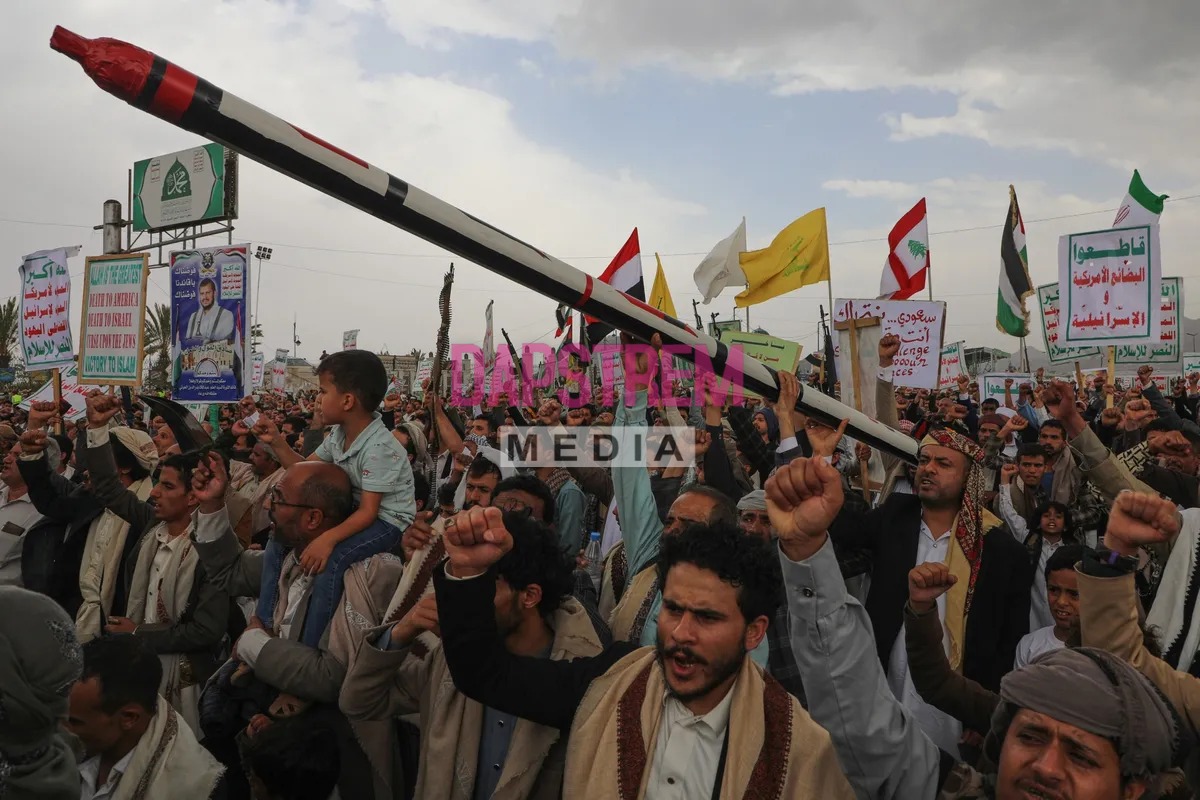
Muslim World League Condemns Houthi Attacks on Saudi Arabia as Missile and Drone Strikes Intensify, Raising Fears Over Civilian Safety, Oil Infrastructure and Regional Stability.
The Muslim World League (MWL) has strongly condemned continued Houthi attacks on Saudi Arabia as the conflict intensifies, raising fresh concerns about civilian safety, regional stability and the security of critical infrastructure across the Middle East.
In a statement issued on Wednesday, October 14, 2026, the organisation denounced attacks it attributed to Yemen’s Houthi movement, particularly those affecting civilians and residential areas. The statement followed reports that four people had been injured and several homes damaged during the latest incidents in Saudi Arabia.
The organisation’s Secretary-General, Sheikh Mohammed bin Abdulkarim Al-Issa, condemned the attacks on behalf of the League’s international bodies, councils and assemblies. He described the targeting of civilians and civilian facilities as unacceptable and said such actions violated religious values, international law and humanitarian norms.
Al-Issa also reaffirmed the organisation’s solidarity with Saudi Arabia, expressing support for measures aimed at protecting the Kingdom, its citizens and residents. He prayed for the safety of the country and wished those injured in the attacks a speedy recovery.
The condemnation comes at a particularly tense moment, with the Houthis threatening to continue striking Saudi airports and oil facilities. The escalation has increased pressure on Saudi authorities to protect key infrastructure while avoiding a wider conflict that could destabilise the region further.
For Saudi Arabia, the attacks present a serious security challenge. For neighbouring countries and the international community, they raise concerns about the potential consequences for aviation, energy supplies, maritime transport and diplomatic efforts to restore stability in Yemen.
Muslim World League Expresses Solidarity With Saudi Arabia
The Muslim World League’s latest statement reflects growing concern over the impact of the attacks on civilians and essential infrastructure.
Headquartered in Makkah, the organisation brings together international Islamic institutions and scholars and promotes cooperation among Muslim communities. Its condemnation places the attacks within a broader religious and humanitarian debate about the protection of human life during armed conflict.
In its statement, the League’s General Secretariat emphasised that deliberately targeting civilians and civilian facilities violates fundamental principles of international humanitarian law. It also reaffirmed the organisation’s support for Saudi Arabia as the Kingdom seeks to protect its population and territory.
The statement was not limited to a general expression of concern. It also included prayers for the safety of Saudi Arabia’s leadership and population, as well as for the recovery of those injured.
The League’s position is significant because Saudi Arabia occupies an important place in the Muslim world, hosting the holy cities of Makkah and Madinah. Attacks affecting the Kingdom can therefore attract concern far beyond its borders, particularly when they threaten civilian lives or facilities used by international travellers.
However, the humanitarian issues extend beyond national or religious affiliations. Civilians in Saudi Arabia and Yemen remain vulnerable whenever military operations expand into populated areas or place essential services at risk.
The immediate concern is therefore the protection of people who may be caught up in the violence, regardless of their nationality or political affiliation.
The League’s condemnation adds to the wider international pressure for attacks affecting civilian areas to stop. It also highlights the need for all parties to the conflict to respect their obligations under international humanitarian law.
Houthi Attacks Raise Fresh Security Concerns in Saudi Arabia
The latest condemnation comes as Saudi Arabia faces an expanding series of missile and drone attacks attributed to Yemen’s Houthi movement.
The attacks have reportedly targeted locations in and around Riyadh, as well as other strategically important facilities. Saudi authorities have also reported injuries and property damage following incidents involving missiles and debris from intercepted projectiles.
On October 14, Reuters reported that the Houthis had threatened to intensify attacks against Saudi airports and oil infrastructure. The group also claimed responsibility for attacks involving missiles and drones directed at several targets, including facilities associated with Saudi Aramco and King Khalid International Airport in Riyadh.
Saudi authorities have responded by intercepting incoming projectiles and issuing warnings when aerial threats have been detected. Nevertheless, the reported attacks demonstrate the difficulty of protecting large urban areas and extensive infrastructure networks against repeated missile and drone strikes.
Saudi Arabia has invested heavily in military equipment and air-defence capabilities. However, defending a country with major cities, oil facilities, airports and long transportation routes presents a complex challenge.
Even when missiles are intercepted, falling debris can cause injuries and damage buildings. The resulting uncertainty can also disrupt ordinary activities, forcing residents to remain indoors and businesses to reconsider their operations.
The consequences extend beyond immediate physical damage. Repeated attacks can affect public confidence, disrupt transport services and increase pressure on emergency responders.
For residents of affected areas, the priority remains safety. For the authorities, the challenge is to identify and respond to threats while preventing further harm to civilians.
Saudi Aramco Facilities and Oil Infrastructure Become Part of the Crisis
One of the most concerning aspects of the latest escalation is the reported targeting of oil infrastructure.
Saudi Arabia is one of the world’s most important oil-producing countries, and its energy facilities play a major role in global petroleum supply. Any sustained threat to these installations can attract international attention because of the potential implications for energy markets and economic stability.
Reuters reported on October 14 that the Houthis had claimed attacks against facilities associated with Saudi Aramco, including its headquarters complex in Dhahran. Saudi authorities reported that an administrative building at the complex had sustained damage and a limited fire, with no injuries reported in that particular incident.
The incident illustrates the vulnerability of critical infrastructure during an escalating conflict. Oil facilities depend on interconnected systems, including production sites, pipelines, processing plants, storage areas and export terminals. Disruption at a strategically important location can create operational challenges even when the immediate damage is limited.
The threat of further attacks can also influence business decisions. Companies may increase security measures, reassess operational risks and prepare contingency arrangements to protect employees and essential equipment.
For the global economy, uncertainty surrounding major energy infrastructure can influence market sentiment. Traders and investors closely monitor developments that could threaten production or transportation, even before any significant supply disruption occurs.
However, the consequences for oil prices and supplies will depend on the extent of the damage, the frequency of further attacks and whether Saudi Arabia can maintain normal operations.
The latest incidents have already drawn attention to the wider economic risks associated with the conflict. If attacks continue or spread to additional facilities, the effects could extend beyond Saudi Arabia to countries that depend on stable energy markets.
Threats to Airports Disrupt Travel and Raise Civilian Concerns
Airports have also become a major concern as the conflict escalates.
King Khalid International Airport in Riyadh is an important gateway for domestic and international travel. Threats to such a facility can affect passengers, airlines, airport workers and businesses that rely on reliable air transport.
The Muslim World League had already condemned earlier attacks affecting King Khalid International Airport. In statements issued in October, the organisation expressed concern about attacks on the airport and a Saudia aircraft, as well as reports of casualties and injuries.
The latest developments have increased concerns about aviation safety and the potential for further disruption.
When an airport faces a credible security threat, authorities and airlines may introduce additional precautions, delay flights or suspend services. These decisions can affect passengers travelling for business, tourism, education, medical care and family commitments.
Air transport is also essential for moving goods and supporting commercial activity. Disruptions can therefore have consequences beyond the airport itself, particularly when airlines adjust schedules across several destinations.
The security of airports is especially important because they serve large numbers of people who have no direct involvement in the conflict. Passengers and airport workers should not be exposed to attacks as a means of exerting political or military pressure.
The reported targeting of civilian infrastructure has therefore become a central issue in the international response to the escalation.
The Muslim World League’s condemnation reflects this concern, emphasising the need to protect civilian facilities and the people who depend on them.
Why the Conflict Between Saudi Arabia and the Houthis Has Escalated
The latest attacks cannot be understood without considering the wider conflict in Yemen.
The Houthis, also known as Ansar Allah, are an armed political and religious movement that emerged in Yemen and seized control of the capital, Sanaa, in 2014. Their takeover contributed to a prolonged conflict involving Yemen’s internationally recognised government and several regional and international actors.
Saudi Arabia intervened militarily in Yemen in 2015 in support of the internationally recognised government after the Houthis captured the capital and advanced across the country.
The conflict has since caused widespread displacement, damage to infrastructure and severe humanitarian needs. Millions of Yemenis have experienced the consequences of violence, economic disruption and reduced access to essential services.
Although a United Nations-brokered truce in 2022 helped reduce large-scale fighting for a period, the situation remained fragile. Recent developments have brought renewed hostilities and increased the risk of a broader confrontation.
Reuters reported that the Houthis have linked their latest attacks on Saudi Arabia to the Kingdom’s support for Yemeni government forces. The group has also threatened further strikes against airports and oil facilities.
These explanations represent the Houthis’ stated justification for their actions; they do not establish that attacks on civilian areas are lawful or justified.
Saudi Arabia, meanwhile, faces pressure to defend its territory and protect its population while considering the risks of further military escalation.
This creates a difficult strategic situation. A stronger military response may be intended to deter additional attacks, but it can also lead to further retaliation and increase the danger to civilians on both sides.
The challenge for regional leaders is to prevent the latest violence from developing into a prolonged cycle of strikes and counterstrikes.
Civilian Protection Remains a Central Concern
The Muslim World League’s statement places particular emphasis on civilian safety, an issue that has become increasingly urgent as the conflict spreads to populated areas and essential infrastructure.
International humanitarian law requires parties to an armed conflict to distinguish between civilians and combatants. It also protects civilian objects and places limits on attacks that may cause excessive civilian harm in relation to the anticipated military advantage.
Airports, residential buildings and other facilities used by civilians require particular attention when military operations take place nearby. The legal assessment of any specific attack depends on the facts, including the target, the circumstances and the expected civilian consequences.
The presence of a military objective near a civilian area does not remove the obligation to take feasible precautions to protect civilians.
The reported injuries and damage to residential properties in Saudi Arabia underline the importance of these principles. Civilians should not have to live under constant fear of missiles, drones or the debris of intercepted projectiles.
The same humanitarian concern applies to people living in Yemen, where years of conflict have already placed enormous pressure on families and essential services.
When violence intensifies, hospitals, emergency services and humanitarian organisations can face additional demands. Displacement may increase, livelihoods can be disrupted, and access to food, fuel and other basic necessities may become more difficult.
International condemnation can draw attention to these dangers, but preventing further harm requires practical measures. These include protecting civilians, ensuring humanitarian access and creating conditions in which military escalation can be brought under control.
The Muslim World League has called for the protection of Saudi citizens and residents. A lasting reduction in civilian suffering, however, will require all parties to respect humanitarian principles and work towards a wider de-escalation.
Possible Impact on Regional Stability and the Global Economy
The growing confrontation has implications beyond the immediate battlefield.
Saudi Arabia is a major economic power in the Gulf, and its energy sector is closely connected to international markets. The Kingdom also plays an important role in regional trade, investment, aviation and diplomatic relations.
Continued attacks could increase security costs for businesses and affect investor confidence. Companies operating in the region may need to reconsider travel arrangements, protect staff and prepare for possible interruptions to their activities.
Energy markets are particularly sensitive to threats against oil-producing infrastructure. Even where production continues, the possibility of further attacks can increase uncertainty and influence trading decisions.
Aviation could face similar pressure. Airlines must consider the safety of passengers and crew when deciding whether to operate flights through areas affected by missile or drone threats. Any sustained disruption could affect tourism, commercial travel and international connections.
Maritime security is another concern because the wider conflict intersects with strategic waterways in and around the Red Sea. The Bab el-Mandeb Strait, located between Yemen and the Horn of Africa, is an important route for international shipping. Any wider deterioration in regional security could raise concerns about the movement of energy supplies and commercial goods.
The precise economic impact will depend on how the situation develops. A short-lived escalation may have limited long-term effects, while a prolonged conflict could create greater uncertainty for businesses, investors and consumers.
For countries that import fuel or rely on international trade, instability in the region is worth monitoring closely.
Calls for Restraint and a Path Towards De-escalation
The latest condemnation by the Muslim World League adds to international concern over the escalating violence.
The organisation has expressed solidarity with Saudi Arabia and condemned attacks affecting civilians and civilian infrastructure. Its statement also reinforces the importance of protecting human life and respecting international and humanitarian norms.
However, statements of condemnation alone cannot resolve the underlying conflict.
A sustainable solution will require efforts to reduce hostilities, prevent further attacks and address the political disputes that have fuelled the war in Yemen. Regional governments and international partners may need to support diplomatic engagement and encourage measures that reduce the risk of miscalculation.
De-escalation would also help create better conditions for humanitarian assistance and economic recovery. Yemen continues to face serious needs after years of conflict, while Saudi Arabia must protect its population and infrastructure against further threats.
A prolonged exchange of attacks could make those challenges more difficult to address. It could also draw additional actors into the confrontation, increasing the risk of a wider regional crisis.
For that reason, the priority should remain the protection of civilians and the prevention of further escalation.
Any diplomatic effort must recognise the security concerns of affected states while also addressing the humanitarian consequences of continued fighting. Respect for international law and meaningful steps towards reducing violence will be essential to restoring stability.
Conclusion
The Muslim World League’s condemnation of Houthi attacks on Saudi Arabia comes as the conflict enters a more dangerous phase, with reported strikes affecting residential areas, airports and oil infrastructure.
The organisation, led by Secretary-General Sheikh Mohammed bin Abdulkarim Al-Issa, has expressed solidarity with Saudi Arabia and called for the protection of its citizens and residents. Its statement follows reports of civilian injuries and damage to homes amid a wider series of missile and drone attacks.
The escalation has created concerns about aviation safety, energy infrastructure, regional trade and the possibility of a broader confrontation. It has also renewed attention to the humanitarian consequences of the long-running conflict in Yemen.
While Saudi Arabia has a responsibility to protect its territory and population, all parties remain bound by international humanitarian law and the obligation to take measures to protect civilians.
The latest condemnation sends a clear message that attacks affecting civilian lives and essential infrastructure are a serious concern. The challenge now is to prevent further violence and create conditions for a lasting reduction in hostilities.
Ultimately, regional stability will depend not only on military responses but also on restraint, diplomatic engagement and respect for civilian life. Without meaningful efforts to reduce the fighting, the conflict risks imposing even greater costs on the people and economies of the region.