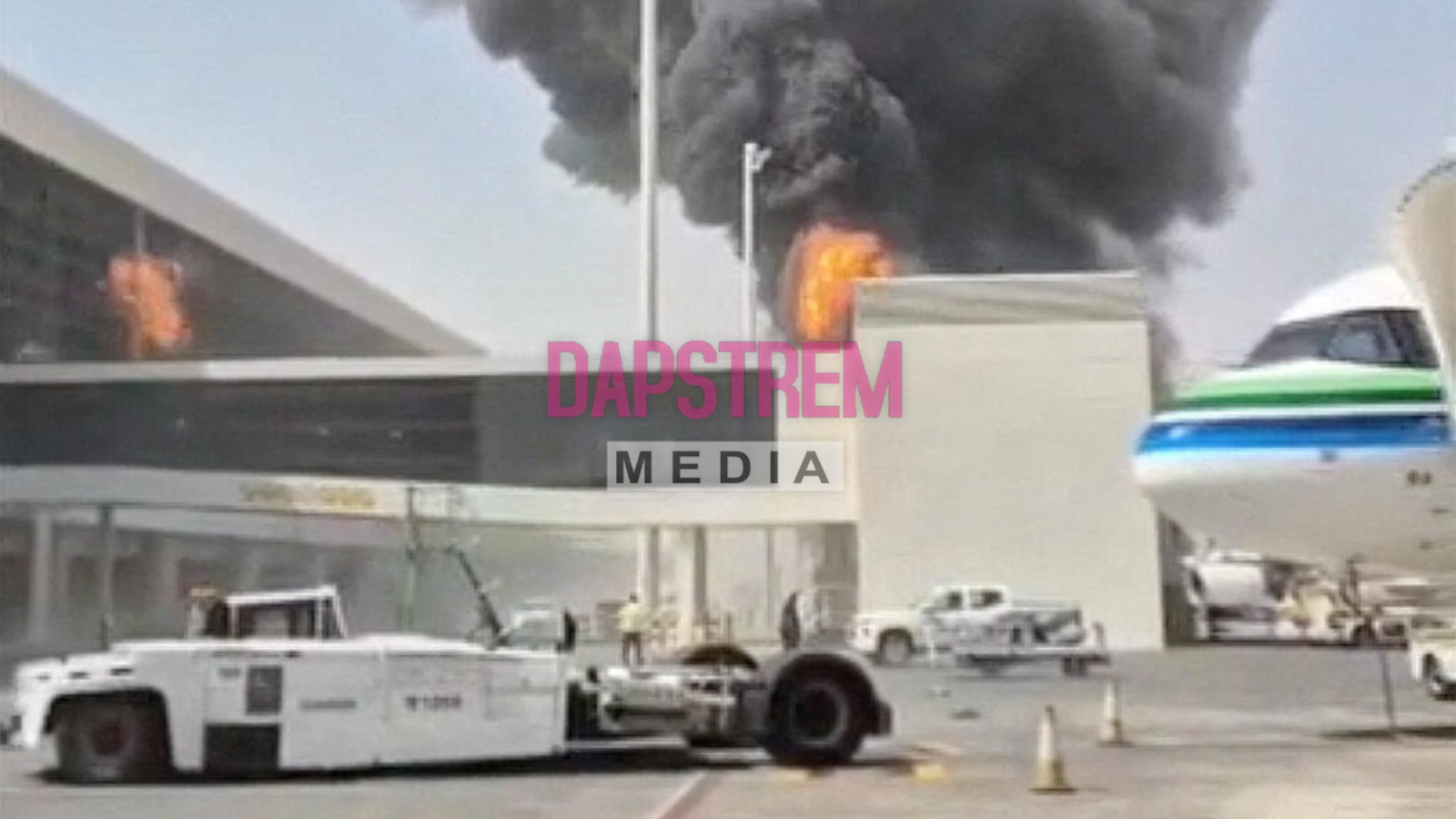
A fresh attack struck Saudi Arabia’s King Khalid International Airport in Riyadh on Sunday, killing one person and injuring 11 others, a day after a deadly Houthi-claimed strike killed at least 12 people and wounded more than 300, according to Saudi authorities.
The latest attack has intensified security concerns in the Saudi capital, disrupted air travel and raised fears of further escalation in the widening conflict involving Yemen’s Houthi rebels and the Saudi-led military coalition.
Saudi Arabia’s General Authority of Civil Aviation (GACA) confirmed that the latest strike killed a Pakistani national and left 11 people injured. The injured were transferred to several hospitals for treatment, while authorities began assessing the damage and inspecting affected airport facilities.
The projectile struck Terminals 3 and 4, which serve domestic flights, according to reporting by Al Jazeera, citing Saudi aviation authorities. A witness quoted by Reuters said a projectile hit the tarmac near parked aircraft at about 8:30pm local time on Sunday, triggering a fire and prompting passengers aboard a taxiing plane to return to the gate and disembark.
The airport had remained closed following Saturday’s deadly attack, and the latest incident further complicated efforts to restore normal operations.
Deadly Saturday Attack Leaves Hundreds Injured
The latest strike followed a major attack on Saturday, October 10, which Saudi authorities attributed to Yemen’s Houthi rebels.
Saudi Arabia initially reported that at least 12 people were killed and 309 injured in the attack on King Khalid International Airport. The victims included Saudi citizens and foreign nationals from several countries.
India’s embassy in Saudi Arabia subsequently reported that one of its citizens had died from injuries sustained in Saturday’s attack, bringing the reported death toll to 13.
The attack caused significant disruption, forcing authorities to suspend airport operations while emergency teams assessed the damage and attended to casualties.
The latest incidents followed earlier attacks on Riyadh airport during the same week, including Thursday’s strikes that killed three Saudi citizens, one of them an airline pilot, according to Saudi aviation authorities and the Associated Press.
The repeated targeting of the airport has heightened concerns over the safety of civilian aviation infrastructure and the potential consequences for international travel.
Houthis Threaten Further Attacks
Yemen’s Houthi movement has claimed responsibility for attacks on Saudi targets and issued further warnings against the kingdom’s airports and other infrastructure.
The group has framed its actions as part of its response to Saudi Arabia’s military campaign in Yemen. Its threats have increased pressure on Saudi authorities to strengthen air defences and protect critical transport facilities.
The Saudi-led coalition, which backs Yemen’s internationally recognised government against the Houthis, has condemned the attacks and warned of a response under international humanitarian law.
Saudi Arabia and its allies have also intensified military operations against Houthi-held areas in Yemen, raising the risk of retaliatory strikes and a broader escalation.
The latest attack on Riyadh airport underscores the difficulty of containing the conflict as both sides continue military operations and exchange threats.
Air Travel Disrupted as Security Concerns Grow
The attacks have had significant consequences for commercial aviation. With Riyadh airport closed following Saturday’s strike, passengers and airlines faced uncertainty over departures, arrivals and rescheduled flights.
Several international airlines have suspended or adjusted services to affected Saudi destinations amid heightened security concerns. Travel advisories have also warned of risks associated with missile and drone attacks in the region.
The European Union Aviation Safety Agency has highlighted dangers posed by recurring missile and drone attacks, including interception activity, falling debris and the risk of misidentification involving civilian aircraft.
Beyond the immediate disruption, repeated attacks on Saudi airports could affect business travel, tourism and the movement of passengers through one of the region’s important aviation hubs.
The incidents have also raised concerns about the safety of airport workers, airline crews and travellers who may be caught up in further attacks.
Regional Conflict Raises Stakes for Saudi Arabia
The renewed attacks come amid an intensifying confrontation between Saudi-led forces and the Houthis, whose military capabilities have allowed them to threaten targets deep inside Saudi territory.
The conflict also carries wider economic implications because of the strategic importance of the Red Sea and the Bab el-Mandeb Strait, a major shipping route linking the Red Sea with the Gulf of Aden.
Any further escalation could threaten commercial shipping, increase insurance costs and add pressure to global energy markets already sensitive to instability across the Middle East.
The United States has been considering its response to the worsening security situation, while Saudi Arabia has sought assistance from its partners. However, the extent of any additional foreign military involvement remains uncertain.
For now, Saudi authorities are assessing the damage, treating the injured and reviewing security arrangements as concerns grow over the possibility of further attacks.
The latest strike marks another dangerous development in a conflict increasingly threatening civilian infrastructure and regional stability.