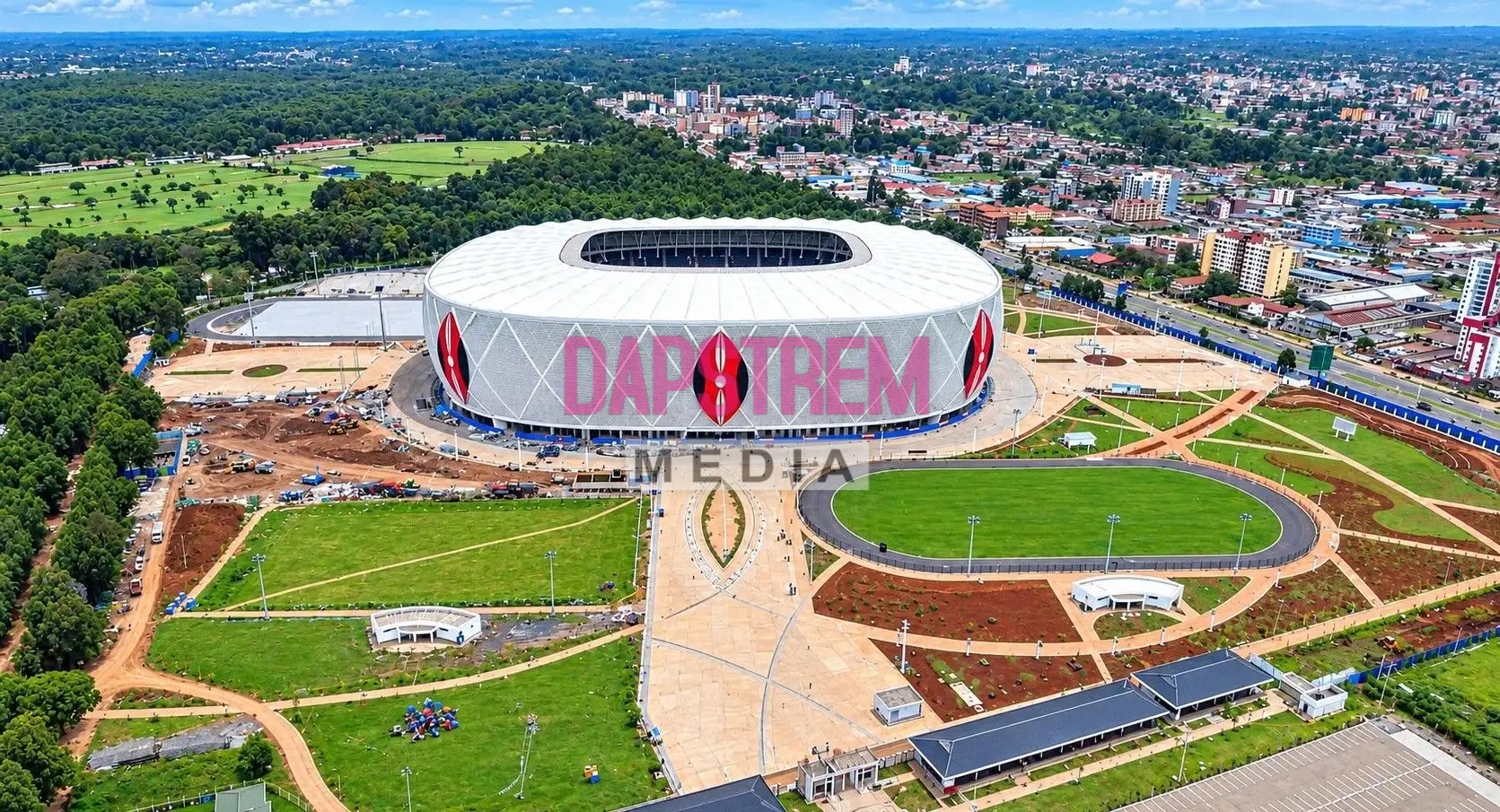
Talanta Sports Stadium to Host the Opening Leg of the 2027 HSBC SVNS 2 Rugby Sevens Series on January 23–24, Bringing International Men’s and Women’s Teams to Nairobi as Kenya Strengthens Its Position on the Global Rugby Stage.
Kenya is preparing to welcome international rugby sevens to Nairobi after World Rugby confirmed that Talanta Sports Stadium will host the opening leg of the 2027 HSBC SVNS 2 series. The tournament is scheduled for January 23–24, 2027, giving Kenyan rugby fans an opportunity to watch international teams compete on home soil while placing the new stadium at the centre of a major sporting event.
The announcement, made on Tuesday, October 13, 2026, marks an important milestone for Kenya’s rugby ambitions and the development of its sporting infrastructure. Nairobi will host the first of three tournaments in the series before the competition moves to South America for the remaining rounds in February.
The decision also gives Talanta Sports Stadium an opportunity to demonstrate its readiness to host major international sporting events. The facility has been developed as part of Kenya’s wider efforts to improve sports infrastructure, attract international competitions and create better opportunities for athletes and fans.
For Kenya, the tournament carries significance beyond hosting duties. The country has a strong rugby sevens following, with its national men’s team, Shujaa, and women’s team, the Lionesses, representing Kenya on the international stage. Playing in front of home supporters could provide both teams with valuable motivation as they pursue their ambitions in the global competition.
World Rugby confirmed that Nairobi, Montevideo and São Paulo would return as host cities for the 2027 HSBC SVNS 2 series after featuring in the inaugural competition in 2026. The three-city arrangement will give participating teams several opportunities to collect points as they compete for progression to the next level of international sevens. <Cite refs={[“turn365910search0″,”turn365910search3”]}/>
Nairobi to Open the 2027 International Rugby Sevens Calendar
Under the confirmed schedule, Talanta Sports Stadium will host the opening tournament on January 23 and 24, 2027. The event will be followed by the second leg in Montevideo, Uruguay, on February 20–21, with São Paulo, Brazil, hosting the final round on February 27–28.
The schedule places Nairobi at the beginning of an important three-stage competition that will test the consistency, fitness and tactical ability of participating teams.
Rugby sevens differs from the traditional 15-a-side format because each team fields seven players on the pitch. Matches are shorter, creating a fast-paced game in which speed, endurance, accurate passing and quick decision-making can determine the outcome.
The format has helped rugby sevens attract a wider international audience. Its shorter matches allow tournaments to feature several games over a weekend, creating an energetic atmosphere for spectators and providing teams with opportunities to compete against multiple opponents.
For supporters attending the Nairobi leg, the tournament is expected to offer two days of competitive rugby featuring men’s and women’s national teams. It will also provide an opportunity for fans who may not regularly follow international rugby to experience the sport in a major stadium setting.
The return of Nairobi to the SVNS 2 calendar also highlights the city’s growing role in the international sevens circuit. Kenya has previously hosted international rugby tournaments, including the long-running Safari Sevens, which attracts local and foreign teams.
The selection of Talanta Sports Stadium for the opening leg represents another step in that hosting tradition. However, the tournament’s success will depend on more than the venue itself. Organisers will need to coordinate transport, security, crowd management, accommodation and other arrangements to deliver a smooth experience for teams, officials and spectators.
Talanta Sports Stadium Set for a Major International Test
The announcement places Talanta Sports Stadium under the spotlight as Kenya prepares to complete the work required for the venue to host international competition.
The stadium, located in Nairobi, is one of the country’s major sports infrastructure projects. It forms part of the wider Talanta Sports City development, which is intended to expand Kenya’s capacity to host sporting events and support the growth of different disciplines.
The facility has been associated with plans to improve the country’s ability to stage international football and rugby competitions. Its selection for the SVNS 2 opening leg provides a concrete event around which the final preparations can be organised.
Reports published in October indicated that construction and installation work was still progressing, with completion targeted before the tournament. That makes readiness a key issue in the months leading up to the event.
For a venue hosting an international tournament, preparations extend beyond the playing surface. Organisers must ensure that the stadium has suitable seating, lighting, broadcast facilities, changing rooms, medical support, security systems and other services required by teams and spectators.
Transport and access will also be important. A successful tournament needs reliable arrangements for moving players, officials and fans to and from the venue, particularly during peak periods when large crowds are expected.
The availability of suitable training facilities is another consideration. Visiting teams need opportunities to prepare before matches, while competition officials require spaces to conduct briefings, manage equipment and coordinate the tournament programme.
A successful event could strengthen confidence in Kenya’s ability to host additional international competitions. It could also demonstrate how investment in sports infrastructure can support a broader sporting economy involving tourism, hospitality, broadcasting and event management.
However, the stadium’s long-term value will depend on how effectively it is used after the tournament. Regular events, proper maintenance and access for athletes could help ensure that the investment delivers benefits beyond a single international competition.
Kenya’s Shujaa and Lionesses Prepare for the Challenge
The Nairobi tournament will provide Kenya’s men’s and women’s teams with an opportunity to test themselves against international opposition in front of local supporters.
Shujaa have built a reputation as one of Africa’s most recognisable rugby sevens teams. Their participation in international competitions has helped strengthen Kenya’s standing in the sport, while their performances have attracted a dedicated following at home and abroad.
The Lionesses have also continued to represent Kenya in women’s rugby sevens, helping expand the sport’s profile and providing a platform for female athletes to compete internationally.
Hosting the opening leg could offer both teams a valuable home advantage. Familiar surroundings, local support and reduced travel demands can help players focus on preparation, although success will ultimately depend on performance on the pitch.
In rugby sevens, small mistakes can have major consequences. A missed tackle, poor restart or handling error can quickly turn into a scoring opportunity for the opposition. Teams must therefore maintain concentration throughout matches while managing the physical demands of playing several games over a short period.
Speed and fitness are particularly important because players cover significant distances in open space. Coaches must also decide when to use substitutions, how to manage possession and when to take risks in attack.
Playing before a home crowd can inspire athletes, but it can also bring pressure. Kenyan supporters will naturally hope to see Shujaa and the Lionesses perform well, and expectations may be high given the importance of the tournament.
The teams will need to prepare carefully, study their opponents and approach each match with discipline. Strong performances in Nairobi could help build momentum before the series moves to Uruguay and Brazil.
At the same time, the international tournament offers an opportunity for local fans to appreciate the standard of rugby played by teams from other parts of the world. Such exposure can help develop interest in the sport, encourage young players and strengthen Kenya’s wider rugby community.
What the HSBC SVNS 2 Competition Means for Participating Teams
The HSBC SVNS 2 series forms part of World Rugby’s updated international sevens competition structure. The system links regional qualification and lower-tier competition with the HSBC SVNS 3, HSBC SVNS 2 and the HSBC SVNS World Championship.
The structure is designed to provide teams with a clearer route towards competing among the world’s leading sevens nations. Rather than treating lower-tier tournaments as isolated events, it connects performance across different stages of the international competition system.
The 2027 SVNS 2 series will feature six men’s teams and six women’s teams. They will compete across the three tournament locations, with the overall standings determining which teams advance.
According to World Rugby, the top four men’s teams and top four women’s teams in the overall standings after the three legs will earn places in the HSBC SVNS World Championship. That opportunity makes every tournament important, as teams will need to accumulate enough points across the circuit rather than relying on one strong performance.
For teams seeking promotion, the format rewards consistency. A side that wins in Nairobi but struggles in the remaining rounds could lose its advantage, while a team that begins slowly may still recover through strong performances in Montevideo and São Paulo.
The competition also gives emerging teams an opportunity to measure themselves against established rugby nations. Exposure to different playing styles can help coaches identify weaknesses, refine tactics and develop players for future international assignments.
The series is particularly significant as the international rugby sevens calendar builds towards the Los Angeles 2028 Olympic Games. World Rugby has highlighted the importance of the competition pathway as national teams continue working towards the next Olympic cycle.
The SVNS 2 series does not itself guarantee Olympic qualification. Instead, it provides a competitive platform within the broader international structure, helping teams pursue progression and improve their standing ahead of future qualification opportunities.
For Kenya, the tournament is therefore both an immediate sporting challenge and an opportunity to strengthen the country’s position in the global rugby sevens system.
Nairobi, Montevideo and São Paulo Retain Hosting Roles
The 2027 schedule will return to the same three cities that hosted the inaugural SVNS 2 circuit in 2026.
Nairobi will stage the opening leg on January 23–24, followed by Montevideo on February 20–21 and São Paulo on February 27–28.
The decision to retain the three destinations provides continuity for the competition and allows organisers to build on the experience gained during the previous season. It also gives the host cities another opportunity to attract international rugby fans and showcase their capacity to stage major sporting events.
Montevideo, Uruguay’s capital, will host the second round at Estadio Charrúa. São Paulo will then stage the concluding tournament at Nicolau Alayon Stadium.
The travel schedule will require teams to manage long-distance journeys between Africa and South America while maintaining their physical condition. Recovery, training and squad management will be important as teams move between the three rounds.
The sequence also gives Nairobi an important role in establishing the tone for the series. A well-organised opening event could generate excitement for the remaining tournaments and provide participating teams with a strong start to their campaigns.
For Kenya, hosting the first leg brings international attention to the country at the beginning of the series. It also provides local businesses with an opportunity to benefit from visiting teams, officials, supporters and media representatives.
World Rugby Sevens World Series General Manager Sam Pinder welcomed the return of the three host cities, saying the competition offers teams a clear and competitive route towards the HSBC SVNS World Championship while bringing international sevens to rugby audiences around the world. He also noted that the road to Los Angeles 2028 gives each stage of the pathway greater significance.
Potential Economic Benefits for Kenya
Hosting an international rugby tournament can generate economic activity across several sectors, particularly when visiting teams, supporters, officials and media personnel travel to the host city.
Hotels and guesthouses may receive bookings from people attending the tournament, while restaurants, transport operators and other service providers could benefit from increased demand.
Local businesses around the venue may also experience additional activity during the tournament weekend. Food vendors, merchandise sellers and other suppliers could find opportunities to serve spectators, depending on the event’s commercial arrangements and the access granted to vendors.
The tournament may also create temporary work opportunities in areas such as event management, hospitality, transport, security, cleaning, technical support and media production.
However, the actual economic benefits will depend on attendance, visitor spending and how much of the event’s expenditure remains within the local economy. Hosting an international competition does not automatically guarantee large financial returns, and organisers must balance costs against the expected benefits.
Ticket prices, public transport arrangements and access to the venue will influence how many people attend. Affordable and well-organised transport could make it easier for families, students and rugby supporters to experience the tournament.
The event could also help promote Kenya as a destination for sports tourism. International teams and media representatives will have an opportunity to experience Nairobi, while images and coverage of the competition may reach audiences beyond the country.
If Kenya delivers a successful tournament, it could strengthen its case for hosting future rugby competitions and other international sporting events. Such opportunities may help generate repeat business for hospitality providers and encourage further investment in sports-related services.
Still, the long-term impact will depend on whether the country can build on the event rather than treating it as a one-off occasion. Consistent organisation, reliable facilities and effective promotion will be essential to converting international exposure into lasting benefits.
A Chance to Grow Rugby Among Young Kenyans
Beyond the immediate tournament, the SVNS 2 event could help inspire a new generation of Kenyan rugby players.
International competitions give young athletes an opportunity to see the speed, skill and discipline required at the highest levels of the sport. Watching national teams compete can encourage schoolchildren and club players to take rugby more seriously and pursue opportunities to improve their abilities.
The event may also help raise the profile of women’s rugby. With both men’s and women’s teams participating in the series, the tournament can showcase the contribution of female athletes and encourage more girls to participate in the sport.
Growing participation requires more than an international event, however. Schools, clubs, coaches and local rugby associations need access to equipment, training facilities and competitions that allow players to develop consistently.
Investment in grassroots programmes can help identify talented athletes early and provide them with structured pathways towards elite competition. Coaching education, injury prevention and player welfare are equally important in building a sustainable sporting environment.
Kenya’s rugby authorities can use the tournament as an opportunity to engage fans, promote youth participation and strengthen relationships between schools, clubs and the national teams.
Community activities around the event could further encourage interest, particularly if young players are given opportunities to meet athletes, learn about training and understand the discipline required to succeed in international rugby.
The tournament could therefore serve a wider purpose by bringing international sport closer to communities and demonstrating that rugby offers opportunities for both personal development and professional competition.
What Fans Should Expect Ahead of the Tournament
With the dates now confirmed, attention will turn to preparations for the January tournament. Fans will be looking for information on ticket sales, participating teams, fixtures, transport arrangements and other event details.
World Rugby said further information on the SVNS 2 competition and ticketing would be announced in due course. Supporters should therefore follow official World Rugby and Kenya Rugby Union channels for confirmed updates rather than relying on unverified ticket offers or schedules.
The final preparations at Talanta Sports Stadium will also be closely watched. The venue must be ready to accommodate international teams and spectators, with suitable facilities and operational arrangements in place before the opening matches.
For fans, the tournament offers an opportunity to plan ahead and experience two days of international rugby in Nairobi. For organisers, it is a chance to demonstrate that Kenya can host a high-quality event that meets international expectations.
The atmosphere could be one of the tournament’s biggest attractions. Rugby sevens is known for its fast action, close finishes and lively crowds, making it well suited to a weekend festival of sport.
Kenyan supporters will hope to see Shujaa and the Lionesses deliver strong performances, but the competition will also provide an opportunity to appreciate the talent of visiting teams and the international standard of the game.
Kenya’s Sporting Ambitions Receive a Major Boost
The confirmation of Talanta Sports Stadium as the host of the opening leg of the 2027 HSBC SVNS 2 series is an important development for Kenyan rugby and the country’s wider sporting ambitions.
The January 23–24 tournament will bring international teams to Nairobi, give local supporters another opportunity to watch high-level rugby and place the new stadium before a global sporting audience.
It will also provide Shujaa and the Lionesses with a valuable opportunity to compete at home as they seek progress through the international sevens pathway. With the top four men’s and women’s teams advancing to the HSBC SVNS World Championship, the stakes will remain high throughout the three-event series.
For the stadium, the tournament will be an important test of readiness and organisation. For the country, it offers potential benefits in tourism, hospitality, employment and the promotion of rugby among young people.
The challenge will be to turn the announcement into a successful event. That will require the completion of necessary preparations, effective coordination between organisers and authorities, and a welcoming experience for players, officials and supporters.
If Kenya delivers on those expectations, the tournament could become more than the opening round of an international rugby series. It could demonstrate the country’s capacity to host major sporting events, strengthen its reputation within the global rugby community and create momentum for further investment in sport.
As the countdown to January begins, attention will remain on Talanta Sports Stadium and the preparations needed to welcome the world’s rugby sevens teams to Nairobi.