Waititu Appeals Against Judgement Upholding His Conviction and 12-Year Prison Sentence
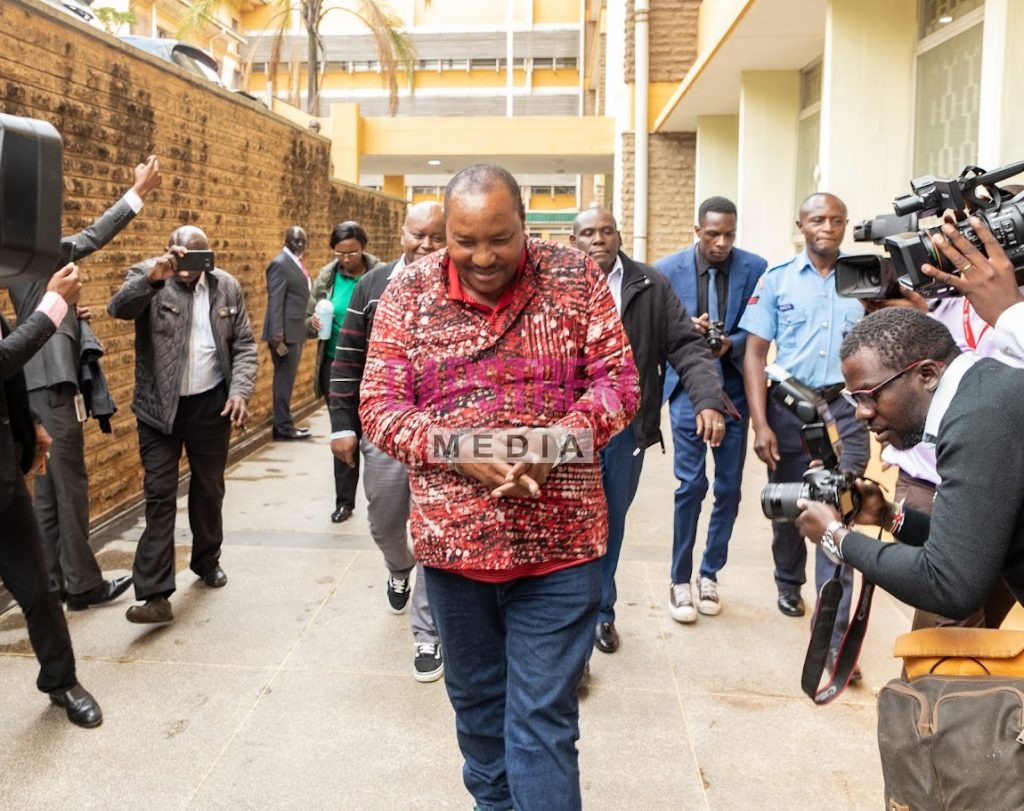
Former Kiambu Governor Ferdinand Waititu has moved to the Court of Appeal in a fresh attempt to overturn his conviction and 12-year prison sentence in the Sh588 million corruption case.
Waititu is challenging the High Court judgment delivered by Justice Rose Ougo on October 14, 2026, which upheld his conviction and the sentence imposed by the lower court. The latest appeal marks another chapter in a legal battle that has followed the former governor since investigations into the controversial Kiambu County road tender began in 2019.
Through his lawyer, Chris Mutuku, Waititu is also challenging the convictions entered against his wife, Susan Wangari, and two companies over money-laundering charges. The companies are Saika Two Estates Limited and Bienvenue Delta Hotel.
The appeal challenges the entire decision delivered by Justice Ougo, including the ruling that upheld the convictions and sentences imposed by the trial court and the decision to overturn the earlier acquittals on money laundering.
The latest development comes days after Waititu and his co-accused appeared before the Milimani Anti-Corruption Chief Magistrate’s Court for mitigation on the additional money-laundering charges.
Their legal team asked the court to consider the hardship they had experienced during the lengthy court proceedings, which began in 2019. The defence also maintained that the accused persons were remorseful and continued to insist on their innocence despite the convictions.
Waititu’s decision to appeal now places the case before another level of the judicial system, where the Court of Appeal will be expected to examine the legal arguments raised against the High Court judgment.
How the Sh588 Million Corruption Case Began
The case revolves around a road construction contract worth approximately Sh588 million awarded by the County Government of Kiambu during the 2017/2018 financial year.
The contract was intended to upgrade several gravel roads to bitumen standards in different parts of the county, including Thika, Limuru, Gatundu North, Juja and Ruiru.
The tender was awarded to Testimony Enterprises Limited, a company whose director was Charles Chege Mbuthia, one of Waititu’s co-accused in the corruption case.
Investigations into the contract began in 2019 following allegations that the procurement process had been irregularly conducted and that public funds had been channelled to individuals and businesses connected to the former governor.
The Ethics and Anti-Corruption Commission investigated the transactions, examining procurement documents, financial records and the relationships between the individuals and companies involved.
Prosecutors subsequently accused Waititu of using his position as Kiambu Governor to benefit from the controversial tender.
The case also involved Susan Wangari, former Kiambu County Chief Officer for Roads, Transport, Public Works and Utilities Luka Mwangi Wahinya, and Testimony Enterprises director Charles Chege Mbuthia.
The prosecution argued that the tendering process had been manipulated to favour the contractor despite concerns about compliance with procurement requirements.
Investigators also examined how money paid to the contractor by the county government was subsequently transferred to companies associated with Waititu and his family.
These transactions became a central part of the prosecution’s case, with investigators seeking to establish whether the money represented proceeds of corruption.
The case attracted significant public attention because of the amount involved and the position Waititu held when the contract was awarded.
It also became one of the high-profile corruption prosecutions involving a former county governor, highlighting the challenges surrounding accountability in devolved government.
High Court Upholds Waititu’s Conviction and 12-Year Sentence
On October 14, 2026, Justice Rose Ougo dismissed Waititu’s appeal against his conviction and sentence, upholding the decision of the lower court.
The judge also dismissed appeals by his co-accused, Charles Chege and Luka Mwahiya, concerning their convictions on several corruption-related charges.
Waititu had been sentenced to 12 years in prison, with an alternative fine of approximately Sh53.5 million, after the trial court found him guilty of corruption-related offences.
The charges included conflict of interest, dealing with suspicious property, abuse of office, fraudulent procurement practices and fraudulent acquisition of public property.
The former governor had challenged the convictions and argued that the prosecution had not established the case against him to the required legal standard.
His legal team also questioned aspects of the penalties imposed by the trial court, including the legality and calculation of the fines and default prison terms.
However, Justice Ougo found no sufficient legal basis to overturn the convictions or interfere with the sentences.
The judge maintained that the trial court had properly applied the relevant provisions of the Anti-Corruption and Economic Crimes Act when imposing the penalties.
She also upheld the order barring the convicted individuals from holding public office for 10 years.
The ruling represented a major setback for Waititu, who had hoped the High Court would overturn the lower court’s decision and provide him with an opportunity to challenge the case from a stronger legal position.
Instead, the judgment reinforced the earlier findings and required him to continue serving his sentence.
The former governor’s latest appeal is therefore aimed at reversing a decision that has significantly affected his freedom and political future.
Court Overturns Earlier Money-Laundering Acquittals
One of the most significant developments in the October 14 judgment was the High Court’s decision to overturn the earlier acquittals on money-laundering charges.
Although the trial court had convicted Waititu and his co-accused on several corruption-related offences, it had acquitted them on the money-laundering counts.
The State challenged those acquittals through a cross-appeal, arguing that the trial court had failed to properly consider the financial transactions and the legal principles governing money laundering.
Justice Ougo agreed with the prosecution and set aside the acquittals.
The judge entered convictions against Waititu, his wife and the two companies on the relevant money-laundering charges, directing that they be produced before the trial court for mitigation and sentencing.
The decision was particularly significant because it expanded the legal consequences of the case beyond the original corruption convictions.
It also meant that Susan Wangari, who had previously been acquitted on the money-laundering charges, faced fresh convictions following the High Court ruling.
The two companies, Saika Two Estates Limited and Bienvenue Delta Hotel, were also affected by the decision.
In explaining the ruling, Justice Ougo treated money laundering as a distinct offence that could be established separately from the underlying corruption offences.
The prosecution had presented evidence tracing payments from the Kiambu County road contract to the contractor and subsequently to businesses associated with the accused.
The judge found that the financial transactions formed part of a wider chain of dealings involving funds obtained through the disputed procurement process.
The decision to overturn the acquittals became one of the key issues in Waititu’s latest appeal.
His legal team will now have another opportunity to challenge the findings before the Court of Appeal.
Waititu’s Defence Says the Accused Have Suffered Since 2019
During mitigation proceedings on October 27, 2026, Waititu and his co-accused asked the court to consider the difficulties they had experienced throughout the lengthy corruption trial.
Lawyer Chris Mutuku told the court that his clients had endured immense suffering since the case began in 2019.
He cited anxiety, sleepless nights and the loss of personal freedom as some of the difficulties they had experienced during the proceedings.
The lawyer also told the court that the accused persons were remorseful and were asking for forgiveness despite continuing to maintain their innocence.
According to the defence, the accused acknowledged that convictions had been entered against them but insisted that they had not committed the offences.
The legal team further argued that the government had not lost money through the disputed road contract.
They relied on an audit report which, according to their submissions, indicated that no public funds had been lost and that the contracted works had been executed.
The defence maintained that the main problem concerned the manner in which the tender had been acquired rather than the delivery of the road projects.
This argument has been central to the defence’s position throughout the case.
However, the courts have previously rejected the suggestion that the execution of contracted works automatically removes criminal liability where procurement violations and corrupt transactions have been established.
The High Court maintained that the legality of the procurement process and the subsequent handling of the money remained important considerations.
The mitigation submissions are also separate from the question of whether the convictions should stand. The Court of Appeal will have to consider the legal grounds raised in the new appeal.
The Financial Transactions That Became Central to the Case
A major part of the prosecution’s case involved tracing money paid to Testimony Enterprises Limited after the company received the Kiambu County road contract.
Investigators examined bank records and transactions involving companies linked to Waititu and his wife.
Among the entities mentioned during the proceedings were Saika Two Estates Limited and Bienvenue Delta Hotel.
The prosecution argued that money from the road contract was transferred through different business accounts, creating a financial trail connecting the county payments to companies associated with the accused.
The transactions were important because investigators wanted to establish whether the money had been transferred to conceal its origin or disguise the people benefiting from it.
The High Court considered the banking evidence and the explanations provided by the accused when determining the money-laundering appeal.
Justice Ougo found that the prosecution had established a connection between the disputed procurement and the financial benefits received through the transactions.
The defence, however, disputed the interpretation of the financial dealings and maintained that the transactions had legitimate explanations.
The disagreement over the evidence is expected to remain an important feature of the legal battle as Waititu pursues his appeal.
The case also demonstrates how financial investigations have become increasingly important in corruption prosecutions, particularly where public funds are alleged to have moved through several companies and personal accounts.
Rather than focusing only on the original government contract, investigators sought to establish what happened to the money after it was released by the county government.
Waititu’s Political Career and Previous Legal Battles
Before the corruption case dominated headlines, Waititu was one of the prominent political figures in Kiambu County.
He served as the county’s second governor after winning the 2017 general election under the Jubilee Party.
His political journey had earlier included serving as Member of Parliament for Embakasi East and later as Nairobi’s Kabete constituency representative.
However, his tenure as Kiambu Governor was interrupted after the County Assembly impeached him in December 2019 over allegations of abuse of office and other misconduct.
The Senate upheld his removal on January 29, 2020, ending his time as governor.
His removal came as investigations into the controversial road tender were already attracting attention.
The criminal proceedings continued for several years before the trial court convicted him in February 2025.
The conviction marked another major setback for the former governor, who had maintained his innocence throughout the proceedings.
He was sentenced to 12 years in prison, with an alternative financial penalty, and subsequently pursued legal avenues to challenge the decision.
In February 2026, Waititu obtained temporary freedom after the High Court reviewed his bail terms and allowed him to secure release through a Sh20 million cash bail arrangement pending the appeal.
His legal team had previously raised concerns about his health, citing conditions including diabetes, hypertension, eyesight problems and kidney complications.
The October 14 judgment, however, upheld his conviction and sentence, resulting in his return to custody.
The latest appeal now offers another opportunity for the former governor to challenge the legal findings against him.
EACC Continues Pursuing Other Financial Recovery Proceedings
Beyond the criminal case, the Ethics and Anti-Corruption Commission has continued pursuing separate proceedings aimed at recovering assets and money allegedly linked to the corruption allegations.
In December 2025, a court ordered the forfeiture of assets valued at approximately Sh131.2 million linked to Waititu and associated parties in a separate unexplained-wealth case.
The assets included properties in Thindigua, a Caterpillar machine, motor vehicles and property associated with companies linked to the former governor and his wife.
The EACC has also pursued a separate civil case seeking to recover approximately Sh170 million from Waititu and Testimony Enterprises Limited as alleged proceeds of corruption.
That recovery case is distinct from the criminal appeal now being pursued at the Court of Appeal.
The commission has maintained that following the money and recovering assets believed to be proceeds of corruption are important parts of its mandate.
The separate proceedings demonstrate that the legal consequences surrounding the Kiambu road tender extend beyond the prison sentence imposed on the former governor.
They also highlight the difference between criminal prosecution and civil asset recovery, which can proceed through separate legal processes.
What Happens Next in Waititu’s Appeal?
The filing of the latest appeal means that Waititu’s legal battle is moving to another stage.
The Court of Appeal will be expected to examine the grounds raised by his legal team and determine whether the High Court made errors that justify overturning or varying its decision.
The appeal challenges the judgment delivered by Justice Ougo on October 14, 2026, which upheld the earlier convictions and sentences and entered fresh convictions on the money-laundering charges.
The court will have to consider the arguments presented by both the defence and the prosecution before reaching a decision.
Depending on its findings, the appellate court could uphold the judgment, overturn parts of it or make other orders permitted under the law.
For now, the filing of an appeal does not automatically cancel the existing convictions or the prison sentence. Waititu remains subject to the court orders already in force unless a competent court issues different directions.
The appeal also places renewed attention on the role of the judiciary in handling high-profile corruption cases involving former public officials.
For the prosecution, the case represents an important test of efforts to hold public officials accountable over alleged misuse of public resources.
For Waititu and his co-accused, it is another opportunity to challenge findings they continue to dispute.
Ultimately, the Court of Appeal’s decision will determine whether the High Court judgment remains intact or whether any part of it requires reconsideration.
As the proceedings continue, the case remains one of the country’s closely watched corruption battles, with implications for public accountability, procurement oversight and the recovery of alleged proceeds of corruption.
Waititu’s latest move demonstrates that the legal fight is far from over, even after the High Court upheld his 12-year sentence. The coming proceedings will be crucial in determining the next chapter of the former governor’s legal and political future.