Thousands of Kenyans seeking employment opportunities in Europe could benefit from improved visa and recruitment processes after Kenya and Germany agreed to streamline procedures for skilled workers, as the number of Kenyans employed in Germany climbed to 9,500.
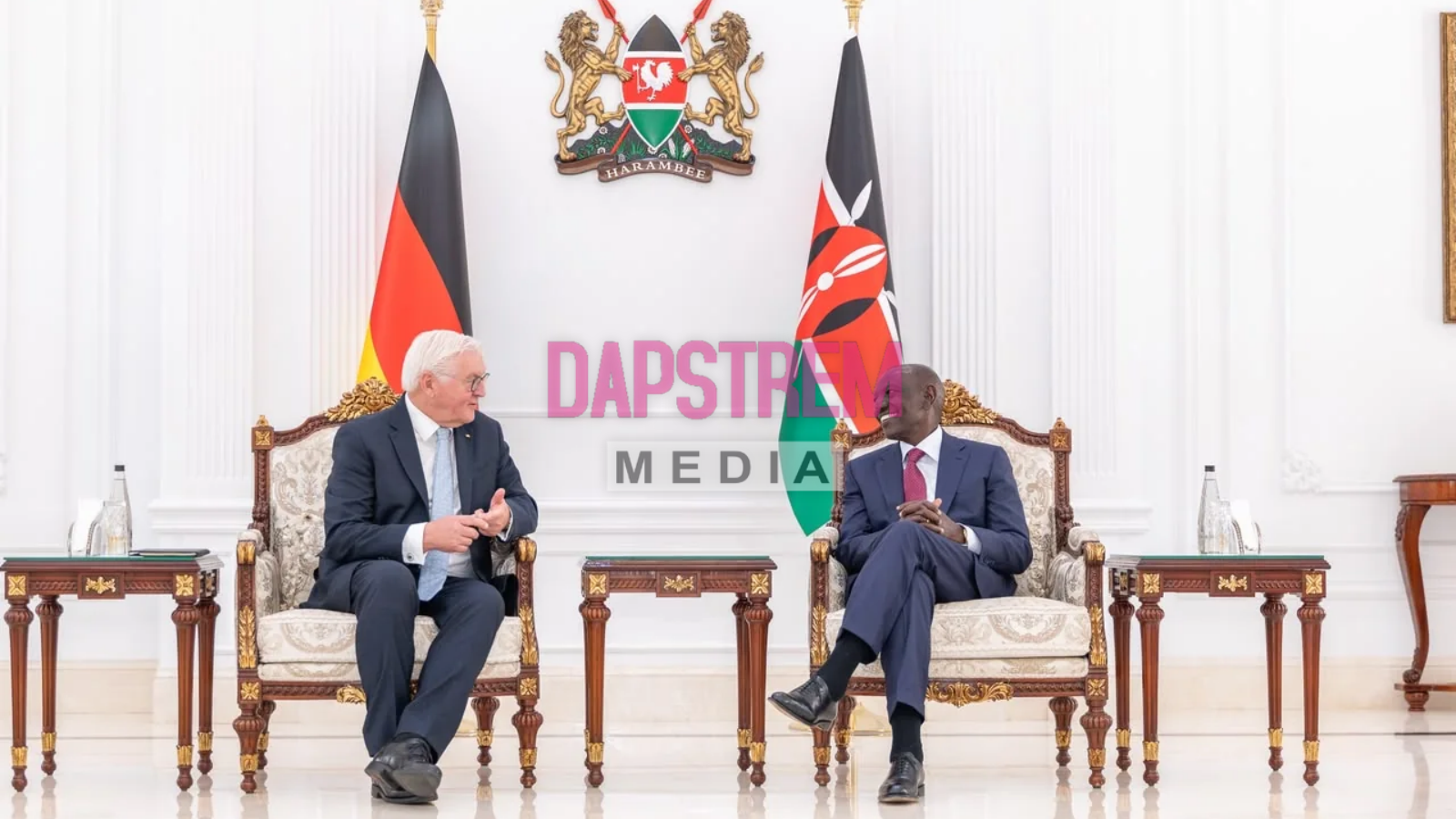
President William Ruto announced the development on Wednesday, November 25, 2026, following bilateral talks with German President Frank-Walter Steinmeier at State House, Nairobi.
According to Ruto, the number of Kenyans working in Germany increased from 7,000 in March 2024 to 9,500 in March 2026, reflecting growing employment opportunities under the two countries’ Comprehensive Migration and Mobility Partnership Agreement (CMMPA).
The President also revealed that the number of Kenyan trainees contributing to Germany’s social security system rose from 820 to 1,260 over the same period.
Visa processes and skills recognition targeted
During their discussions, the two leaders agreed to strengthen cooperation by simplifying visa and recruitment procedures, expanding German-language training and accelerating the recognition of professional qualifications.
The measures are intended to make it easier for qualified Kenyans to access employment opportunities while helping German employers recruit workers in sectors experiencing shortages.
Germany has been facing a shortage of skilled labour as its population ages, creating demand for foreign professionals in healthcare, construction, engineering and technical occupations.
For Kenya, the partnership offers an opportunity to create international employment pathways for its young and skilled workforce.
What the 2024 agreement provides
Kenya and Germany signed the Comprehensive Migration and Mobility Partnership Agreement in Berlin on September 13, 2024. It officially entered into force on October 18, 2024.
The agreement establishes cooperation in skilled labour migration, vocational training, education, social protection and the rights of migrant workers.
It also provides a framework for addressing irregular migration and facilitating the return of individuals who have no legal right to remain in either country.
In September 2026, Kenya’s State Department for Diaspora Affairs signed another memorandum of understanding with German institutions, including the Nuremberg Chamber of Commerce and Industry, to strengthen recruitment pathways, skills development and qualifications recognition.
The partnership emphasises ethical recruitment and protection against exploitation, ensuring Kenyans receive reliable information, transparent employment contracts and appropriate support.
Opportunities beyond employment
Ruto and Steinmeier also discussed opportunities for Kenyan seafarers through specialised training, sea-time placements and partnerships with German shipping companies.
For thousands of Kenyans hoping to work abroad, the proposed reforms could reduce administrative obstacles. However, visa requirements will remain in place, and applicants must still satisfy the relevant professional, immigration and language requirements.
The latest announcement signals a growing partnership between Nairobi and Berlin, with both governments seeking to turn Germany’s demand for skilled labour into meaningful employment opportunities for Kenyans.