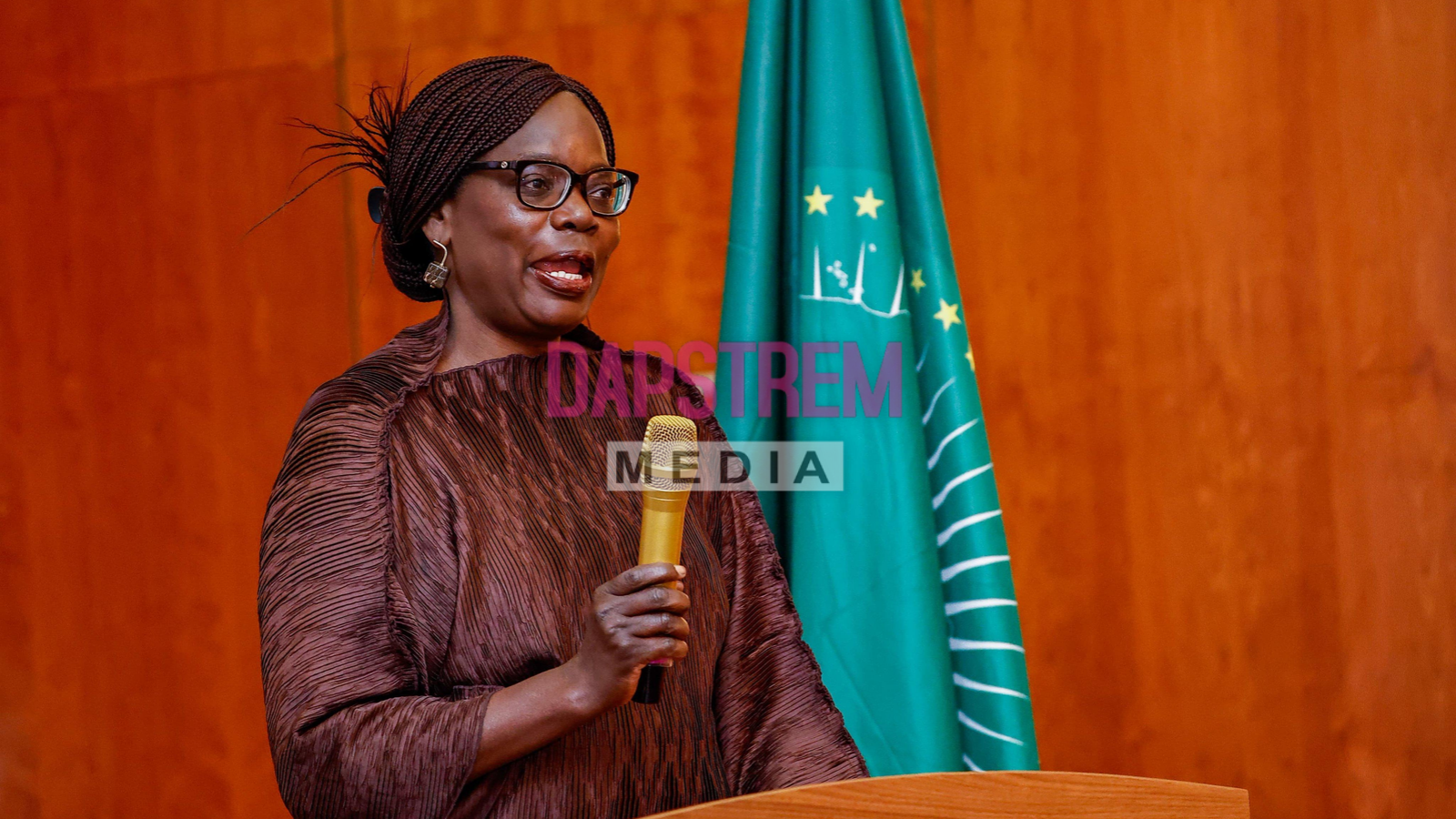
Kenyan Professor Phoebe Okowa has secured a full nine-year term as a judge of the International Court of Justice (ICJ), following a closely contested election at the United Nations headquarters in New York.
Okowa’s victory came after several rounds of voting by the UN General Assembly and Security Council on Tuesday, November 3, 2026, bringing an end to an intense diplomatic contest involving nine candidates seeking five vacancies on the world’s principal judicial body.
The Kenyan jurist secured 183 votes in the 193-member UN General Assembly, against two votes for her final challenger, Peru’s Luz del Carmen Ibáñez Carranza. She also received 13 votes in the 15-member Security Council, comfortably surpassing the required threshold.
Her new term will run from February 6, 2027, to February 5, 2036, extending her service at the court for another nine years.
The election represents a significant diplomatic achievement for Kenya and reinforces the country’s presence in one of the world’s most influential international legal institutions.
A hard-fought election at the United Nations
Although Okowa ultimately secured an overwhelming victory, her path to re-election was not straightforward.
The election initially involved nine candidates competing for five available positions. Candidates were required to obtain an absolute majority in both the General Assembly and the Security Council to secure election.
Four candidates Dapo Akande of the United Kingdom, François Alabrune of France, Mahmoud Daifallah Hmoud of Jordan and Rena Lee of Singapore secured the necessary support in the initial voting rounds.
However, the fifth position proved considerably more difficult to resolve.
During the early rounds, Okowa received strong support in the General Assembly but struggled to secure the necessary majority in the Security Council. In one of the initial ballots, she obtained six votes in the 15-member council, falling short of the eight required.
The contest also became an important diplomatic issue for Africa after Kenya and Sierra Leone both sought representation through their respective candidates.
Sierra Leone had nominated Professor Charles Chernor Jalloh, creating a competitive situation between two African legal scholars.
Following several rounds of unsuccessful voting, rival candidates began withdrawing.
Sierra Leone eventually withdrew Jalloh’s candidature and backed Okowa, while Ecuador’s Marcelo Vázquez-Bermúdez and South Korea’s Jin-Hyun Paik also exited the contest.
This helped narrow the field and consolidate support behind the remaining candidates.
In the decisive third round, Okowa secured the backing required from both UN bodies, defeating Peru’s candidate and completing the election of all five judges.
The result was a significant turnaround from the earlier voting difficulties and demonstrated the importance of sustained diplomatic engagement in international elections.
Who is Professor Phoebe Okowa?
Professor Phoebe Okowa is an internationally recognised Kenyan scholar specialising in public international law.
She is a Professor of Public International Law at Queen Mary University of London, where she has also served as Director of Graduate Studies.
Her academic career has focused on important areas of international law, including state responsibility, environmental law and the legal principles governing relations between countries.
Okowa studied law at the University of Nairobi before proceeding to the University of Oxford, where she obtained a Bachelor of Civil Law degree and a doctorate.
Her professional experience extends beyond academia.
In 2021, she was elected to the United Nations International Law Commission, becoming the first African woman to serve on the expert body.
The commission is responsible for contributing to the development and codification of international law, helping clarify legal principles that govern relations between states.
She has also served as a member of the Permanent Court of Arbitration at The Hague, an international institution that facilitates the resolution of disputes involving states and other parties.
Her election to the ICJ in November 2025 made her the first Kenyan to serve as a judge of the court since its establishment in 1945.
From a temporary appointment to a full nine-year mandate
Okowa’s latest election builds on her earlier appointment to the court in 2025.
She was elected on November 12, 2025, to fill the vacancy created by the resignation of Somali judge Abdulqawi Ahmed Yusuf.
However, because she was completing her predecessor’s remaining term, her initial appointment was due to expire on February 5, 2027.
This meant Kenya had to mount a fresh campaign to secure her election for a complete nine-year mandate.
The Ministry of Foreign Affairs intensified diplomatic engagements ahead of the November 2026 election, seeking support from UN member states.
Principal Secretary for Foreign Affairs Korir Sing’oei led much of the diplomatic engagement, presenting Okowa’s legal experience and qualifications as important assets for the court.
The government argued that her expertise, professional record and contribution to international law made her a strong candidate for the position.
The successful outcome now gives Okowa a full mandate extending to February 2036.
What does the International Court of Justice do?
The International Court of Justice, commonly referred to as the ICJ or World Court, is the principal judicial organ of the United Nations.
Established in 1945 under the UN Charter, it is headquartered at the Peace Palace in The Hague, Netherlands.
Its primary responsibility is to resolve legal disputes submitted by states and provide advisory opinions on legal questions referred to it by authorised UN institutions and agencies.
Its work covers a wide range of international issues, including territorial disputes, maritime boundaries, diplomatic relations, treaty interpretation and questions concerning state responsibility.
Unlike domestic courts, the ICJ does not prosecute individuals or determine their criminal guilt.
It is also important not to confuse it with the International Criminal Court (ICC), which prosecutes individuals accused of crimes such as genocide, war crimes and crimes against humanity.
The ICJ has 15 judges, each elected to a nine-year term, with elections staggered to ensure continuity in the court’s membership.
Judges are elected by the General Assembly and Security Council voting independently. A candidate must secure an absolute majority in both institutions.
Although judges are nominated through national processes, they do not serve as representatives of their respective governments. They are expected to exercise independent judicial judgment.
This means Okowa’s position is not to advance Kenya’s national interests but to interpret and apply international law impartially.
Five judges elected to serve from 2027
Okowa was among five successful candidates elected to replace judges whose terms expire in February 2027.
The other four are:
- Professor Dapo Akande – United Kingdom: An internationally recognised scholar of public international law at the University of Oxford.
- François Alabrune – France: A French legal expert and diplomat.
- Mahmoud Daifallah Hmoud – Jordan: An experienced international jurist who has previously served on the ICJ.
- Rena Lee – Singapore: Singapore’s Ambassador for International Law, with extensive experience in international negotiations.
The five will begin their new terms on February 6, 2027, and serve until February 5, 2036.
Their election will help shape the composition of the court during a period when international legal questions involving armed conflicts, territorial sovereignty, human rights and state obligations continue to attract global attention.
Kenya celebrates a major diplomatic achievement
Okowa’s re-election has attracted congratulatory messages from Kenyan leaders and members of the legal fraternity.
President William Ruto welcomed the victory, describing it as a significant achievement for Kenya and recognising her contribution to international law.
Former Chief Justice David Maraga also congratulated the jurist, describing the result as an endorsement of her expertise and the confidence placed in her by the international community.
Foreign Affairs Principal Secretary Korir Sing’oei thanked the UN General Assembly and Security Council members who supported her candidature.
He also acknowledged the countries that withdrew their candidates during the voting process, noting their role in helping resolve the prolonged contest.
The successful campaign reflects months of diplomatic engagement by Kenya and its efforts to maintain a presence in international institutions responsible for interpreting and applying international law.
What Okowa’s re-election means for Kenya and Africa
The significance of Okowa’s victory extends beyond the personal achievement of securing another nine years at the court.
For Kenya, it represents continued recognition of the country’s contribution to international legal scholarship and diplomacy.
It also provides an opportunity for Kenyan legal expertise to remain represented within an institution whose decisions influence international relations and the interpretation of legal obligations between states.
For Africa, the election ensures that the continent retains representation through Okowa on the 15-member court.
However, her judicial responsibilities remain international rather than national. She will be expected to approach cases independently, including any matters involving Kenya, should they come before the court.
Her re-election also highlights the growing participation of African legal scholars in international institutions that have historically been dominated by established global legal and diplomatic networks.