World Food Day 2026: Innovate Today, Nourish Tomorrow as the World Renews Fight Against Hunger
The world today marks World Food Day, an important international occasion dedicated to raising awareness about hunger, food insecurity, malnutrition and the need to ensure that every person can access safe, nutritious and affordable food. Observed annually on October 16, the day brings together governments, farmers, humanitarian organisations, researchers, businesses and communities to reflect on the progress made in fighting hunger and the challenges that continue to threaten global food security.
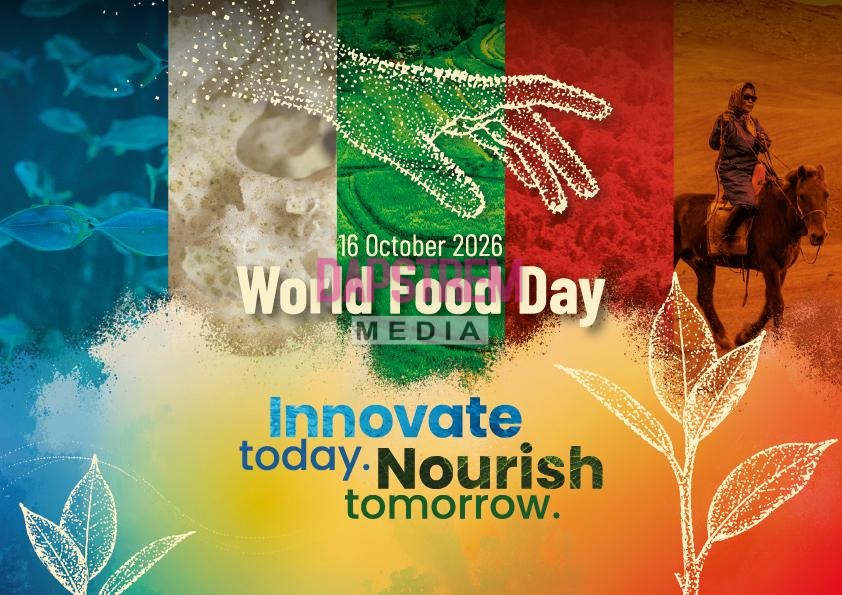
This year’s celebrations are taking place under the theme “Innovate Today. Nourish Tomorrow.” The theme calls for new ideas, technologies and sustainable practices that can transform food production, improve distribution and make nutritious meals accessible to more people. It also recognises the importance of traditional knowledge, local solutions and the experience of farmers and communities that have sustained food production for generations.
The Food and Agriculture Organization of the United Nations (FAO) is leading the global campaign, encouraging countries to invest in practical solutions that strengthen agricultural systems while protecting the environment. The organisation emphasises that innovation should not remain limited to advanced technologies. It must reach the people who need it most, including smallholder farmers, pastoralists, fishing communities, women, young people and households struggling to afford healthy food.
World Food Day is observed on October 16 to commemorate the founding of the FAO in 1945. Over the decades, the occasion has developed into a global platform for discussions about hunger, agricultural development, nutrition and the future of food.
However, this year’s commemoration comes at a time when millions of people worldwide continue to face difficulties accessing adequate food. Conflict, climate change, economic instability, rising production costs and disruptions to supply chains have placed additional pressure on households and agricultural communities.
The United Nations has highlighted the scale of the challenge, reporting that approximately 645 million people faced hunger in 2025, while nearly 2.7 billion people could not afford a healthy diet. These figures illustrate the difference between producing enough food globally and ensuring that people can actually obtain the food they need.
The challenge is therefore not simply to produce more food. Countries must also improve access, affordability, nutrition, storage, transportation and the resilience of the systems that bring food from farms to consumers.
World Food Day 2026 calls for innovation in agriculture
The theme, “Innovate Today. Nourish Tomorrow,” places innovation at the centre of efforts to build sustainable food systems. It encourages countries to identify solutions that can increase agricultural productivity, reduce food losses, improve nutrition and help communities withstand future crises.
Innovation in agriculture can take many forms. It includes developing improved crop varieties, using weather information to guide planting, adopting efficient irrigation systems, improving soil management and using digital platforms to connect farmers with buyers and agricultural experts.
For smallholder farmers, access to timely and reliable information can make a significant difference. Knowing when to plant, which crops are suitable for local conditions and how to manage pests can help farmers reduce losses and improve their harvests.
Digital agricultural services can also connect farmers with market prices, weather forecasts, financing opportunities and information about agricultural inputs. These tools can help farmers make better decisions and reduce uncertainty in an increasingly unpredictable environment.
However, innovation does not necessarily require expensive equipment or sophisticated technology. Simple interventions can also transform agricultural production when they respond to the needs of local communities.
Improved grain storage facilities, for example, can help farmers preserve harvested crops and reduce losses caused by pests, moisture and poor handling. Community irrigation schemes can help farmers maintain production during dry periods, while cooperative farming arrangements can improve access to equipment, markets and financing.
Traditional knowledge also remains important. Farmers and pastoralists have long developed ways of managing land, conserving water, selecting seeds and adapting to changing weather conditions. Combining this experience with scientific research can produce solutions that are both practical and sustainable.
The FAO’s message is that innovation must be inclusive. New technologies will have limited impact if smallholder farmers cannot afford them or if rural communities lack electricity, internet access, financing and the necessary training.
Governments, research institutions and development partners therefore have a responsibility to ensure that useful innovations reach farmers across different regions and income groups.
The goal is to create food systems that can produce sufficient quantities of nutritious food while protecting natural resources and supporting the people whose livelihoods depend on agriculture.
Global hunger remains a major challenge
Despite advances in agricultural technology and food production, hunger remains one of the world’s most persistent development challenges.
Many countries have the capacity to produce substantial quantities of food, yet millions of households still struggle to afford regular meals. In some areas, food is available in markets but remains too expensive for low-income families. In others, conflict, damaged infrastructure and extreme weather prevent food from reaching people who need it.
The FAO has highlighted the need to address these inequalities by improving the entire food system, from production and storage to transportation, processing, retail and household consumption.
Conflict remains a major cause of severe food insecurity in several parts of the world. Fighting can force farmers to abandon their land, destroy crops and livestock, disrupt trade routes and displace communities. When families lose their homes and livelihoods, their ability to access food can deteriorate rapidly.
Climate-related disasters have also increased pressure on food systems. Droughts can destroy crops and reduce pasture, while floods can wash away farms, damage roads and contaminate water sources. Heatwaves and changing rainfall patterns can affect the productivity of crops and livestock.
Economic instability creates another challenge. When the prices of food, fuel, fertiliser and transportation rise, farmers face higher production costs while consumers struggle to purchase essential commodities.
For low-income households, these pressures can force difficult decisions. Families may reduce the number of meals they eat, purchase cheaper foods with lower nutritional value or spend less on healthcare and education to meet their food needs.
Children are particularly vulnerable to the effects of inadequate nutrition. Poor diets can contribute to malnutrition, impair physical growth and affect learning and development. Pregnant women, older people and individuals with limited access to healthcare may also face serious consequences when nutritious food becomes unaffordable.
World Food Day therefore calls for more than emergency food donations. Humanitarian assistance remains essential during crises, but long-term progress requires investment in livelihoods, agricultural productivity, infrastructure, nutrition programmes and social protection.
The world must also recognise that food security involves more than the availability of calories. People need diverse diets containing the nutrients necessary for healthy lives. Ensuring access to vegetables, fruits, proteins and other nutritious foods is just as important as ensuring that households have enough food to eat.
Kenya marks World Food Day amid persistent food insecurity
In Kenya, World Food Day provides an opportunity to examine the country’s agricultural potential alongside the difficulties facing farmers, pastoralists and households that depend on affordable food.
Agriculture remains a major part of Kenya’s economy, supporting livelihoods in rural areas and supplying food to towns and cities. Smallholder farmers produce important crops, while pastoralist communities depend heavily on livestock for income, food and cultural identity.
However, agricultural production remains vulnerable to weather conditions. Many farming households rely on rainfall, leaving their harvests exposed to drought, delayed rains and other climate shocks.
The country’s arid and semi-arid lands are particularly vulnerable because communities depend heavily on livestock, pasture and limited water resources. When rainfall fails, livestock may lose body condition, pasture becomes scarce and households can lose important sources of income.
The latest analysis by the Integrated Food Security Phase Classification (IPC), released in September 2026, estimated that around 2.7 million people in Kenya’s arid and semi-arid lands were experiencing Crisis-level food insecurity or worse between July and October 2026. This included approximately 348,000 people facing Emergency-level food insecurity.
The analysis attributed the deterioration to factors including erratic rainfall, slow recovery of livelihoods, persistent vulnerabilities and insufficient humanitarian food assistance. It also projected that around 2.1 million people in these areas could remain in Crisis-level food insecurity or worse between November 2026 and January 2027, although conditions were expected to improve modestly if the short rains strengthened.
These figures demonstrate that food insecurity is not an abstract international problem. It affects families whose livelihoods depend on livestock, farming and local markets, particularly when successive climate shocks weaken their ability to recover.
For pastoralist households, the loss of livestock can have consequences extending beyond the immediate shortage of food. Animals provide income, milk and other essential resources. When herds decline, families may struggle to pay school fees, access healthcare or purchase basic household supplies.
Farmers face similar challenges when crops fail. Money invested in seeds, fertiliser, labour and land preparation may be lost, leaving households with reduced harvests and limited resources for the next planting season.
The situation also affects urban households. Even families who do not depend directly on agriculture can feel the impact when food prices rise or supplies become unreliable. The cost of maize flour, vegetables, cooking oil and other basic commodities can place considerable pressure on households already dealing with high living expenses.
World Food Day should therefore encourage Kenya to pursue solutions that address both agricultural production and the ability of households to obtain nutritious food.
These solutions include improving irrigation, investing in water harvesting, expanding access to agricultural extension services, strengthening food storage systems and supporting farmers with reliable markets.
County governments also have an important role to play. They can help identify vulnerable communities, invest in local agricultural infrastructure, support nutrition programmes and coordinate early responses when drought or flooding threatens livelihoods.
National policies must also recognise the different needs of farmers, pastoralists and urban consumers. A single approach may not adequately address the challenges facing communities in different climatic and economic conditions.
Why smallholder farmers must remain at the centre
Smallholder farmers are central to food security because they produce food while supporting millions of rural livelihoods. Their ability to remain productive directly influences food availability, household incomes and the stability of local markets.
Yet many small-scale farmers face obstacles that limit their potential. These include the high cost of agricultural inputs, limited access to affordable credit, inadequate storage facilities, unreliable markets and the effects of changing weather patterns.
Some farmers cannot afford sufficient fertiliser or quality seeds, while others lack access to irrigation equipment and modern farming methods. Even when they achieve a good harvest, poor roads and limited storage capacity can make it difficult to transport and sell their produce before it spoils.
Access to financing remains particularly important. Farmers often need money before planting, but their earnings may only arrive months later after harvesting and selling their crops. Without affordable credit or savings, they may struggle to purchase inputs at the right time.
Governments and financial institutions can help by expanding suitable agricultural loans, improving access to crop insurance and supporting cooperative arrangements that allow farmers to share equipment and market opportunities.
Agricultural research is equally important. Developing crop varieties that can withstand drought, resist pests or mature within shorter periods can help farmers adapt to changing environmental conditions.
However, new varieties must be appropriate for local climates, farming practices and consumer needs. Farmers also need training and reliable access to quality seeds if scientific advances are to translate into better harvests.
Extension services can help bridge the gap between research and farming communities. Agricultural officers can provide practical advice on soil management, pest control, water conservation and post-harvest handling.
Young people should also be encouraged to participate in agriculture as entrepreneurs, researchers, technology developers and producers. Modern agriculture offers opportunities in irrigation, food processing, logistics, digital services, storage and marketing.
Making agriculture more attractive to young people will require better access to land, financing, skills and profitable markets. It will also require challenging the perception that farming is necessarily a low-income activity with limited opportunities for growth.
World Food Day’s focus on innovation provides an opportunity to demonstrate that agriculture can be a source of enterprise, employment and technological development.
Reducing food waste can strengthen food security
Another important issue highlighted by World Food Day is the amount of food lost or wasted before it reaches the people who need it.
Food losses can occur at different stages of the supply chain. Crops may be damaged during harvesting, transportation or storage, while fresh produce can spoil because of inadequate refrigeration and poor handling.
At the consumer level, food may be discarded because households purchase more than they need, store it incorrectly or prepare portions that are not consumed.
Reducing these losses can improve food availability without requiring farmers to increase production by the same amount. It can also protect farmers’ incomes and reduce the resources used to produce food that is never eaten.
In Kenya, improving storage facilities and transportation infrastructure could help farmers preserve more of their harvests. Better access to markets can also reduce the time produce spends waiting to be sold.
Food processors and retailers can contribute by improving inventory management, handling products properly and finding safe ways to redistribute suitable surplus food.
Households can make a difference by planning meals, storing food correctly, using leftovers safely and buying quantities they can reasonably consume.
Food waste also has environmental consequences. Producing food requires land, water, energy and labour. When food is wasted, these resources are also wasted, while decomposing food can contribute to greenhouse gas emissions.
Reducing food waste is therefore both an economic and environmental priority. It can help communities make better use of available resources while strengthening efforts to build sustainable food systems.
Climate change threatens the future of food production
Climate change remains one of the major challenges facing farmers and food systems worldwide.
Rising temperatures, changing rainfall patterns and increasingly unpredictable weather can affect crop yields, livestock productivity and the availability of water. Farmers who once relied on familiar planting seasons may find it increasingly difficult to predict when rains will begin or end.
In Kenya, drought can devastate pastoralist communities and reduce agricultural output in rain-fed farming areas. Heavy rainfall and flooding can also damage crops, destroy infrastructure and disrupt transportation.
These contrasting threats demonstrate why agricultural resilience must be part of long-term food security planning.
Climate-smart agriculture can help farmers manage these risks through practices such as water harvesting, conservation agriculture, agroforestry, improved soil management and the use of suitable crop varieties.
Irrigation can reduce dependence on rainfall, although it must be planned carefully to avoid exhausting water resources or damaging ecosystems. Efficient irrigation methods can help farmers use available water more productively.
Protecting forests, wetlands and watersheds is also important because healthy ecosystems support water cycles, soil stability and biodiversity. When natural resources are degraded, agricultural communities may become more vulnerable to droughts, floods and declining productivity.
Governments must invest in reliable weather information and early-warning systems that help communities prepare for disasters before they become severe. Farmers need access to information they can use to adjust planting decisions, protect livestock and prepare for changing conditions.
Insurance and emergency financing can also help households recover after crop failures and livestock losses. Without support, families may be forced to sell productive assets, accumulate debt or abandon farming altogether.
Climate adaptation should not be treated as an optional addition to agricultural development. It is becoming essential to protecting food production, rural livelihoods and the long-term affordability of food.
Food security requires cooperation from governments, businesses and communities
World Food Day also highlights the need for coordinated action across the food system.
Governments have a responsibility to create policies that support agricultural productivity, protect vulnerable households and ensure that markets function fairly. This includes investment in rural roads, water infrastructure, agricultural research, food safety systems and nutrition programmes.
They can also strengthen early-warning systems and establish effective responses to droughts, floods and other emergencies. Timely interventions can prevent vulnerable households from losing their livelihoods and falling into deeper food insecurity.
Businesses play an important role because food moves through networks of farmers, processors, transporters, wholesalers, retailers and restaurants. Investment in storage, processing and distribution can reduce losses and improve the availability of food.
Private companies can also support farmers by creating predictable markets, offering fair purchasing arrangements and investing in technologies that make supply chains more efficient.
Research institutions and universities can contribute by developing improved agricultural practices, studying nutrition challenges and testing solutions that respond to local conditions.
Humanitarian organisations remain essential in areas affected by severe hunger. Emergency food assistance, cash transfers and nutrition support can help families meet immediate needs while longer-term recovery programmes are developed.
Communities also have a role in identifying local problems and finding practical solutions. Farmer cooperatives, community gardens, water-user associations and local savings groups can help people pool resources and improve access to food and agricultural services.
Women deserve particular attention because they play significant roles in farming, food processing, household nutrition and food preparation. However, many women farmers face barriers to land ownership, credit, training and agricultural inputs.
Improving women’s access to resources and decision-making can strengthen agricultural productivity and household food security.
Young people should likewise be involved in shaping the future of food systems. Their participation can bring new ideas to agriculture, technology, food processing and sustainable business development.
The 2026 theme encourages collaboration because no single organisation or government can solve hunger alone. Progress requires innovation that reaches communities, investment that supports practical solutions and policies that make nutritious food more affordable.
The role of nutrition in building a healthier society
Food security must also be understood through the quality of food people consume.
A household may have enough food to avoid hunger but still lack the diverse nutrients needed for good health. Diets dominated by a limited range of foods can leave people vulnerable to nutritional deficiencies, particularly when fruits, vegetables, proteins and other nutrient-rich foods are too expensive.
Children require adequate nutrition to grow, learn and develop. Poor nutrition during early childhood can have lasting consequences for physical growth and cognitive development.
Pregnant and breastfeeding women also need access to nutritious diets to support their health and the development of their children. Older people and individuals living with health conditions may have additional dietary needs.
Improving nutrition requires access to diverse foods, nutrition education, clean water, sanitation and healthcare. These factors work together because illness, unsafe water and poor sanitation can affect the body’s ability to absorb nutrients.
Schools can contribute through feeding programmes that provide children with nutritious meals and support attendance and concentration. Such programmes can also create markets for local farmers when food is sourced responsibly from nearby producers.
Public awareness campaigns can help households make informed food choices, but education alone cannot solve the problem when nutritious foods remain unaffordable. Improving household incomes, agricultural production and food distribution is therefore essential.
Governments should also strengthen nutrition services and ensure that vulnerable groups can access appropriate support.
The objective is not merely to fill stomachs. It is to ensure that people have the food and nutrients they need to live healthy, productive lives.
What individuals can do on World Food Day
Although governments and institutions carry major responsibilities, individuals can also contribute to efforts to improve food security.
Households can begin by reducing food waste, planning meals and making careful use of available resources. Buying appropriate quantities, storing food correctly and using leftovers safely can help families save money.
People with access to land or suitable spaces can consider growing vegetables and herbs for household consumption. Community gardens can also create opportunities for neighbours to share knowledge and improve access to fresh produce.
Consumers can support local farmers and food businesses where practical. Buying locally produced food can help sustain agricultural livelihoods, although affordability and availability remain important considerations.
Schools, religious institutions, community groups and businesses can organise food drives, nutrition awareness activities and initiatives to support vulnerable households. Such efforts should respect the dignity of people receiving assistance and avoid treating food insecurity as a source of shame.
Individuals can also support policies and initiatives that improve food production, strengthen social protection and promote sustainable use of natural resources.
The FAO encourages people to take action beyond simply marking the day. Its campaign highlights the importance of everyday choices, collective responsibility and practical efforts to improve how food is produced, distributed and consumed.
World Food Day should therefore serve as a reminder that tackling hunger is not a responsibility reserved for international organisations. It is a shared task that requires sustained commitment at every level of society.
A call to action beyond October 16
As the world marks World Food Day 2026, the message is clear: the future of food depends on the decisions made today.
The theme, “Innovate Today. Nourish Tomorrow,” challenges governments, businesses, researchers and communities to move beyond promises and invest in solutions that can deliver lasting results.
For Kenya, this means supporting farmers, strengthening irrigation, improving food storage, reducing post-harvest losses and building resilience against drought and flooding. It also means addressing the economic conditions that prevent families from purchasing nutritious food, even when supplies are available.
Globally, the challenge requires renewed efforts to protect agricultural livelihoods, resolve conflicts that disrupt food supplies, strengthen humanitarian assistance and ensure that scientific advances benefit vulnerable communities.
Innovation must be measured by its impact on people’s lives. A new farming technology is valuable when farmers can use it to increase productivity. A better storage system matters when it prevents food from spoiling. A successful nutrition programme makes a difference when children and families gain reliable access to healthy meals.
The world also needs to recognise that food security cannot be achieved sustainably at the expense of the environment. Protecting soil, water and biodiversity is essential to maintaining agricultural production for future generations.
Most importantly, hunger must not be accepted as an unavoidable part of life. While the causes of food insecurity are complex, practical solutions exist. Governments can strengthen social protection, farmers can adopt suitable innovations, businesses can improve supply chains and communities can support vulnerable households.
World Food Day offers an opportunity to turn awareness into action. Its significance will ultimately depend not on the number of celebrations held today, but on the progress made in the months and years that follow.
As the world reflects on the importance of food, the goal must remain straightforward: every person should have access to sufficient, safe and nutritious food without having to sacrifice other basic needs.
This World Food Day, the call is to innovate today, protect the planet and build a future in which no one is left behind in the fight against hunger.